
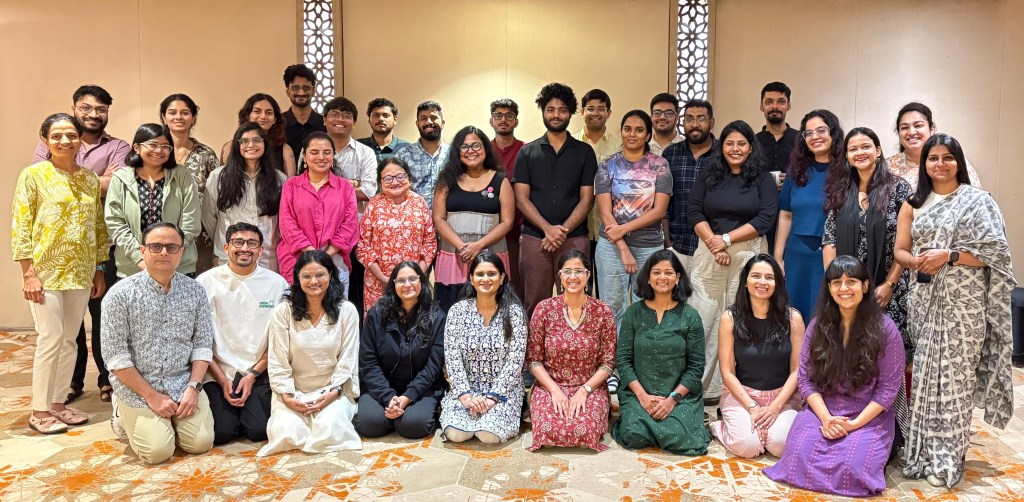
This sprint I wanted to try something new. Since I’ve always been intrigued by data and user engagement, the track for Impact engagement was an ideal opportunity for me to engage with a couple of NGOs and work alongside them during the NGO sprint for 2-days. You can read more about the Impact evaluation track in Fawas’ blog here. The other track at the sprint was on Prototyping, which mostly had fairly new NGOs participating, and trying out new features on the platform to build or improve their bots. Read more on Tanu’s blog about their creations.
I learnt through my interactions on day-1 that having a think-aloud session, being the sounding board with NGOs helps them and us get to core questions and thereof answers of what is the real purpose of the chatbot and what is the goal they are looking to achieve. Some NGOs I spoke with were not sure about the goal they were looking to achieve with their chatbot program. It could be because they were new in the org or because they never got a chance to sit back and reflect or think. The 2-days gave few of them this opportunity. Aditya from ATECF mentioned that it helped him relook at what he was building towards the original goal they had – bullseye!
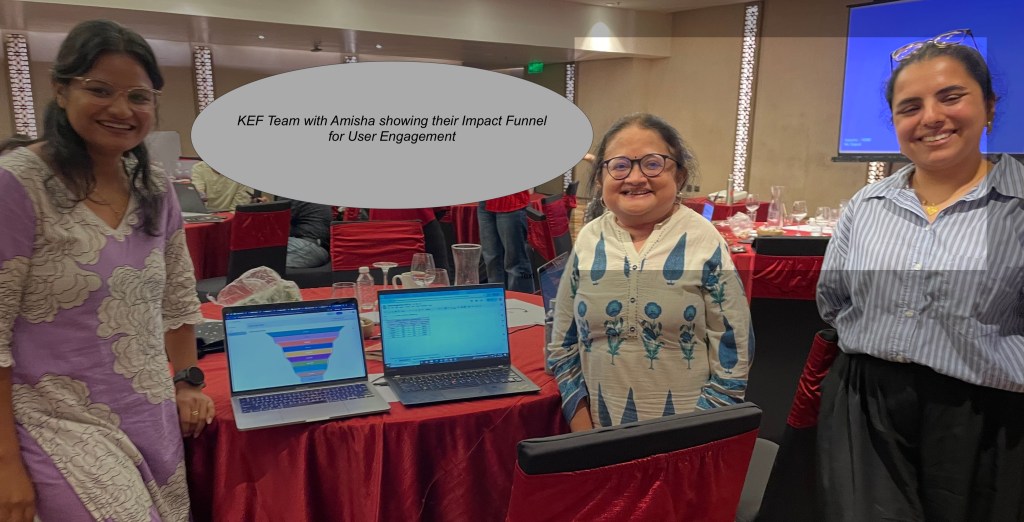
Post the brainstorming with KEF on what their impact funnel levels could be defined as, they saw the funnel for 2 different programs they had tried on the ground. Seeing an impact engagement funnel and comparing how engagement for one of their program is markably high for vs. another that doesn’t have much on-ground intervention was a revelation to them. Brainstorming and asking questions with curiosity helped them and me figure out what really is the goal of their chatbot program. We started this deep dive with a handful of NGOs so we could learn if we can build an out-of-the box engagement funnel for all NGOs on the Glific platform. By reviewing all the 6 NGOs that worked on defining their funnel levels, the Glific team will make an informed decision on building a dashboard funnel (or not). My hunch after the sprint is that it will take us some more iterations to come up with an impact evaluation dashboard. Though it clearly brought out the need to show analytics on the platform for actions that the users take like for triggers and collections. So this will definitely be part of our roadmap.
On the last day I got to see the work by several NGOs and their PoCs. I realized how small wins excite and motivate most of the NGO staff who attend these sprints. Orgs fairly new to Glific like Tiny miracles, built an AI-enabled chatbot for enabling end users to comprehend medical reports. The bot, though rudimentary, worked pretty well for the use case designed. The Tiny miracles team was very thrilled and proud to see their creation.

The session by Mukkamaar’s Shraddha was incredibly inspiring. The dedication she brought in her 6 years at the org and how she innovated on the chatbot through their mascot, Mukki, as well as its gamification, left me in awe. Mukkamaar now recharges a participating girl’s phone data (data is expensive) if they win points through engaging with the bot and submitting their assignments (1000 pts=₹1 recharge) – brilliant!! This was the only session where I saw everyone listen to with undivided attention.
Though most of us know this, in the sprint demo the fact that multilingual voice notes feature in Glific has very bad performance was in-the-face. It was not worth keeping it in production in the current state it is. Dependency on Bhashini for Indic languages in voice has proven to be a subpar experience. We will be looking into evaluating various providers in the upcoming quarter, to bring better voice quality for chatbot voice notes.
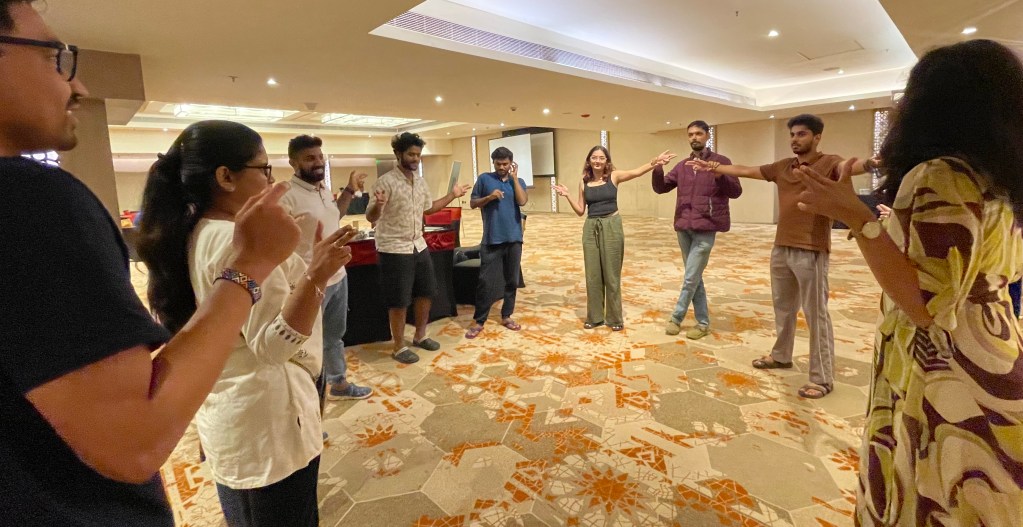
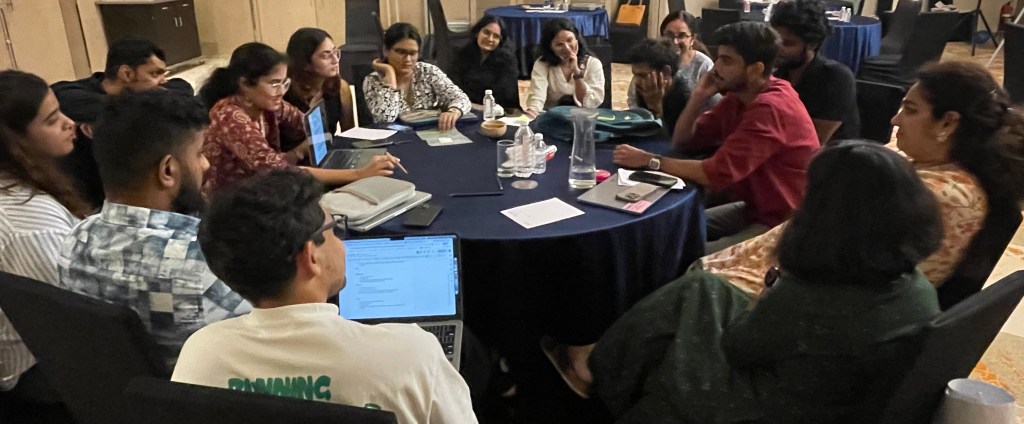
Glific Team @ NGO Sprint Debrief
Reflection on the NGO sprint revealed that though few of NGOs were not new, the staff participating was new. And this meant they had not used the platform at all or didn’t know what exactly the problem they needed to solve with Glific. This frankly first made me annoyed. But as I spoke with few of them, I realized how in the 2-day they had either learned about the platform, or learnt about their own org or got motivated by other NGOs (or everything above). I was left thinking if we should relook at our sprints and restructure them for NGOs who were more mature Glific users vs. new to Glific, if we should hold a pre-sprint for few of the new users so they benefit more from the sprint with everyone else, or if we should split new users into a separate forum like city meetup, or possibly just open the sprint to everyone and nudge all Glific NGOs to attend and learn from each other. One of the feedback was to help cross-NGO collaboration and enable them to work on a common problem; it sounded interesting but not sure how it would play out in execution. For now, I’ve put a pin on this, for which the Glific team will debate and discuss what the next NGO sprint would look like next year.
Throughout the sprint I had some really good conversations across Tech4Dev. I feel happy to get pushbacks from my team, I loved the open (and respectful) debates with several folks. Discussions on velocity, empathy and planning led to some concrete next steps within the Glific team. With the kaapi team forming, I’ve seen cross-team collaboration with Tech4Dev first-hand, for the first time. The inital collaboration was bumpy. Looking forward to more seamless ones in the near future, with better project planning and reviews. Tech4Dev is growing and these are growing pains that will make use stronger.
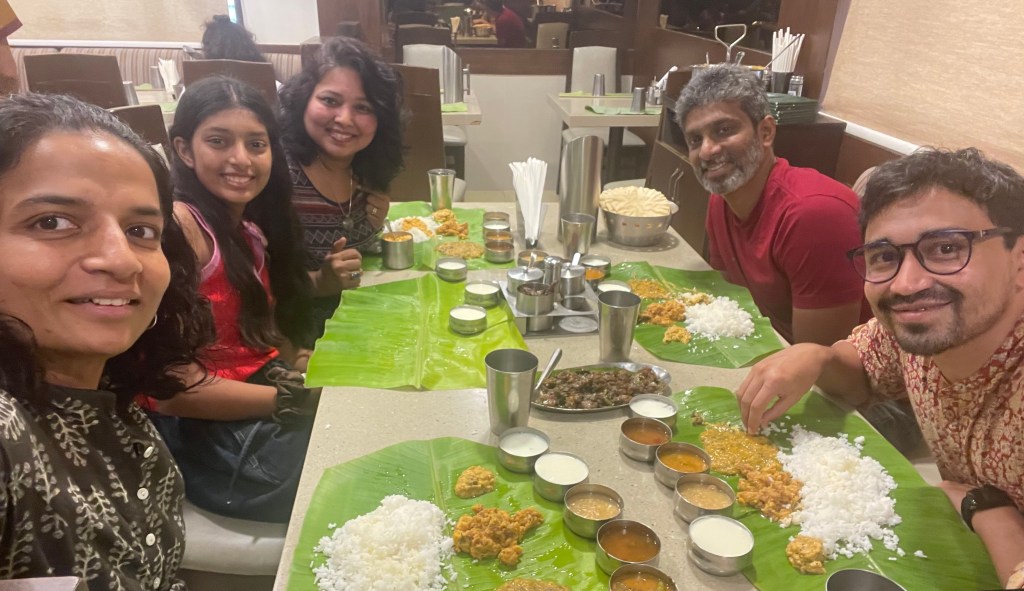
This time I made conscious effort to go meet our NGO leaders where they work. Something that doesn’t come naturally to me and entirely out of my comfort zone. Bangalore gave me ample opportunity to do so, though the week I was in the city, most NGO leaders were traveling out of the city. I still got to meet Ramesh and Shashanka from Udhyam, Gauthamraj from Reap Benefit, Poorva and her program team from NooraHealth and Subhashree and Gayathri at The Nudge. I left each of them knowing more about their work, challenges they face with the Glific platform and how we could collaborate on few things, to improve on certain areas. Navigating through the Bangalore traffic can leave you drained, sharing a drive with Shashanka, lunch with Tejas, Anto and family and endless filter coffees with everyone I met, made everything worthwhile. Some glimpses of scrumptious meals in the pictures below.



For now, as I fly back from the sprint, I feel content with what I’ve learned. The goals we set out with for the sprint, were all accomplished entirely or to most extent. The team got to learn about how some of our mature NGOs, think about user engagement and were able to groom their method of looking at data and goals. We also got appreciation and constructive feedback on the sprint as well as the platform, that we will incorporate in the upcoming quarters. Glific team has several new members who experienced the sprint and NGO interaction for the first time. Their learnings from these in-person interactions were invaluable. And last but not the least, all the NGOs took back new connections and learnings, which hopefully would nudge them into the right direction for their chatbot program. I leave humbled by the energy and dedication of each and every team member of the team. So Proud!