
In the bustling urban informal settlements of Mumbai and parts of Maharashtra, SNEHA (Society for Nutrition, Education and Health Action) has spent the past 25 years addressing some of society’s most pressing challenges – maternal and child health, violence against women and children, adolescent well-being, hospital partnerships, and palliative care.

Balancing Sensitivity and Scale in Data
SNEHA works with deeply personal and often urgent cases – maternal health within the critical first 1,000 days, and domestic violence interventions where delays can escalate harm. Protecting this data is paramount. Anindita explained that every interaction begins with consent, and personal identifiers are replaced with unique IDs to preserve anonymity.
SNEHA, with a strong M&E research unit, was generating data visualizations and analysis on a monthly basis using offline statistical analysis tools. But the need of the hour was real-time data to match the volume, urgency and quick insights for more informed intervention.
The Dalgo Transformation
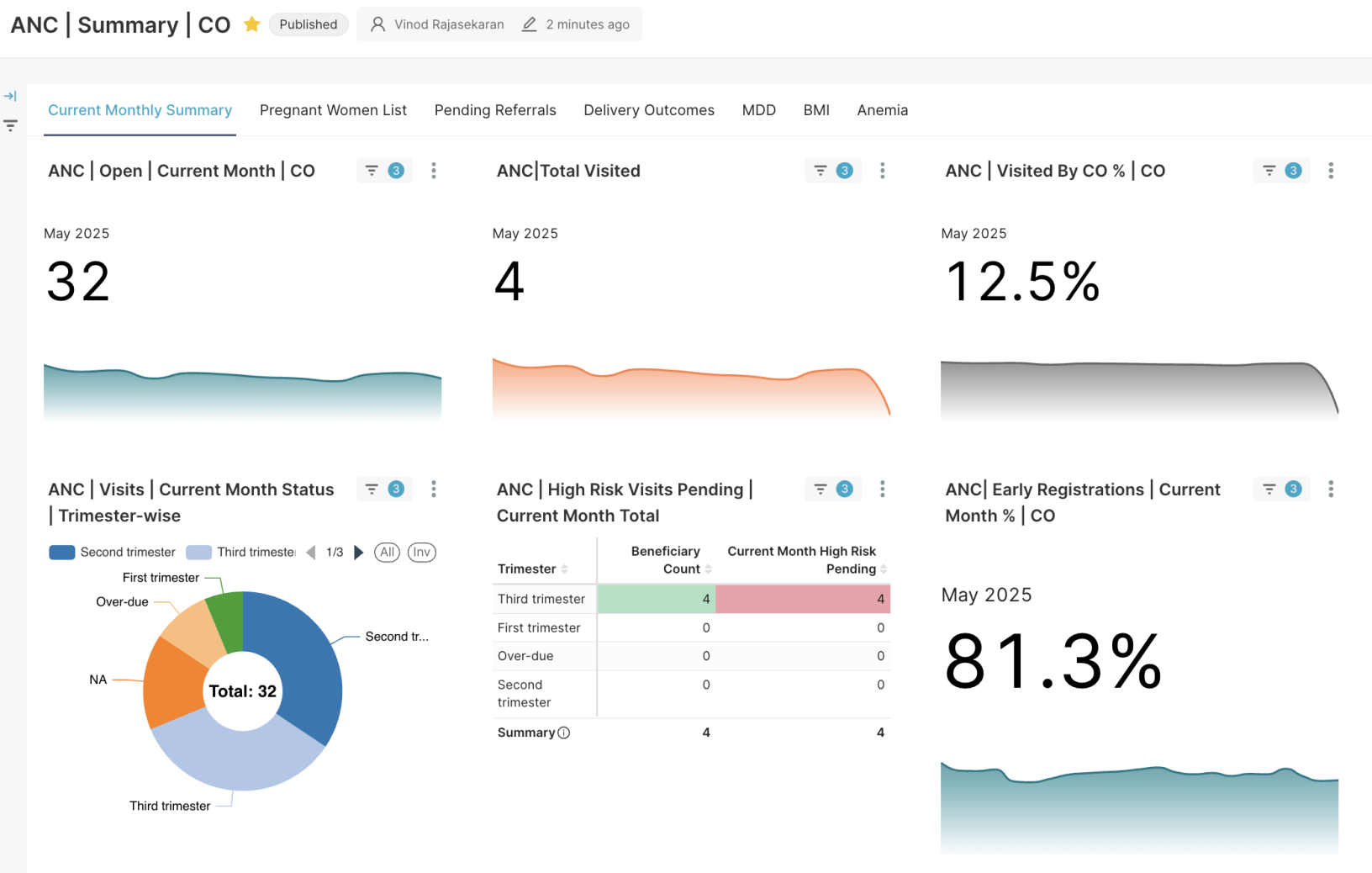
The move to Dalgo marked a turning point. With real-time dashboards in Apache Superset, the M&E team and program staff shifted from waiting on monthly reports to accessing insights as soon as the next day.
“Once we enter the work today, by tomorrow we can already see it reflected. That visibility has brought a lot of meaningful impact to the team.” explains Anindita.
This immediacy has helped every level of the organization see a clearer picture, guide programs more effectively, and stay motivated by seeing the direct impact of their efforts.
Evolving Needs and Ongoing Challenges
While Dalgo has brought significant benefits, some challenges remain:
- Agility in dashboard updates – Adding new indicators or changing parameters can take time, creating bottlenecks in fast-changing program environments.
- Storytelling from data – Senior leaders and donors need quick, clear narratives without navigating multiple filters or dashboards.
- Advanced AI integration – Features like AI-assisted data cleaning, anomaly detection, and automated insight generation could help M&E team focus more on decision-making than routine troubleshooting.
Why Stories Matter
Beyond numbers, data holds human stories. Whether it’s measuring reduction of violence among GBV survivors or tracking improvements in child nutrition, framing insights as narratives helps funders, policymakers, and the public connect with the mission.
Advice for Organizations Starting Their Data Journey
Anindita’s guidance is clear: start strong with your monitoring and evaluation framework. From the moment a project proposal is drafted:
- Define indicators based on literature, program needs, and funder requirements.
- Keep data collection focused on what will truly inform decisions.
Build forms and systems that align with your indicators from day one.
“As any program generates many data points/indicators, it is very important to identify the data indicators at the first instance, which will lead to meaningful project outcomes. Following that, data visualization can be designed based on those set of indicators to create a meaningful sequence and data story.” shares Anindita
Looking Ahead
With tools like Dalgo and emerging AI capabilities, SNEHA is poised to deepen its data-driven impact. By blending ethical data practices, real-time analytics, and human-centered storytelling, they’re setting a standard for how technology can serve both efficiency and empathy in the social sector.
Follow SNEHA’s work here: https://www.snehamumbai.org/
If you are interested in chatting with us about your data needs, book a call with us here: https://calendly.com/priyesh-projecttech4dev/30min
