As India prepares for the DPDP roll-out, with full statutory compliance for all provisions required by May 2027, the development sector is also gearing up to protect the data of the people they serve.
6 weeks ago we began a DPDP cohort program with 7 NGOs to help them bridge their compliance gap by combining structured learning, peer exchange, expert advisory, and hands-on implementation support over three months.
The program’s aim is to help organizations build sustainable systems and compliant legal and organizational practices for responsible data governance.
Two weeks into the program we ran an immersive two day workshop in Bangalore, for the participants. The workshop included instructor-led sessions on key DPDP areas delving into the requirements of the Act, activities in breakout groups for hands-on learning, and time for individual work to help the orgs create tangible plans for DPDP implementation.
The workshop may have been the hardest part for us as mentors to deliver. But for the NGOs, the real work began when they returned to their organisations. That’s when the learning had to translate into action.
They now had to put into practice what they had learnt: introduce new processes, rethink existing ways of working, get colleagues on board, build internal ownership and, in many cases, challenge practices that had been followed for years.
Understanding the DPDP Act is one thing; making it work within the everyday realities of an NGO is quite another.
Different Strokes
We laid out a roadmap for participants, breaking down the journey towards DPDP compliance into manageable steps. But it’s been fascinating to see the different paths they have chosen to get there.
- Some are following the roadmap, step by step. They are taking a structured approach, working through each area systematically and building their compliance practices one step at a time.
- Some are taking a piecemeal approach. They are picking up the most immediate or manageable tasks first, addressing specific gaps as they come up, and gradually working towards the larger picture.
- Some are starting with the organization itself. Before changing processes, they are focusing on building awareness, preparing their teams, getting leadership buy-in and bringing colleagues along on the journey.
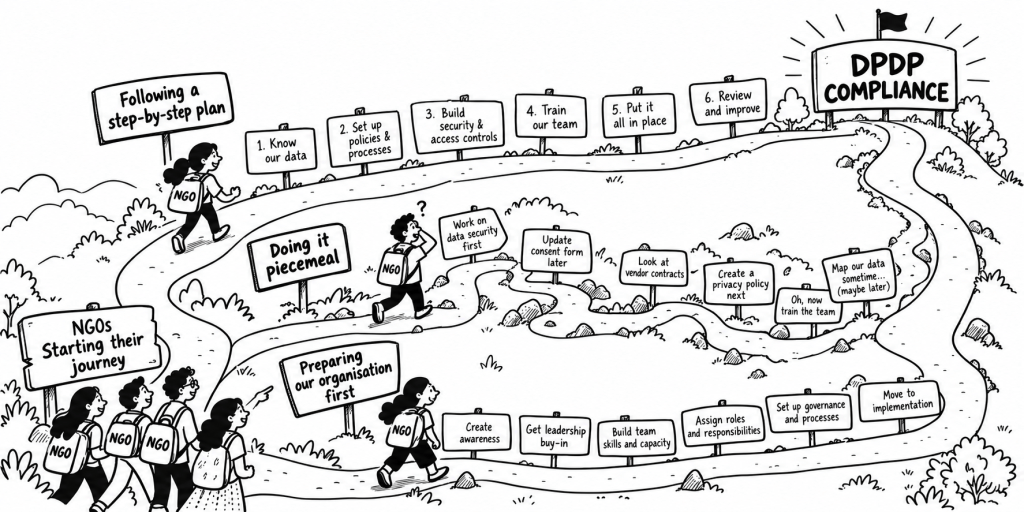
There is no single correct way to approach this. Every NGO has its own starting point, capacity, priorities and organizational realities. And that’s perfectly fine. What matters is that each of them has started moving forward.
Building learnings and resources for the ecosystem
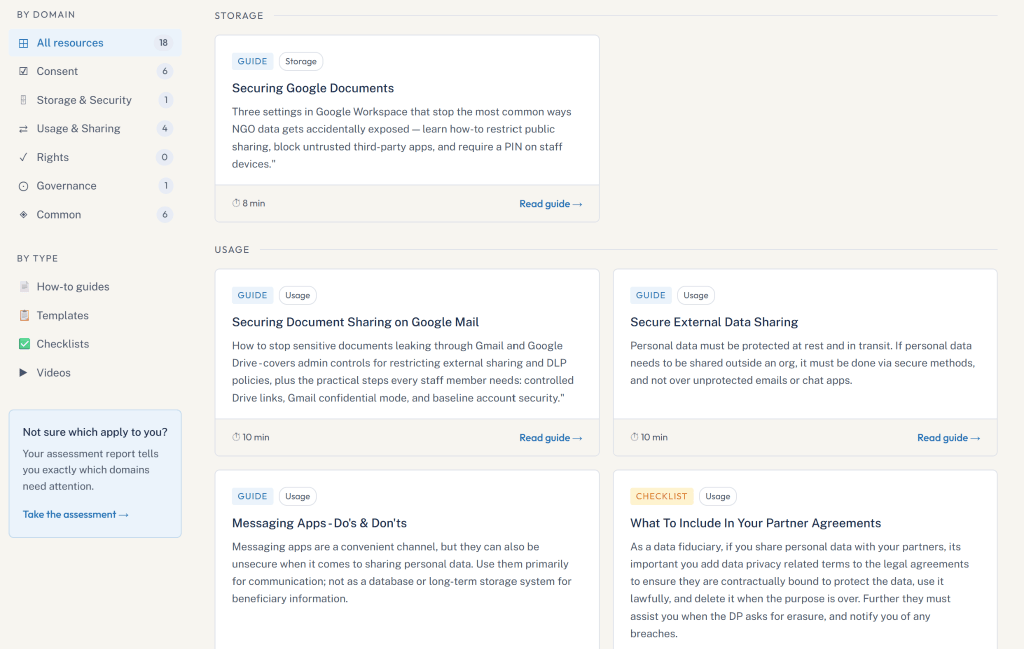
The questions our cohort participants are asking are just as important as the actions they are taking. Their questions help us understand where the real implementation challenges lie, what is proving difficult, and where they need more guidance. We are using these insights to develop practical resources, not just for them but for the wider NGO ecosystem as well.
These resources are available on our DPDP Navigator: Resources — DPDP Readiness Navigator. The collection includes practical guides, how-to documents, checklists and primers that break down technical and legal concepts into simple, bite-sized, easy-to-understand and actionable guidance for organizations.
The Highs
What’s been particularly heartening is seeing the little victories along the way. One NGO has introduced a new consent form, another has conducted an internal training session for its colleagues, while others have started reviewing their existing data practices. Each of these may seem like a small step, but together they add up to meaningful change. And every small win builds the confidence to take the next step.
We’ve also enjoyed the little aha! moments during our discussions, when a seemingly complicated challenge turns out to have a simple, practical solution. That’s exactly what we want our advisory to deliver: actionable advice that organisations can put to use in their everyday work, without getting lost in technical jargon or legalese.
The feedback from participants has been equally valuable. It has helped us understand their real-world challenges, identify where they need more support, and continually adapt our DPDP advisory to make it as relevant, practical and useful as possible. We’re learning just as much from this journey as they are!
The Lows
Keeping participants engaged throughout a long programme is always a challenge, and this cohort has been no exception. In a virtual programme, the demands of everyday work and competing priorities inevitably take over. It’s easy for participants to lose momentum, especially when they are juggling programme commitments alongside their regular responsibilities.
This has been an important learning for us as well. It has pushed us to rethink how we engage with participants, make our interactions more meaningful, and find ways to keep the momentum going between sessions. We’ve realised that engagement cannot be limited to scheduled workshops and calls; it needs to be built into the entire programme through regular touchpoints, practical nudges, relevant resources and opportunities for participants to share their progress and learn from each other.
It’s also reminded us that a good advisory programme needs to be flexible and responsive to the realities of the organisations it works with.
What’s Next
As we enter the second half of the programme, we want to continue working with our participating orgs and help them maintain the momentum they have built thus far and keep closing their compliance gap.
We are here to hold the bicycle till they are ready for the training wheels to come off.