
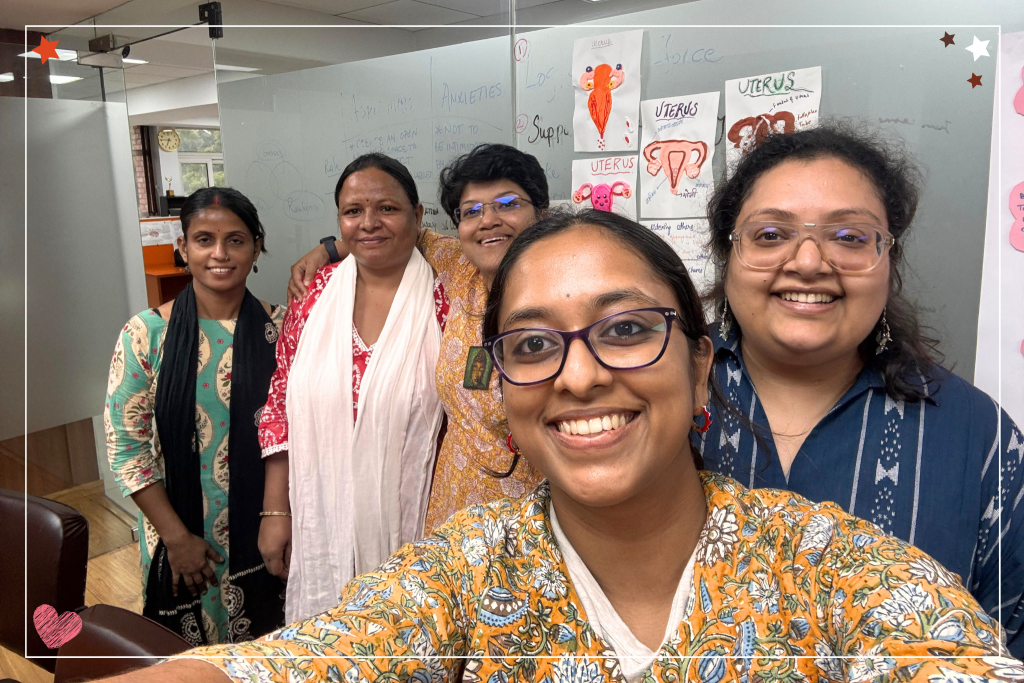
Rain usually makes everyone want to wrap up early and get home. But that was not the day I walked into in early August. When I landed in Delhi, the team was all ready and excited to get started. They had all of their spreadsheets and files pulled up, a whiteboard already filled with data and programme linkages, and two full days cleared from their calendars for this. They had even thought about the order we should look at things in. Nobody had to be chased for a file. If you have done this work in a few places, you know how rare that is, and you know what it means: they knew that this was worth their time.

Data has a way of creeping up on you
When someone needs a number for a report, a column gets added. When a new centre opens and builds its own tracker, it’s done because that is faster than waiting for a central one. A funder asks a question nobody anticipated, so another form gets extended. When this happens for fifteen years, you do have something that works – in the sense that the people who built it can get answers out of it. The trouble is that those processes harden. Getting to a decision, or showing what the organisation has actually achieved, starts costing the team far more time and effort than it should.
Currently – Protsahan is managing hundreds of sheets, each of which are being tracked and updated on almost a daily basis. But reporting only happens once a month – and more likely once a quarter or at the end of a year as a retrospective. For decisions to be actively made and for information to be readily available – this data should be made more accessible in a more systematic manner.
What NGOs want from their data is bigger than just a dashboard
Fifteen years working with young girls has taught Protsahan a lot. For instance, the HEART framework is all-encompassing in terms of a girl’s growth and its impact can’t be completely defined by a simple questionnaire, although we can try to get close. Government linkages have been built patiently over years to unlock livelihoods for people within the localities, and this can sometimes be difficult to communicate and easy to underestimate in terms of impact.
Protsahan has done great work and they want all of this to become sector learning. Other organisations should be able to build on it and policy people can act on it.
But they capture far more than anyone can use. Surveys, pre- and post-assessments, registers, alumni follow-ups all go back several years and there’s a lot of raw material. And that can be a problem to sift through.
We ended the two days with a wishlist
The exercise was thinking through what we would do if we were to start this data process from scratch – what is the impact that we want to show, and the decisions that need to be made from data? The following then became clear:
- We first needed to identify clear indicators that would shape decisions. The evidence is already in the extensive spreadsheets. But it needs to be structured, comparable and consistent over time.
- We then needed to form a pathway to get these indicators from numbers that can be trusted, and that do not take days to find.
So how is the data audit going?
Honestly, the task looks quite significant from here. All of this data is live, being recorded and used every day, and any real change needs the right rationale and the right people involved. But we’re taking this one week at a time.
So this is what we’re doing!
- First, figuring out an overall program level indicator list. Every indicator needs to drive a decision or build a story, and we need the rationale to retire the ones that fail that test.
- Second, a reworked capture process for each programme. Once you know which indicators matter and what they decide, a lot of the recording effort can be optimized. It can also help smoothen out the amount of time spent in cleaning and pre processing data before it is usable.
- Third, a demo dashboard for at least one programme, built on a cleaned dataset. Nothing shifts a data culture like seeing something real, so that is where we want to start.
Dalgo is merely doing the plumbing process in the data. Our job is to ensure that Protsahan’s impact can shine through – the work that it has done in the sector for girls through art, technology, and building trust. Helping it get to a place where the decisions can be made better and the impact is clear is a great responsibility and I’m glad we get to keep at it!
If you have more questions about our product and consulting offerings – reach out to me at partnerships@dalgo.org or set up a call here.

