
In our last post, we introduced Sashakt – an open-source assessment platform that makes it effortless for organizations to create, customize, and conduct assessments at scale.
This time, let’s step behind the curtain.
How is Sashakt structured?
What makes it so flexible and fast?
And why has it become a go-to platform for large-scale field assessments?
Let’s explore the architecture, the design choices, and the technology that power Sashakt from the inside out.
The Architecture
Sashakt isn’t just a web app – it’s a multi-tenant platform.
That means multiple organizations can use it independently, each managing their own users, data, and assessments – safely and securely.
At its core, Sashakt revolves around five key components: Users, Tests, Questions, Tags, and Candidates.
These five pillars work together seamlessly to form a smooth assessment lifecycle – from question creation to result analytics.
User Management
Every organized system begins with clear roles, and Sashakt handles this beautifully.
The platform lets you create users with specific roles and permissions – ensuring everyone has access to exactly what they need.
Here’s how Sashakt defines its hierarchy:
Super Admin
The top-level role. They onboard new organizations, manage global configurations, and set up the entire ecosystem. Think of them as the system architects.
System Admin
They manage everything within their organization – users, configurations, and assessments.
State Admin
A focused, regional role. State Admins handle data and operations for their assigned states, maintaining localized control.
Test Admin
They’re the test builders – the ones who design, publish, and manage assessments for candidates.
This layered structure makes Sashakt highly organized, scalable, and easy to manage across diverse teams.
Question Management
Every assessment starts with a good question – and Sashakt makes sure that process is smooth, reusable, and flexible.
Instead of tying questions directly to tests, Sashakt uses a centralized question bank.
This allows organizations to create questions once and reuse them across multiple assessments – saving time and ensuring consistency.

Each question can be customized with detailed properties like:
- Question Text: The content of the question.
- Question Type: Single choice, multiple choice, and more (with advanced types coming soon).
- Options: Define answers and mark the correct ones.
- Instructions: Optional notes to help candidates.
- Marks: Assign points per question.
- Tags & Locations: Organize questions by topic, difficulty, or geography.
Bulk Upload – Content at Scale
When your question bank grows into hundreds or thousands of entries, manual entry becomes tedious.
That’s where Bulk Upload steps in
Simply download a CSV template, fill in your questions, upload it back – and within seconds, your entire set is ready.
If there’s a mistake, you don’t get a vague “error occurred” message.
You get a clear, pinpointed report telling you exactly what to fix – and you can re-upload in moments.
That’s the Sashakt way: save time, stay accurate, and focus on what matters.
Test Management
Once your question bank is ready, it’s time to shape it into a real assessment.
In Sashakt, you can design test templates – flexible blueprints that you can tweak and convert into full tests whenever needed.
This means you can plan once and reuse it across batches, states, or departments — without losing consistency.
Here’s how a test comes alive:
You name it, describe it, and tag it properly.
Then, you either handpick questions or let Sashakt do it automatically — based on tags like “difficulty” or “topic.”
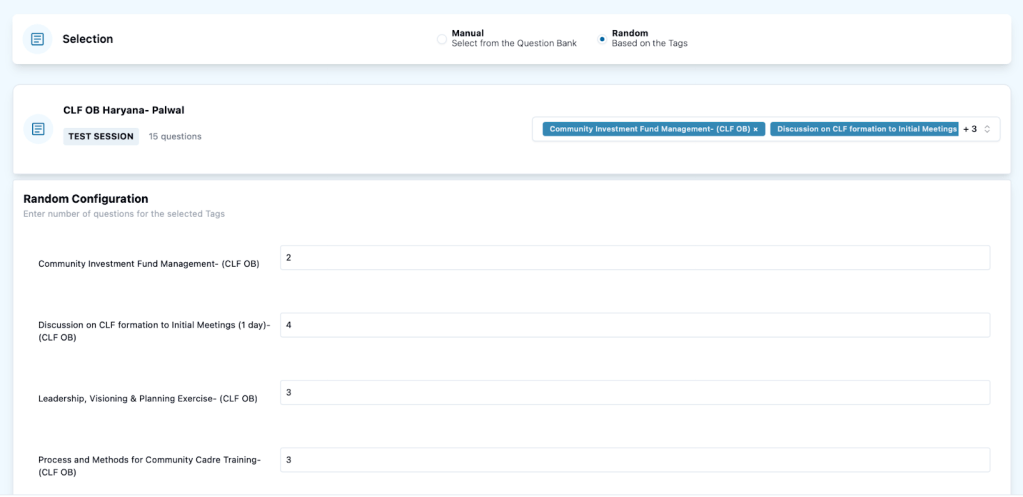
Once selected, you decide how the test behaves – from time limits to marking schemes, question shuffling, or result visibility.
And when you want to reuse it, Just clone it.
Your entire configuration – questions, settings, everything – gets duplicated instantly.
Tweak a few details, and your new test is ready.
No repetition. No rework. Just productivity that feels natural.
Tag Management
Tags in Sashakt aren’t just labels – they’re the foundation of intelligent organization.
They make it easy to filter, group, and manage thousands of tests and questions with precision.
For example, you can create a Tag Type like Difficulty Level, and add tags such as Easy, Medium, and Hard.
This structure lets you build dynamic, adaptive tests instantly — without the manual effort.
A real-world example from Veddis Foundation:
Veddis Foundation uses Sashakt to conduct assessments for Self Help Group (SHG) members.
They tag their content by training areas — like SHG Audit, Meeting Process, and Concept & Management.
When a test is tagged SHG Audit, it automatically pulls matching questions.
No manual searching, no guesswork — just smooth, automated organization.
It’s simple, smart, and aligned with their training flow.
Assessment Management
Now imagine this.
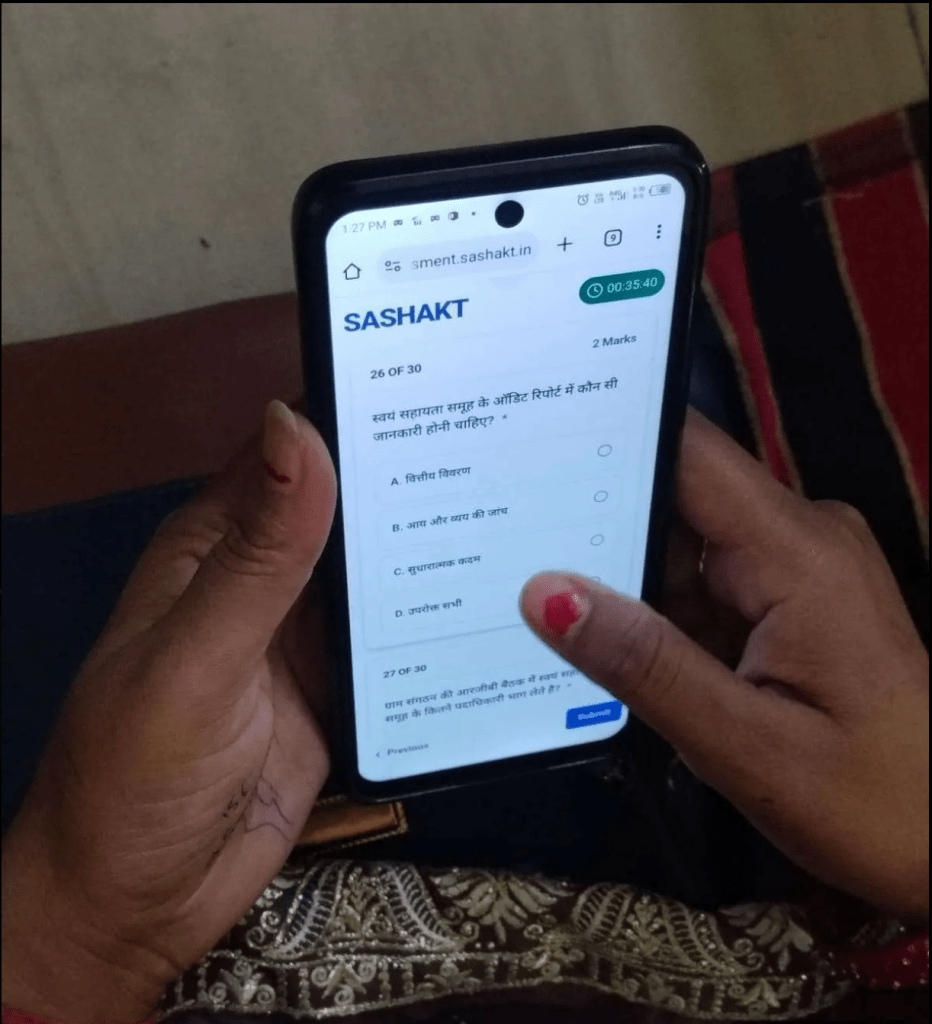
A field officer walks into a village where internet access is patchy. They hand out a printed QR code.
A participant scans it using their phone, and within seconds, the test opens.
No login. No complicated setup.Just scan and start.
The interface is clean, mobile-friendly, and works even in low-connectivity areas.
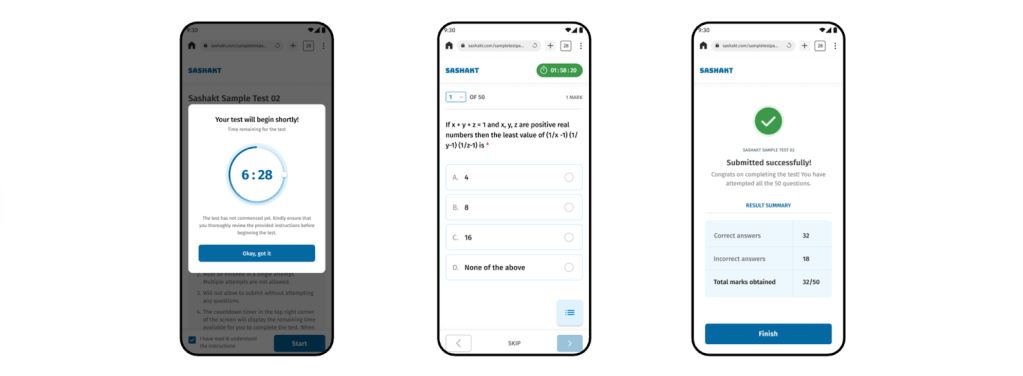
Candidates can read instructions, take the test, and submit answers in one flow.
If results are set to be visible, they see them right away.
It’s simplicity meeting scalability — and it just works.
Built on a Stack That Doesn’t Slow Down
Behind all the simplicity, there’s a rock-solid tech stack keeping things fast and stable.
Sashakt runs on FastAPI for its backend — lightning-fast and developer-friendly.
PostgreSQL takes care of structured, reliable data.
On the frontend, Svelte keeps everything smooth and reactive, supported by shadcn/ui for elegant, reusable components.
For deployment and scale, there’s Docker and AWS Cloud, ensuring it runs consistently across environments.
Analytics? Powered by BigQuery and visualized beautifully through Looker Studio.
Everything is open, modern, and made to grow — because Sashakt was never meant to be a one-time project. It’s built to evolve.
What’s Next: The Vision for Sashakt 2.0

Sashakt isn’t just lines of code — it’s a tool that’s already changing how assessments happen on the ground.
Across Haryana and Himachal Pradesh, it’s being used to conduct fair, large-scale tests for SHG members.
More than 8,500 candidates have already participated, generating 2 lakh+ responses across 31 districts.
That’s not just data. That’s trust. That’s a reach. That’s transformation.
And this is just the beginning.
Sashakt 2.0 is already on the horizon — bringing advanced question types, improved analytics, richer feedback tools, and deeper personalization.
Our mission stays unchanged:
To make assessments simple, reliable, and truly accessible for everyone.
Stay tuned — more stories, field learnings, and platform updates are coming soon.