When Lobo asked me to be part of the organizing team for the AI for Global Development (AI4GD) Sprint, I had exactly zero clue what the Agency Fund was. Tech4Dev is a treasured partner for them, and they fund us too, but somehow this whole side of things had never crossed my radar. So I nodded along, did some frantic Googling, and suddenly found myself in daily calls with Sasha, Sruthi, and Edmund discussing everything from rooming arrangements to booklet design to how many icebreaker sessions we could reasonably get away with.
The sprint week arrived after what felt like an eternity of planning (but also, where did the time go?). I landed at the hotel and met my roommate, Roberta—who, within five seconds of introducing herself, immediately declared, “I’m sorry, I’m a hugger” and wrapped me in a very enthusiastic embrace. Turns out, she is also one of the warmest, most interesting people I’ve met. We spent hours talking about Star Trek (a shared obsession), politics in Brazil vs. India, race and multiculturalism, her research work at the Agency Fund, and somehow, by the second night, she had developed an instinct to wake up mid-sleep to check if I was okay if I made a sound. Just the best kind of person to accidentally get assigned to you as a roommate.
The night before the sprint officially began, the organizing team had our first in-person meeting. I figured I’d be in the background—helping out, making sure things were running smoothly, maybe passing around mics—but the Agency Fund team was so ridiculously inclusive. They genuinely cared about what I thought, actively pulled me into discussions, and by the end of the meeting, I’d somehow been handed the role of emcee. Which, as a former theater kid, I obviously loved.
And then Day One kicked off, and wow.
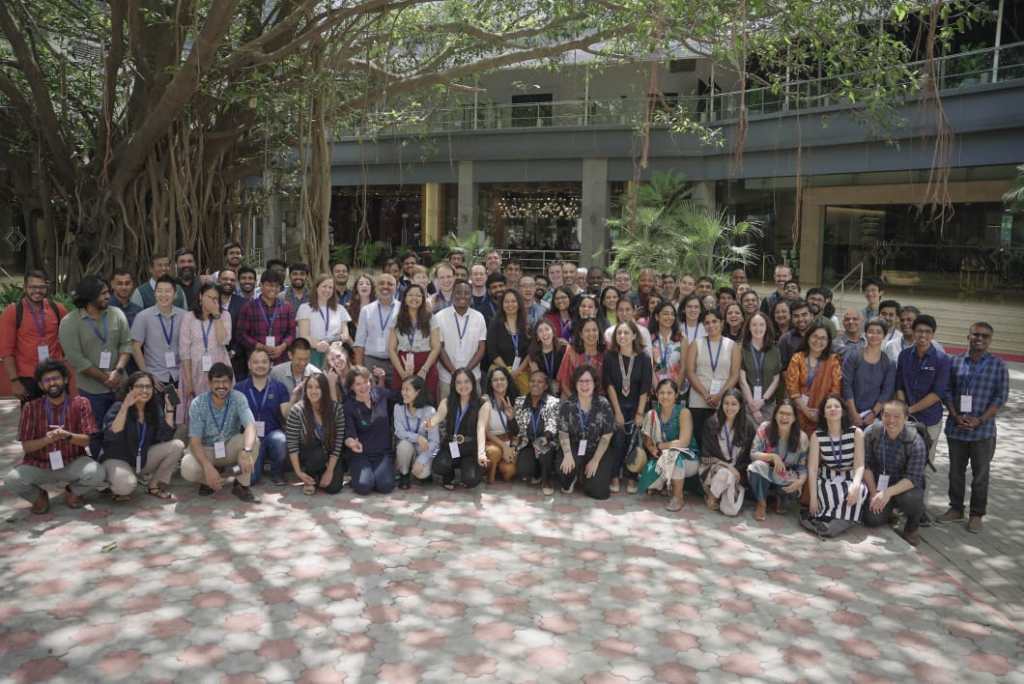
There were about 90 people in attendance, spanning funders, awardees, and NGOs. The keynotes were next level. The first was by Han Sheng Chia from the Center for Global Development, who presented a research-driven keynote on AI in global development—absolutely fascinating stuff. One study he referenced left me spiraling: A rural electrification project in Kenya was meticulously monitored to see if access to electricity improved outcomes. Spoiler: It didn’t. Why? Because the issue wasn’t just access to electricity—it was that people didn’t have the capital to invest in devices to make use of it. Sure, kids got more time to study at night, but they also got more chores. Just a wild, deeply insightful case study on why surface-level interventions often miss the mark. (Seriously, look up the study, it’s so worth reading – Lee, Kenneth, Edward Miguel, and Catherine Wolfram. Experimental Evidence on the Economics of Rural Electrification.April 2019. )
Then there was the graph.

It shows the difference in learning outcomes when kids were tutored in Go (the board game) by a human teacher vs. an AI tutor. The human tutors, unintentionally biased, ended up fostering an environment where boys excelled while girls lagged behind. But with an unbiased AI tutor? The girls caught up at an insane rate. One simple intervention, and suddenly the gender gap in learning disappeared. I had to fight the very real urge to get teary-eyed in the middle of the room. Again, if you haven’t seen this study, go find it. (And if you were at the sprint and caught me looking suspiciously misty-eyed at the screen, no, you didn’t. Here is the study – Bao, Leo, Difang Huang, and Chen Lin. “Can Artificial Intelligence Improve Gender Equality? Evidence from a Natural Experiment.” October 11, 2024. SSRN.)
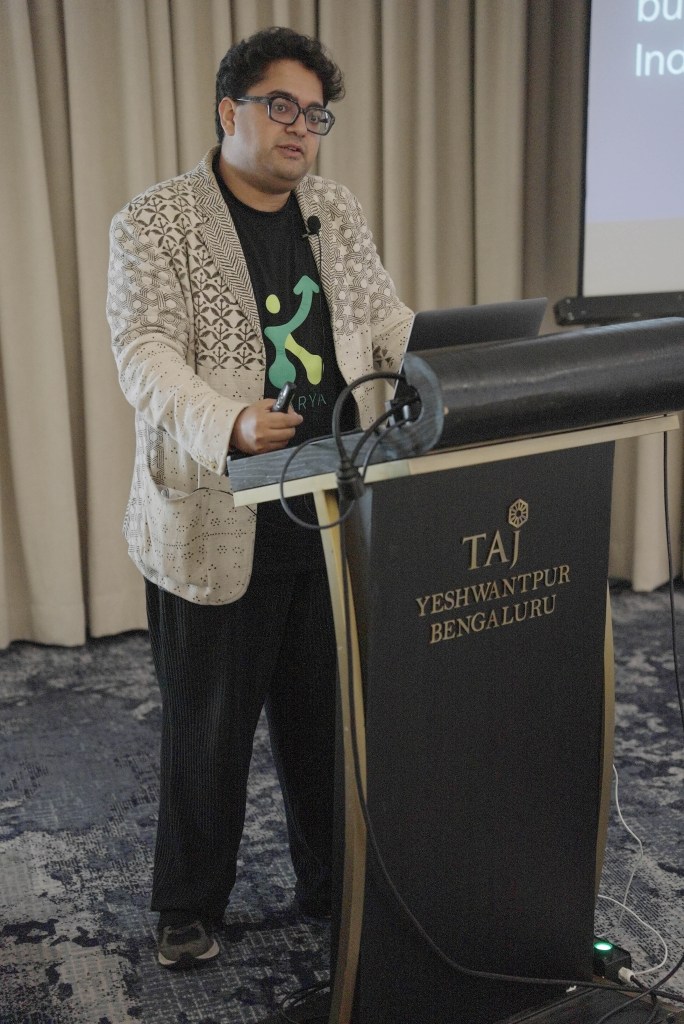
The second keynote was by Manu Chopra, the founder of Karya, and honestly, I love hearing people talk when you can tell they’ve built something truly groundbreaking. Karya lets communities build and own their datasets—datasets that companies like OpenAI, Google, and Microsoft are dying to get their hands on. And through the Karya Public License, the communities get paid royalties on their data. They’ve scaled this to pay $25/hour, which in many economies in the global south is life-changing. Manu explained how better pay results in better data, which in turn improves AI, which creates better outcomes for the communities themselves. It’s the kind of system that feels so obvious after someone has thought of it—but no one had done it before him. Just brilliant.
The rest of the day had awardee project presentations, including a fun (and frankly adorable) demo by Rocket Learning. We got to see the amazing work done by the seven awardee organizations: Rocket Learning, Jacaranda Health, Noora Health, Reach Digital Health, Digital Green, Precision Development, and Youth Impact. The strides they’ve been able to take in their respective areas were nothing short of inspiring.
Then came the funder panels and closed-door discussions. We had incredible conversations about funding priorities, collaboration, and potential. One thing that stood out: There’s a trillion dollars invested in AI globally, but the social sector has only managed to scrape together a billion. And that gap? It’s staggering. I also brought up something that’s been bothering me for a while—how there’s no centralized knowledge base for AI in the social sector. There are so many orgs working on the exact same problems, but they don’t always know who’s already solved what. The idea seemed to gain traction in the room, and I left hopeful that this could become a real initiative in the future. Maybe I’ll be a part of it.
Days Two and Three leaned more technical, which was my jam. We had sessions on:
– Fine-tuning LLMs for different languages
– Graph RAG
– Evaluating Indic language support in LLMs
– Ethical AI in helpline services
– Evaluation frameworks for chatbots
One of my favorite conversations was with Emmanuel from Jacaranda Health about the near-impossible challenge of fine-tuning an LLM for Sheng—a Swahili-English hybrid that changes every few blocks, evolves absurdly fast, and was literally invented by youth to confuse older people. Yet, somehow, they do want to use it with chatbots. If we crack this, it’ll be an AI milestone.
Another fascinating insight came from Digital Green: Women, compared to men, need way more research and evidence before implementing chatbot-suggested advice. Not because of education gaps, but because their lived experiences make them more skeptical. And because women and men also have different language competencies due to education differences, Digital Green found it necessary to train separate fine-tuned models for each. Several other NGOs in the room nodded in agreement, which really solidified how these behavioral differences impact AI adoption in ways I hadn’t considered before.
USAID cuts came up often, and their impact on the social sector has been devastating. But what stood out to me was the resilience in the room—everyone had this “let’s soldier on” attitude. Instead of despairing, they were actively looking at how AI could help improve efficiency, stretch resources, and ensure they could keep making an impact even with fewer funds. It reminded me of that Fred Rogers quote: “Look for the helpers. You will always find people who are helping.” This sprint? It felt like I had met those helpers.
On day 2, Sanskriti from ARTPARK and I got into a deep discussion with Arjun Venkatraman from the Bill & Melinda Gates Foundation, who has very interesting contrarian perspectives on the often superfluous use of GenAI in projects where a reliance on good ol’ statistical, rule based systems could lead to much better outcomes, especially when cost is also a factor. Also, my oh my, his life story is such a rich tapestry of insane stories and a reminder of how free will is something we all have but don’t exercise to the extent that he has done. For some of the details on those stories you’re going to have to reach out to him I’m afraid – they’re not mine to divulge. In addition, it was also a joy to behold Lobo in his element, navigating the room with surgical networking precision. I had heard before of his vast, deep rooted knowledge of the sector, but to see it in person left me awed and proud to be working where I was.
And then, of course, there were the icebreakers, which I ran on Days Two and Three. We did “Human Bingo” (a networking game where people bonded over ridiculous shared traits) and “Find Your Match” (cue a room full of people running around trying to figure out who was the ‘Salt’ to their ‘Pepper’ and what ‘Salt’ would do if they were ‘President of the world’ for a day). I was half expecting people to roll their eyes, but everyone got so into it, and by the end, people were appreciative of the exercise for making them interact outside their usual groups. Mission accomplished.
Feedback forms were handed out twice a day, and every evening at 8, the Agency Fund and the Organizing Team (which included me) would meet to adapt the schedule for the next day based on real-time feedback stats. Roberta put together a dashboard that analyzed responses, and seeing that level of flexibility, initiative, and genuine concern for everyone’s experience was amazing. I picked up so many new skills—management, adaptability, event planning—you name it.
When I walked into the sprint, I was still figuring out where I stood in the social sector. By the time I walked out, I had a much deeper understanding of its challenges, its quirks, and just how much more work there is to do. More than anything, though, I felt motivated. Motivated to do more, learn more, and find ways to actually solve some of these problems.
If nothing else, I left deeply caffeinated and more in love with this community than ever.
Until next time, AI4GD. You were a ride.