
This was my second trip to the Northeast — the first was to Shillong, two years ago. This time the purpose was clearer: to get context on a fundraising project we’re working on with SESTA, an organization helping multiple CSOs across the Northeast strengthen their fundraising.
SESTA has been working in the region for a long time, with community-led development and rural development at the core of its work, operating at a fairly significant scale across the Northeast.
Their work runs across a few major programs:
- Women’s collectives: SeSTA organizes rural women into institutions such as Self-Help Groups (SHGs), Village Organizations and producer groups. The goal is to help these institutions eventually manage finances, access government schemes and credit, negotiate with markets, and collectively build livelihoods.
- Livelihoods: agriculture and livestock, along with promoting rural enterprises and local entrepreneurs.
- Government schemes and entitlements: working with systems like MGNREGA and other livelihood programs.
Strengthening the CSOs, Not Just the Communities
One of the reasons for this visit was to understand how SESTA works with other CSOs — not just by strengthening communities directly, but also by strengthening the organizations that serve those communities.
SESTA currently runs two programs toward this end: NoDe and FRRH. NoDe started in 2024, while FRRH is a newer program that started in 2026. Both are being implemented across the Northeast, with current work in Assam, Manipur, Nagaland, Arunachal Pradesh, and Meghalaya, and plans to expand to the other Northeastern states.
Through NoDe, SESTA supports CSOs across areas such as organizational development, strategy, governance, accounts and compliance, HR management, MIS, communications, and fundraising. Technology is not yet a major focus area, although SESTA tries to support CSOs with technology where relevant.
So far, NoDe has worked with four cohorts of CSOs: 13 CSOs in Cohort 1, 6 in Cohort 2, 8 in Cohort 3, and 10 in Cohort 4 — 37 CSOs in total across the four cohorts.
FRRH is a newer cohort-based program that I have only recently started exploring. Across these initiatives, what stood out to me was that SESTA is not simply working as a direct development organization. It is also building the capacity of the organizations working on the ground, helping them become stronger and more sustainable. One of the recurring needs SESTA has identified among these CSOs is fundraising — understanding which funders to approach, where to find relevant opportunities, and how to put together a strong application.
Meeting Two CSOs
The core purpose of this visit was to meet two CSOs — one from the NoDe program and one
from the ongoing FRRH cohort.
BDF (NoDe Program)
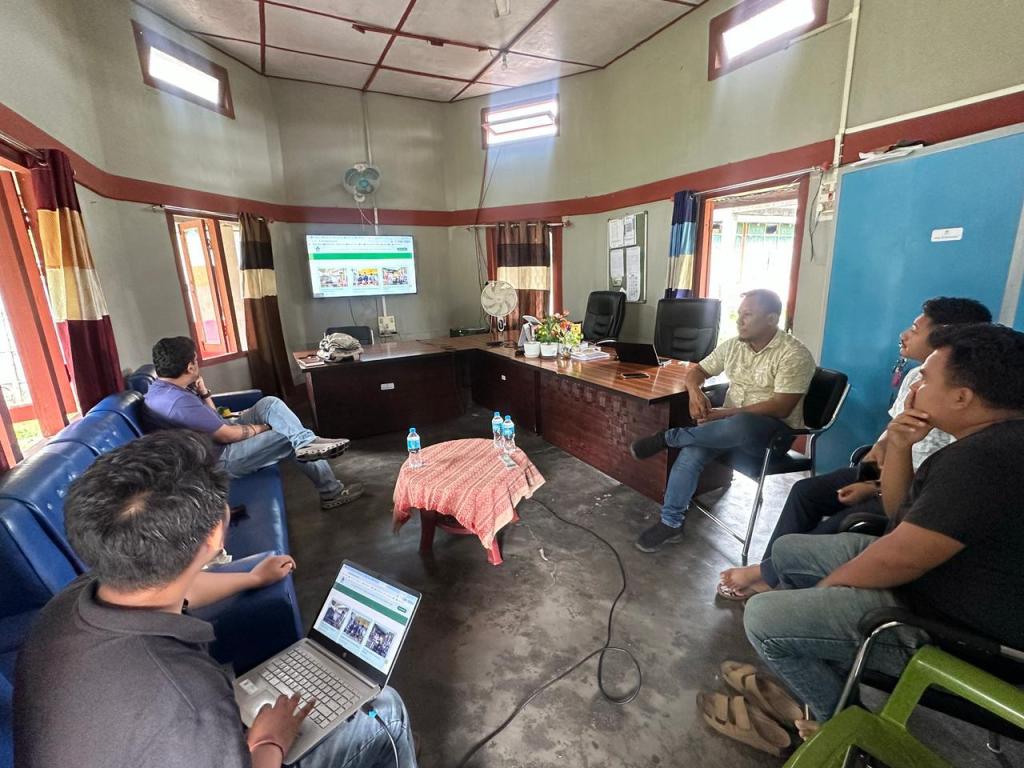
BDF is a grassroots organization working in the Bodoland Territorial Region (BTR) of Assam, with a focus on livelihoods, youth skilling, women’s empowerment and community development. The organization started around 2020 and is still relatively young compared with organizations like KABIL.
I met Monjib from BDF, who explained how the organization started and how they run vocational training programs for students. He walked me through the size of their cohorts, where students are placed, which companies hire them, and their average salaries.
What they do:
- Youth skilling: vocational training for students and young people, with a focus on employability and job placements.
- Livelihoods: agriculture, livestock and other income-generating activities.
- Women’s empowerment: SHG(self help group) strengthening, tailoring, handloom/weaving and entrepreneurship.
- Community institutions — supporting SHGs, farmer groups, FPOs and local entrepreneurs.
- Awareness & capacity building — programs around digital/media literacy, government schemes and other community issues.
He also spent time explaining how government systems in the Northeast work differently from what I had understood before. In particular, he helped me understand the role of the Bodoland Territorial Council (BTC) and how different layers of government and local institutions are involved in development work.
This was a useful context because, from the outside, it is easy to think of government funding as a straightforward process: a program gets approved, the money is allocated, and the organization implements it. But the reality can be much more complicated. There are different administrative layers, approvals, local institutions and funding processes involved.
That conversation helped me understand why an NGO working in the region may have to navigate a much more complex ecosystem than I had initially assumed.
Their struggles were quite similar to what I saw with KABIL:
- Government funding: funds don’t always reach them on time, making it difficult to depend on government funding for their programs and following up a lot of corruption happens on different levels so they hardly get anything out of it to support basic needs of people. They are looking for ways to become less dependent on it.
- Technology & data: they are still early in adopting technology for program monitoring and figuring out how to systematically capture and present their impact.
- Fundraising: they don’t have a clear understanding of which private/CSR funders might be relevant to them, where to find these opportunities, or how to approach them. It’s usually through common connections they reach out to funders or cold email or social media.
- Impact communication: they have program-level information, but turning that information into a compelling, funder-ready impact story is still a challenge.
Kabil (FRRH Program)
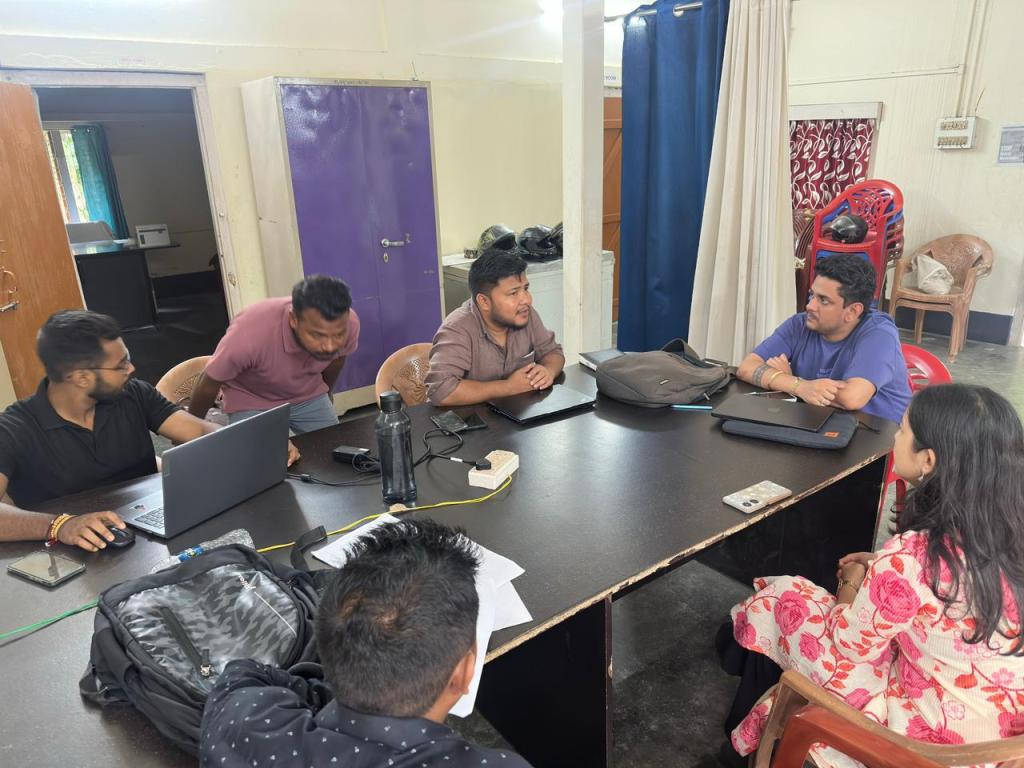
Kabil is a more established rural-livelihood organization, working with rural women, tribal communities, and other marginalized households. Their focus is on building sustainable livelihoods rather than one-off assistance.
What they do:
- Agriculture — better farming practices, crop diversification, irrigation, vegetables, SRI, and more
- Livestock — piggery, poultry, duckery, and other livestock activities
- Natural resources — farm ponds, water management, productive assets
- Government schemes — helping communities access MGNREGA, financial services, and other entitlements
- Markets — aggregation, market linkages, and local entrepreneurship
- Community institutions — SHGs, women farmers’ groups, and local cadres
Their approach follows a clear arc: community mobilization → training → productive assets → livelihood → market/government linkages → higher household income.
Their struggles echo BDF’s in some ways, with a few of their own:
- Many of the older, more experienced staff have left the organization, so a lot of new people are now trying to manage the full scope of programs in Udalgiri.
- They’ve collected data for 2 blocks covering 15,000 households, but haven’t figured out how to integrate this into a proper MIS. For now, they take photos and upload them manually — and everything is scattered.
- They have the data to demonstrate impact, but it sits in raw Excel format, which isn’t presentable to funders.
What This Trip Taught Me
Matching the right funders to the right CSOs — and vice versa — is far from a straightforward task. The challenges show up at multiple levels:
- Visibility: many CSOs simply don’t get noticed by CSR funders, and often don’t know which funders to even approach.
- Data and systems: a lack of reliable data makes it hard to present the right numbers, or even know which KPIs matter.
- Alignment with broader priorities: CSOs need their programs to align with government plans and be able to show secondary research on their impact at a larger scale. This is where I learned a new term: SROI (Social Return on Investment).
For instance, a livelihood program shouldn’t stop at saying “we trained 10,000 women.” A stronger impact case would trace the full chain: 10,000 women trained → 7,500 adopted the intervention → average household income increased by ₹X → Y% sustained that increase after 2 years → Z% improvement relative to comparable households → ₹X of social value generated per ₹1 invested.
Building this kind of case — mapping an NGO’s programs to broader government priorities and the UN Sustainable Development Goals — takes real time and effort for these organizations.
- Fragmented processes — every funder has different templates, some with very tight word limits.
- Time-consuming proposals — on top of the paperwork, funders often send someone to visit with their own separate checklist.
Next Steps –
These are the key layers of work involved in moving from identifying the right funder to developing and submitting a realistic proposal, so we will dive deep with two ngo’s later in this month.
- Funder discovery
Identify funders that are actively interested in the region, sector, and type of work the CSO does. - Funding trends
Analyze whether a funder’s giving is increasing, decreasing, or shifting across different areas. - Thematic & geographic fit
Understand what themes and geographies each funder supports and identify where there is a genuine match with the CSO. - Funder contacts
Find and verify the right contact points within the funding organization to improve the chances of meaningful outreach. - CSO + secondary research
Combine the CSO’s own program data with external research, government priorities, SDGs, and regional needs to build a stronger case for why the intervention matters. - Proposal preparation & AI-assisted checks
Help fill different funder templates, identify missing information, check alignment with requirements, and score the proposal for further refinement. - RFP–CSO alignment
Compare the RFP’s scope and requirements with the CSO’s expertise, geography, existing programs, and proposed intervention before deciding whether to apply. - Budgeting
Develop realistic budgets using relevant benchmarks and funder expectations around staffing, overheads, program costs, and beneficiary-level costs. - Impact & measurement
Define clear indicators that connect activities to outcomes, so the CSO can demonstrate what changed as a result of the funding and how that impact will be measured.
A Short Detour to Majuli
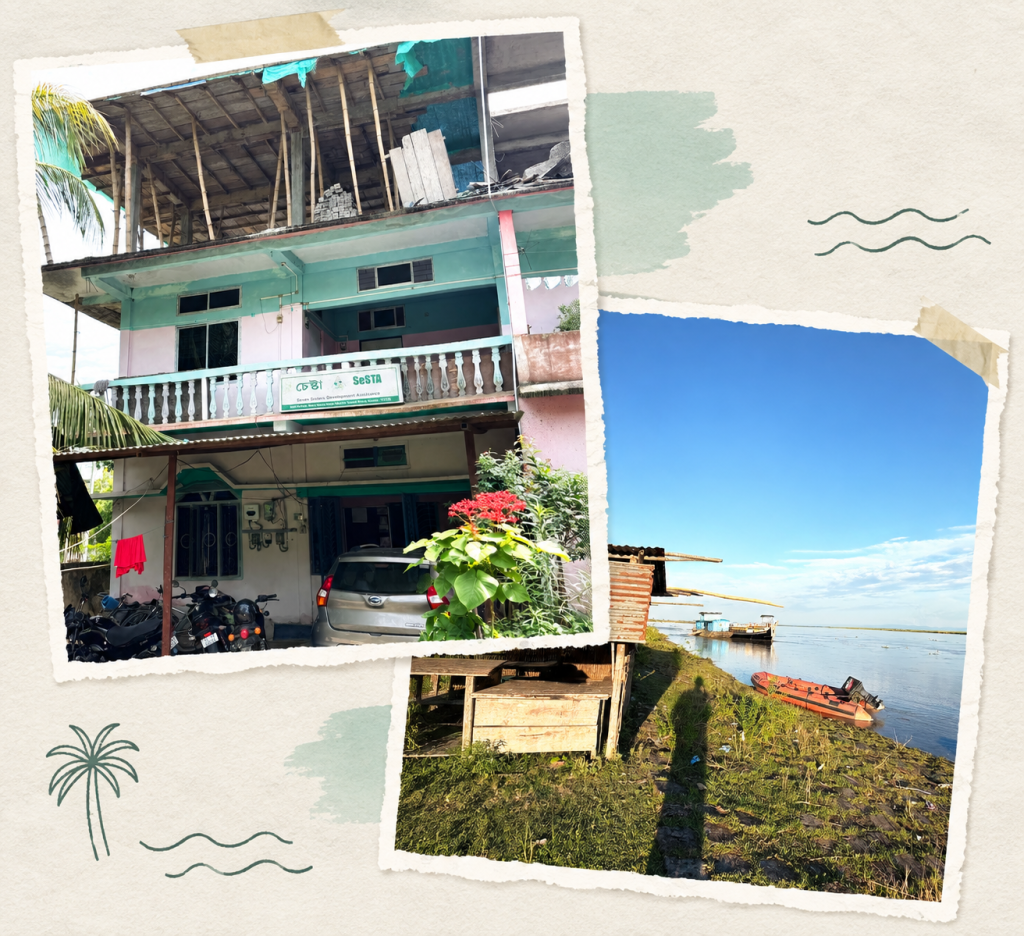
After the SeSTA meetings, I also spent two days in Majuli, based on a recommendation from the SeSTA team. They suggested a few places and people I could explore while I was there, so I decided to make the trip.
I visited the SeSTA office in Majuli and spent some time at a few of the Satras, which gave me a different perspective on the culture and history of the region.
I also happened to meet Ayan Trust, whose office was just about 100 metres from my hotel. They told me that they also collaborate with SeSTA on livelihood programs, which was an interesting connection to discover completely by chance.
And beyond the work, I spent the two days exploring Majuli and its rivers. The landscape was beautiful, and spending time around the rivers was probably one of the highlights of the trip.
It was a nice change of pace from the more structured conversations around fundraising and CSOs, and a reminder that understanding a region also means spending time outside meeting rooms and offices.

