
Found myself hopping over September between the laid-back vibes of San Francisco, nature calls of Yosemite and the Redwoods and the non-stop hustle of New York City. It was one of those trips that had lots of stuff – the kind of travel where everything feels both connected and totally random at the same time. Here’s my musings of the trip on everything from outdoor escapes to conversations with funders and changemakers and of course AI (we can’t have a trip report now without it, can we ?).
It all started on the West Coast, where I spent a lot of time exercising and being outdoors. I had planned it to get a week of time doing a lot of stuff outdoors, before diving into my element of long conversations and meetings (not!), which I haven’t been able to do much over the last year. Lobo and Mari were amazing hosts and joined me on my hikes in Muir Woods and Yosemite – Lobo graciously allowed me to set the pace and thankfully I didn’t kill myself on all the hikes and indoor climbing we did over 5 days. The best part about doing this right after I landed was having no jet lag at all this time compared to my previous visit back in May – remember vividly the second day hiking down to Stinson Beach in the afternoon, getting some icecream there and feeling like I could just curl up and sleep but the steep incline from the beach on Dipsea trail woke me up and kept me up all the way for me to hit the sack at 9pm.
One of the highlights of my trip was meeting Hechin Haokip from the Centre for Women and Girls, Manipur and Manohari Doss from the Institute for Self-Management, Tami Nadu representing the Rebuild India Fund. Hechin’s stories of the difficult situation in Manipur and the work they are doing in spite of that really stuck with me. To hear one – it took Hechin nearly as long to get from Manipur to Delhi as it did to fly from Delhi to San Francisco, all because of the internal strife back home was. There were more heart wrenching stories of running away from mobs, assault etc. Yet, when you hear her talk, there’s no frustration—just quiet determination. Felt like I was more upset and frustrated about the situation than her.
She’s been leading efforts to empower women at the frontline in Manipur; her points were simple but powerful: change doesn’t come from external forces swooping in with big solutions. It happens when communities, especially women, lead with dignity and resilience. Honestly, it made me rethink how disconnected we can get when we focus sometimes too much on big strategies and not enough on the actual people driving change on the ground. I think there is a space for both organic change within communities driven at the grassroots level and big strategy driven system change. Hope we at Project Tech4Dev can really push forward later this year on a circuit runner approach with local technology help guided by our Fractional CxOs to really enable these grassroots organizations to use technology to be more efficient (in whatever ways they need it – be it in maybe website help, setting up efficient monitoring using Google Sheets, internal processes etc) – a way different endeavor than our current Fractional CxO program aimed at larger nonprofits with much bigger and more programmatic technology needs.
Our SF own experimental funder-community building dinner was an opportunity for me to meet some of Tech4Dev’s funders and quite a few other philanthropists in the Bay Area. Lots of questions and interest in the work being done by us and the other orgs at the event – SNEHA, Dream a Dream and the Rebuild India Fund orgs. Wish had actually had more time to talk to a few people that I was starting to have interesting conversations over but ah well there’s always another time when it is not so frenetic. Dasra Philanthropy Forum (DPF) in NYC was another whirlwind with all the panels and me moderating one of the panels on Tech/data fuelling social impact and also part leading a roundtable on AI and use cases in the social sector. Not a lot of work – more of asking a few questions, shutting up and listening to folks such as Vanessa@SNEHA, Sucheta@Dream a Dream, Rebecca@Social Compact, Manu@Karya, Raghu@ARTPARK etc.
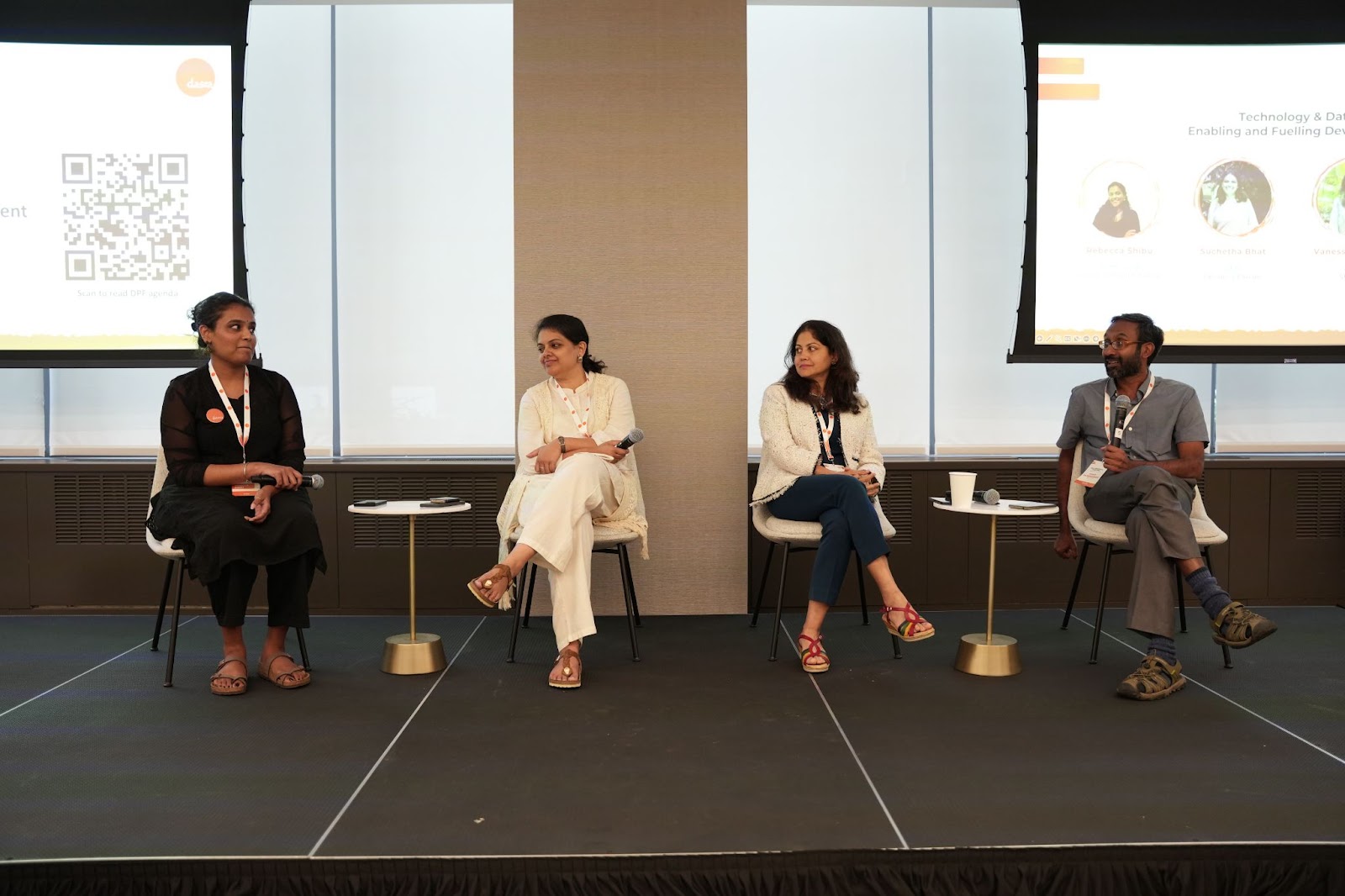
Between side events of UNGA, DPF and our own experimental funder-community building dinner, I found myself “mired” deep in sessions and conversations filled with fancy words. Kuldeep from Reap Benefit, who was also on the “panel” circuit, nails it in his LinkedIn post, “It’s all nouns and adjectives, but no verbs.” Lots of talk about strategy, but when it comes to action? Crickets. Sure, it’s exciting to be part of these conversations, but is there real value in these fleeting interactions with funders – does a line for funders at DPF with a lot of folks barely getting a 5 min quick snap session with a funder mean much? Honestly, I see the point that the funders want to see the faces behind their philanthropy efforts and have these conversations, but are we all just pretending these face-to-face moments will actually lead to something meaningful?
Of course, no trip is complete without a dive into Generative AI. Everyone and their dog/cat or hamster is talking about it, but let’s be real—how many people actually know details of what they’re saying? The roundtable at DPF with folks like Raghu from ARTPARK and Utkarsh from Adalat.ai was super participatory (way more than we expected that we were happy to dump the script) and we all agreed – there are real, meaningful use cases for AI, but not every situation needs generative AI or even AI. The challenge is figuring out where AI adds genuine value, rather than throwing tech at a problem just to feel innovative. It’s tempting, but sometimes the most impactful solutions are the simplest ones. Also, had a similar conversation on GenAI and other more debatable conversations on Tech4Dev’s platform/DPG model to IDInsight’s project based solutioning model with Sid from IDInsight during a 2-hour walk from Brooklyn across the Brooklyn bridge into almost Central Park.
On the flip side for GenAI, Thack (Empowerment Foundation), Erica and I had a stimulating conversation on what standards are we holding GenAI to especially as we look at Global South’s needs – where would we stack a GenAI based nurse assistant vs a pharmacist or a local doctor on the street who are likely to prescribe a course of antibiotics for anything ranging from a fever to cough/cold and/or diarrhea. End of the day for the people in these tough communities, would GenAI help or should we be holding it to the standards of the West and expecting accuracy levels that really are far above what they would be getting today from “trained” humans? A more controversial question but is very real and choices of solutions and standards we hold for these solutions have to really be use case driven and not hypothetical exercises.
So, after bouncing between funders, NGOs, AI panels, and personal chats, I couldn’t shake one question: Are we talking too much and doing too little? It’s easy to get caught up in the buzzwords and intellectual exercises. It is easy to talk about Dignity in a cushy room in NYC but how does that translate into action – was great to hear from leaders like Meenakshi and Anshu on what they are doing and their thoughts on how they work but hey how does that look like in the everyday real world for most of us – is it talk and panels to delegate action or is that how we translate that into everyday actions in the way we work and interact in the communities we are hoping to give and learn back at the same time?
Until the next post (Lobo would surely like me to write more blog posts and push for that), where I’ll probably question all of this again—but for now, I’m sticking with: shut up, get out and do more. A couple of things for me to work on over the next 6 months – Get my butt off Chennai and go stay with a few non profit communities and really learn from them. Work with Rebuild Fund and see if we can help enable the orgs that Rebuild works with through technology.


