
It’s been a while since I wrote a blog. This one’s about day one in Bangalore, where we’ve gathered for the upcoming team sprint and developer sprint, so expect a bunch of more posts in the coming weeks.
This time, it felt different—like I have become a veteran at Tech4Dev, with the baton slowly passing to us. It reminded me of two years ago, when it used to be me, Shamoon, and Siddhant heading out a few days early before the sprint with Lobo taking us to different NGO offices. This time it’s me, Nishika, Amisha, and Akansha. We landed a couple of days before the developer sprint and planned visits to ATREE and ReapBenefit.
We started our Monday early morning around 7 and then headed out to our first stop: breakfast. The place we wanted was shut, but we found another spot nearby and stuffed ourselves with South Indian food.
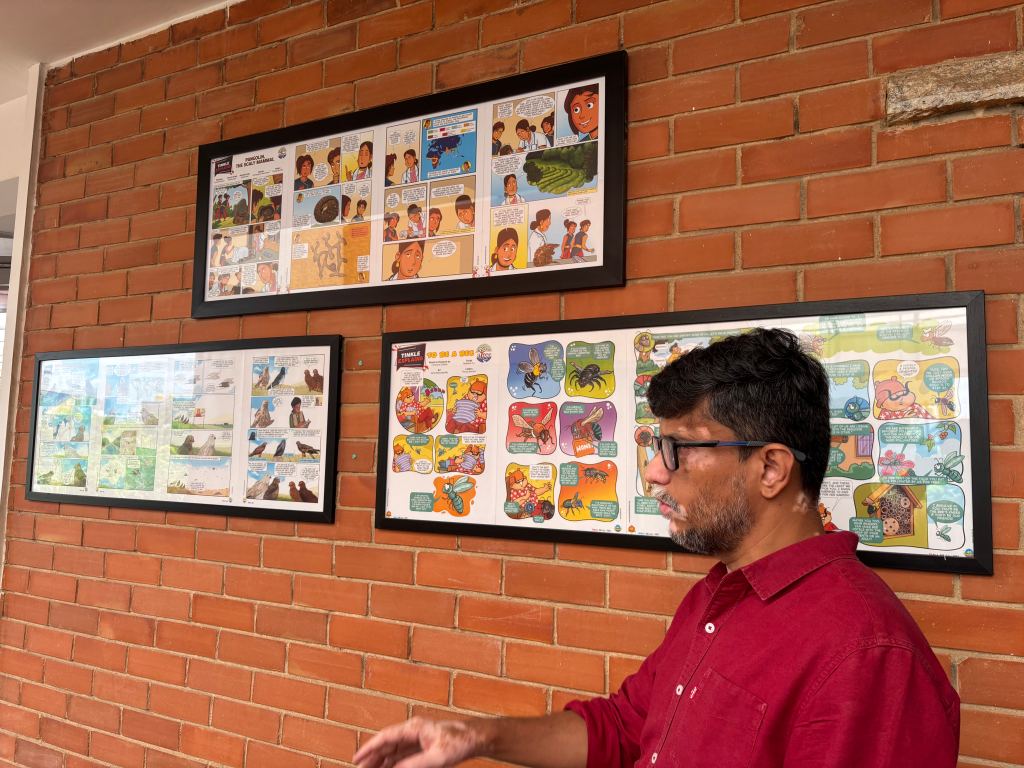
By 9, we reached the ATREE (Ashoka Trust for Research in Ecology and the Environment) office. Beautiful place—lots of greenery, a fish pond, airy buildings, and a terrace that is breath of fresh air anyone can get when need break from long screen hours.


Devi joined in as well. We then had our usual standups from their office, and then Vijay gave us a tour. Around 11, they usually serve coffee on the terrace, which is surrounded by plants and open space. We got there a bit late, so the coffee was gone—settled for black coffee(decoction with water) and tea instead.
For lunch, we went to a spot called CTC(Choudhary Tara Chand). The food took forever to arrive, but once it did, it was worth every minute. Mutton Nihari & Kali Mirch Chicken are a must try I must say.
At 2, Vijay and Sahana from ATREE arranged a tour of the insect lab. Sahana explained how they go out into the field, collect insects, bring them back, study them under the microscope, and then record their genome and taxonomy. At ATREE, they even have samples that are more than 20 years old. They also spoke honestly about the challenges of doing this work full time—funding is much tighter here compared to Western countries. Even publishing new discoveries can take 4–5 years in India, while it might only take a month or two elsewhere. They also showed us a new variety of ant they discovered, which they got to name Neela.


We then met Sujata Seshan, who’s now Director of Development at ATREE. Before this, she founded 17000 ft Foundation and built it up to where it is today. She talked about her journey into the social sector—how she came from a tech background, left it behind, and now jokes that her tech knowledge is “outdated.” She asked us how we found our way here in social sector. She then shared how tech can be enabler and not a solution, as the ground reality may be very different and just asking beneficiaries to start using tech solution can be painfully slow.And after working for so long it may feel like the needle hardly moved an inch
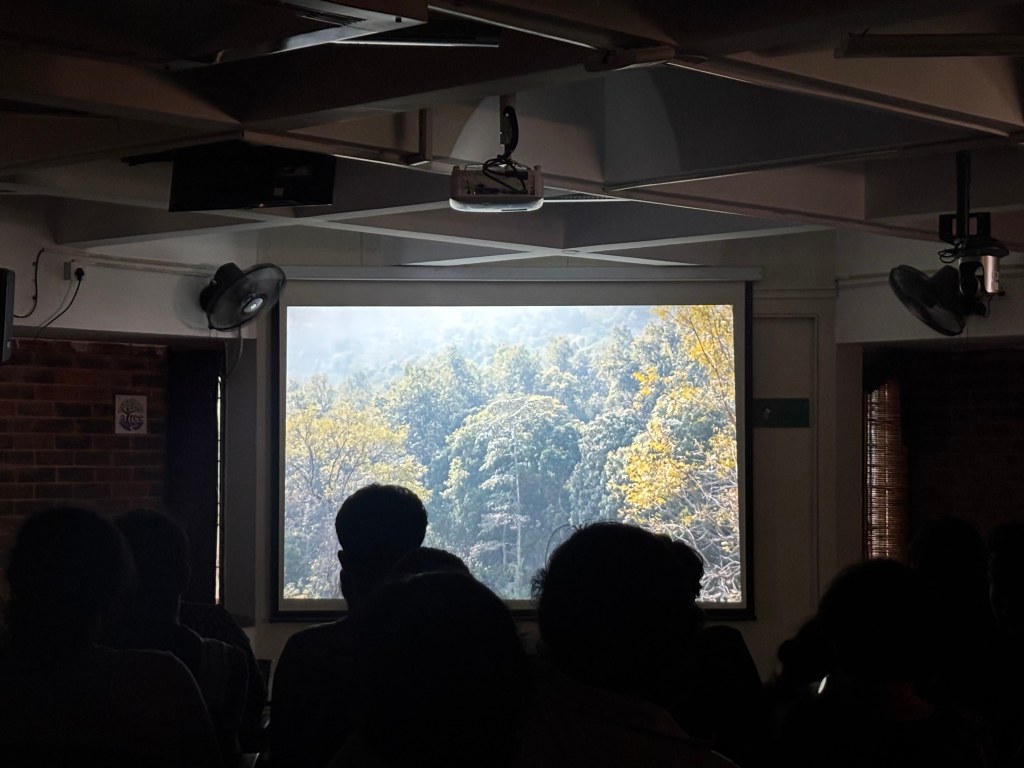
Worked for some time and then joined the Film screening at ATREE: Humans in the Loop
The film follows an Adivasi woman from Jharkhand who, while trying to make ends meet, takes up data labeling work for AI systems. As she goes along, she begins to see the hidden biases, ethical dilemma, and disproportionate impact it may have in people’s lives.
Takeaway
- In one scene, the protagonist tells to their program lead that AI is like a child—it only learns from what you feed it. Garbage in, garbage out. Later, when she tries to explain this in one of his work days where an insect on a crop that eats only the infected part and shouldn’t be called a pest—the lead shrugs it off, saying, “Well, orders come from above to label it as pest.” That’s the problem. People in the field usually know better, but if you only follow the hierarchy, you miss the ground reality. Relying too much on AI means it’ll often sound right, but sometimes it won’t, and people might still take it as truth.
- In another scene, she asked the system to generate an image of a beautiful Indian woman from Jharkhand. Instead, it gave her a blonde woman with Western features. When she tried again, it generated an image Native American woman(Indian Tribe). The dataset was trained with U.S. images, so its idea of “beauty” leaned that way. It shows how biased data can twist things—whether it’s crops or culture.
After that, we went for coffee with Vijay at Lakehouse Restocafe. He shared some wild stories from his corporate days—back when phones weren’t such a distraction, and he used to work insane hours. He shared an incident when he worked 46 hours straight and still drove home after. We also found out that Vijay and Thomas even went to the same college.
Got back home, changed, freshened up, and then headed out to meet Siddhant, Himanshu, and Ishan for dinner at Chin Lung Brewery in Indiranagar. Came back late, and just crashed as we’ve planned for an early start tomorrow morning to visit the Reapbenefit office.
At last, Big thanks to Vijay for arranging the visit to the ATREE office and the entire ATREE team for having us over. Can’t believe he never mentioned how great the place is but I guess it made the surprise even better. Thanks again Vijay!


