
I recently had the incredible opportunity to attend the AI Cohort Program in Bangalore, a groundbreaking initiative launched by Project Tech4Dev and The Agency Fund in September 2025. This program is designed to meaningfully support the development sector in designing and building responsible AI solutions, while also fostering learning about the practicalities of AI adoption for social impact. It was truly inspiring to witness the depth of interest and intent to experiment with AI among various NGOs.
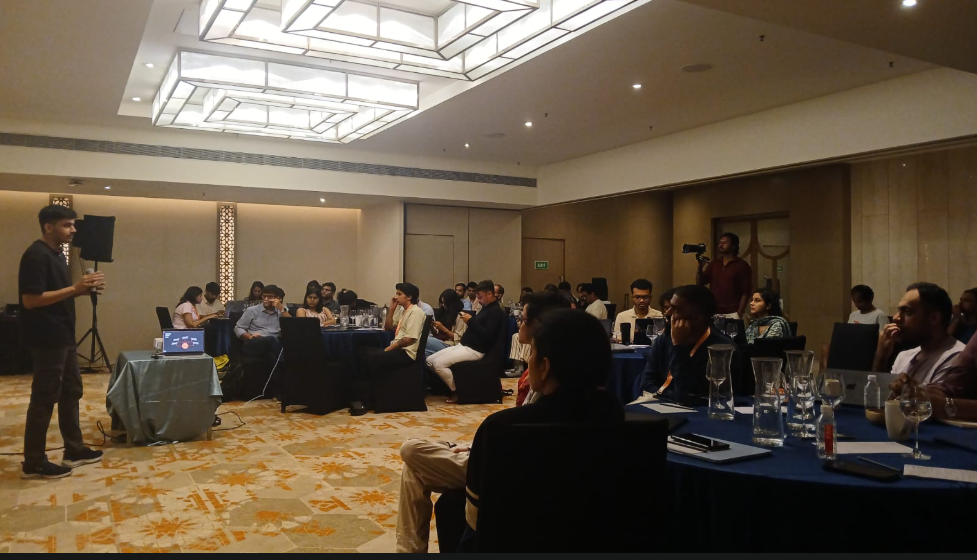
Out of 27 applications from NGOs across education, health, livelihoods, gender, and governance sectors, seven organizations were ultimately selected for this pilot cohort. Each of them is tackling a unique, pressing problem, and their approaches to leveraging AI are truly insightful.
Let’s take a closer look at these inspiring organizations and their AI-powered visions:
1. Avanti Fellows: Personalising Learning for STEM Success
Avanti Fellows is dedicated to helping low-income students in government schools achieve stable, high-paying careers in STEM, with a focus on equitable representation for girls and access across public school systems.
The Problem: Students often lack personalized study guidance, leading to inefficient test preparation and potentially hindering their learning outcomes.
Leveraging AI: Avanti Fellows aims to build a Multi-Factor Recommendation Engine and an LLM Recommendation Engine.
- The Multi-Factor Engine will analyse student performance across tests, considering difficulty, chapter priority, and time analytics, to provide strategic question selection recommendations tailored to each student’s potential.
- The LLM Engine will identify underlying learning patterns, topic relationships, and performance gaps that traditional methods might miss.
Expected Impact: Improved test prep strategies, personalized learning paths, reduced time wastage from low-impact questions, and ultimately, improved test scores through strategic question targeting. Their broader AI vision includes chatbots, AI-generated reports, and career guidance to boost student learning outcomes and operational efficiency.
2. IPE Global: Predicting & Preventing Adverse Pregnancy Outcomes
IPE Global provides innovative solutions for sustainable development, partnering with various entities to deliver cost-effective, scalable, and sustainable solutions that foster human development, inclusive growth, and good governance.
The Problem: Identifying households or individuals at risk of low birthweight (LBW) and other adverse pregnancy outcomes is a significant challenge, requiring proactive, targeted interventions.
Leveraging AI: IPE Global plans to develop an AI/ML model to predict households or individuals at risk of low birthweight and adverse pregnancy outcomes.
- This model will utilize cleaned and validated program data, and in a later phase, be deployed with public datasets to predict and prioritize at-risk households for targeted interventions at state and national levels.
Expected Impact: Short-term, it will identify at-risk individuals for immediate targeted strategies. Long-term, it will accelerate the reduction of LBW and adverse pregnancy outcomes through predictive modeling and interventions, enabling evidence-based policy and optimized resource allocation.
3. Inqui-Lab Foundation: Nurturing Student Innovation with AI Mentorship
Inqui-Lab Foundation strives to nurture problem-solving capacity in the next generation by connecting them with real-world challenges and fostering essential 21st-century skills.
The Problem: With a massive volume of student idea submissions (~3,50,000 annually) and project worksheets, manual evaluation is inefficient, lacks skilled evaluators, and deprives students of crucial feedback for improvement.
Leveraging AI: Inqui-Lab aims to use AI as both an evaluator and a mentor.
- AI as an evaluator will optimize the idea evaluation process for innovation marathons, efficiently handling large volumes and positively impacting cost, time, and quality.
- AI as a mentor will bridge the mentorship gap, ensuring every student receives meaningful feedback, supporting them to learn, iterate, and improve their ideas, thereby enhancing their learning experience and developing higher-order cognitive skills.
Expected Impact: Their solution design involves dual AI models (GPT-4o, Gemini 1.5 Flash) to provide multi-dimensional and educational feedback. Their AI vision is to democratize access to expert-like guidance for students from under-resourced communities.

4. Simple Education Foundation (SEF): An AI Buddy for Teachers
SEF is on a mission to equip 1 million teachers with the skills and mindset needed to prepare children for India’s future.
The Problem: There’s a significant gap between initial teacher training workshops and ongoing coaching visits, meaning teachers often lack continuous, contextual support and opportunities for reflective practice in their daily classrooms.
Leveraging AI: SEF is developing an AI-Powered Teacher Buddy on WhatsApp.
- This innovative tool will provide teachers with on-demand contextual classroom strategies and resources, bridging the gap between training and actual classroom practice. It will also enable reflective discussions to inform holistic teacher evaluations.
Expected Impact: Teachers will receive continuous support, training practices will be contextualized, and states will gain real-time teacher evaluation data to better target support. SEF envisions AI unlocking new possibilities for education systems to make smarter decisions, personalize learning, and scale effective practices.
5. SNEHA (Society for Nutrition, Education and Health Action): Early Risk Detection in Pregnant Women
SNEHA partners with communities and health systems to create sustainable, evidence-based solutions that empower women and families in vulnerable settlements, aiming to break the intergenerational cycle of poor health.
The Problem: Early identification of medical and social risks in pregnant women is crucial for timely interventions, but often challenging due to complex socio-economic factors and subjective assessments.
Leveraging AI: SNEHA proposes building a predictive model using Artificial Intelligence and Machine Learning to detect early signs of medical and social risks in pregnant women.
- This model will determine ‘whether’ and ‘when’ a woman may transition into low, medium, or high-risk categories during her pregnancy, enabling timely, targeted interventions to strengthen maternal health outcomes.
Expected Impact: Early identification of at-risk pregnant women, timely and tiered interventions, optimized resource deployment, and improved maternal health outcomes. Their AI vision also includes using AI Chatbots for targeted interventions, providing 24/7 availability.
6. Samanvay Foundation: Empowering Non-Profits to Build Their Own Apps with AI
Samanvay Foundation builds open-source software products for the non-profit sector, including Avni, a SaaS data collection/case management platform.
The Problem: Organizations adopting platforms like Avni often require significant support to configure and create applications for their field programs, making initial adoption slower and more resource-intensive.
Leveraging AI: Samanvay aims to build a copilot for Avni, allowing users to create applications with limited support from the team.
- This copilot will make the initial adoption of Avni faster, easier, and more cost-effective, encouraging more organizations to use the platform independently. Their solution design involves using tools like Dify for orchestration and chat UI, and integrating OpenAI API for LLM models.
Expected Impact: Increased adoption of their open-source platforms, reducing the barrier for non-profits to leverage technology. Their long-term AI vision is to gain enough expertise to build other valuable AI products for the sector, such as tools to support cancer patients or help people navigate social security schemes.
7. Quest Alliance: Bridging Learning Gaps with an AI Buddy, AskAbhi
Quest Alliance envisions a world where all young people take charge of their future and drive equitable social and economic progress, innovating for “future-ready” learning ecosystems.
The Problem: Many learners fall behind because they don’t get timely support, face unanswered questions, lack accessible resources, and have limited trainer availability, all of which disrupt the flow of self-learning.
Leveraging AI: Quest Alliance is building AskAbhi, an AI solution available 24/7 across voice, text, and images.
- AskAbhi will bridge this learning gap by providing clear answers, explaining concepts, and delivering adaptive nudges to sustain curiosity and ensure learners stay engaged, without solely depending on classroom capacity.
Expected Impact: Improved learning outcomes for young people by providing continuous, personalized support and fostering self-learning, aligning with their broader strategy to grow impact manifold and mainstream tech-enabled learning experiences in public systems.
The AI Cohort Program is a brilliant step towards empowering the development sector with responsible AI solutions. This was an open-door program, where all the sessions will be uploaded on YouTube, to benefit the larger ecosystem. It’s truly exciting to see these organizations not only envisioning but actively building tools that can make a tangible difference in the lives of millions. These pilot projects, if successful, have the potential to inform broader AI use across the sector, creating a wave of positive social impact.
You can go through all the presentations of the NGOs in the following drive link for detailed context. Stay tuned for more updates on these incredible initiatives!
-Sunayna Chaudhury
Business Analyst, Data-Tech-AI, Dasra.


