
Blog by Ishan
Looking back at 3.5 years of building and scaling Dalgo, the lessons along the way, and the people who shaped my journey.
Recently, I made a difficult decision to leave Project Tech4dev, where I spent an amazing 3.5 years building and scaling Dalgo (GitHub). Dalgo is an ELT platform with visualisation and reporting capabilities that helps nonprofits build their data capabilities.
It’s been two weeks, and it still feels surreal. I still wake up and feel inclined to check my calendar for calls and stand-ups. Tech4dev was never a 9-to-6 job for me. The job felt more like being part of a “tribe”, a close-knit community where we all worked towards a common goal: helping nonprofits and NGOs build the data and tech capabilities they need to run their on-ground programmes efficiently.
I distinctly remember my first interview for the Engineer position at Dalgo (and Tech4dev). It was Lobo, Vinod, and Siddhant on the call. I think I fumbled a bit and couldn’t answer one or two questions clearly, but I got the approach right. That was the bet Tech4dev took on me, and I’m so glad they did.
The first year at Dalgo was quite a learning curve. We didn’t have a platform in place, and my job was to run experiments and figure out which open-source tools we could use to build Dalgo. I was definitely out of my comfort zone. I wasn’t familiar with some of the technologies in Python, and it was the first time I’d heard terms like “data pipelines”, “ingestion”, “orchestration”, “ETL or ELT”, etc. And this was all in the pre-agentic era, when I’d still turn to Stack Overflow to help me with questions.
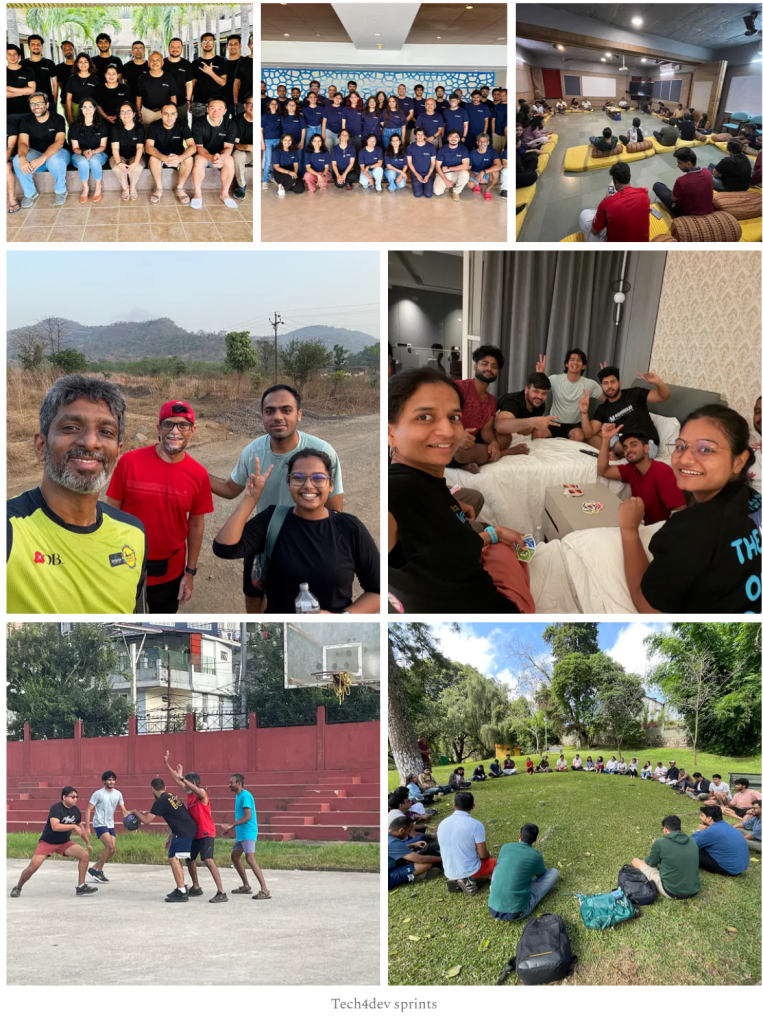
During my first year, I also had to interact with funders, NGOs, and my fellow peers. Being an introvert, this communication didn’t come naturally to me. I would mostly be sweating through the sprints (Tech4dev organises quarterly meetups where the entire organisation comes together at one location to work for a week. Sometimes, NGOs and funders join us too) whenever I was asked to talk to people, explain Dalgo, or understand the data-related challenges they were facing.
One statement I picked up during a sprint, while talking to the leadership at Tech4dev, was: “Technology can never be the entire solution; it can only be an enabler.” This has stuck with me throughout my time here and fundamentally changed the way I look at products. I now think about the user first rather than the technology behind it. The whole game is to understand the user and figure out what to build, rather than just how to build it.
I’ve attended at least 8–10 sprints during my time here and made so many memories with my teammates and peers. From early morning walks and engineering discussions with developers from other verticals to eating amazing food together and having late-night conversations (although I’m an early sleeper, some people wouldn’t let me!), there’s a lot I’ll look back on fondly.
The pace at which our team worked also taught me a lot about time management, setting expectations, and, most importantly, saying “no” when a deadline wasn’t realistic. I wasn’t used to saying no to people before this. Our team was also quite dynamic, in the sense that everyone had a voice and felt comfortable expressing their ideas, opinions, and concerns freely.
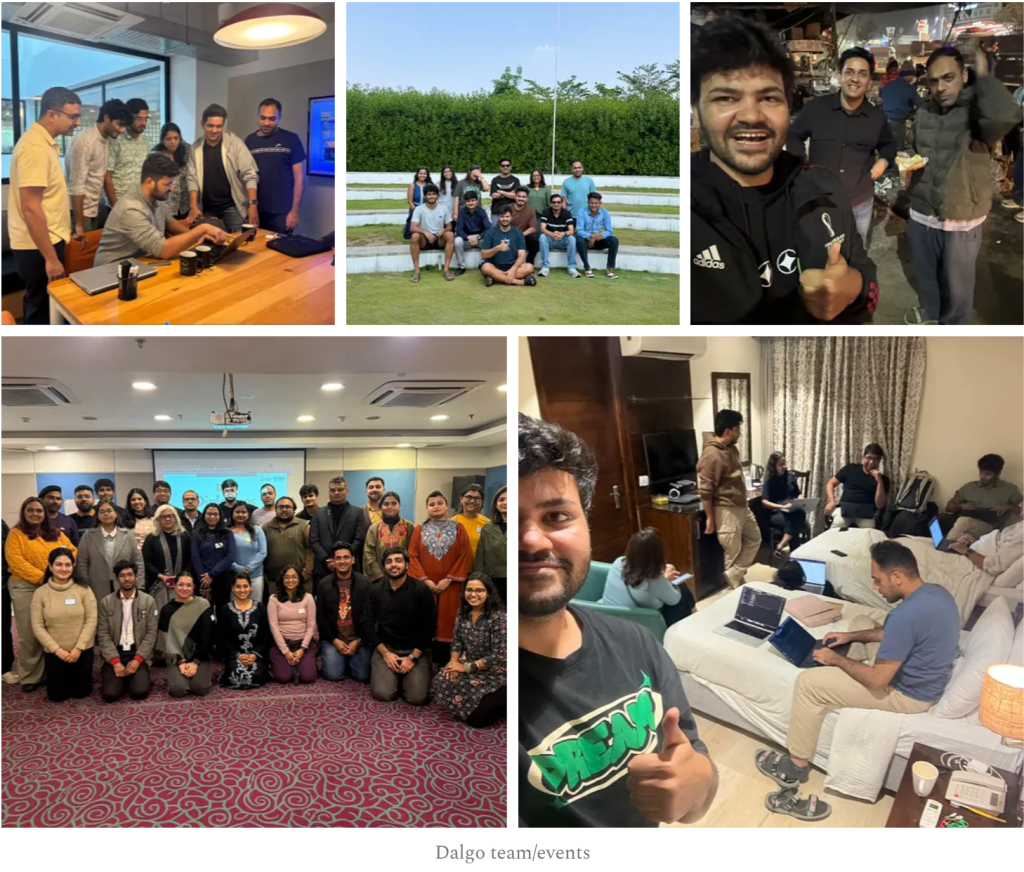
The latter half of my journey at Dalgo was largely about scaling the platform to support more clients. I spent quite a few weekends and sleepless nights working on this so that I could sleep peacefully later! This is probably the challenge I’m most proud of taking on at Tech4dev (more details here). There were plenty of engineering learnings along the way, but one lesson that I learned the hard way, and one that has stuck with me, is that assumptions kill.
One of the most fulfilling parts of this journey has been seeing Dalgo being used by organisations working across such diverse sectors. From STiR Education working towards improving learning outcomes for children, to Ummeed working with children with developmental disabilities, SNEHA working in maternal and child health, and A.T.E. Chandra Foundation working on waterbody rejuvenation — it’s been quite something to see the platform being used in such varied contexts.
What’s particularly rewarding is knowing that the work we did on the engineering side translated into something tangible for these organisations. For instance, STiR was able to bring down its monthly reporting process from an entire week to just an hour. SNEHA’s teams went from waiting for monthly reports to accessing data as soon as the next day. These are just a few examples of how better data infrastructure can help organisations spend less time managing data and more time using it to make decisions and improve their programmes. It’s quite satisfying to know that something we built is playing a small part in the work these organisations are doing on the ground.
As I look back at these 3.5 years, I feel I’ve grown immensely, both as an engineer and as a person. But I also feel it’s time to step out of my comfort zone again, challenge myself, and explore a different set of problems. I’m looking forward to working with an organisation operating at a much larger scale, where the work has the potential to impact millions of lives. There’s a lot to learn, a lot to figure out, and I’m excited (and perhaps a little nervous!) about what’s ahead.
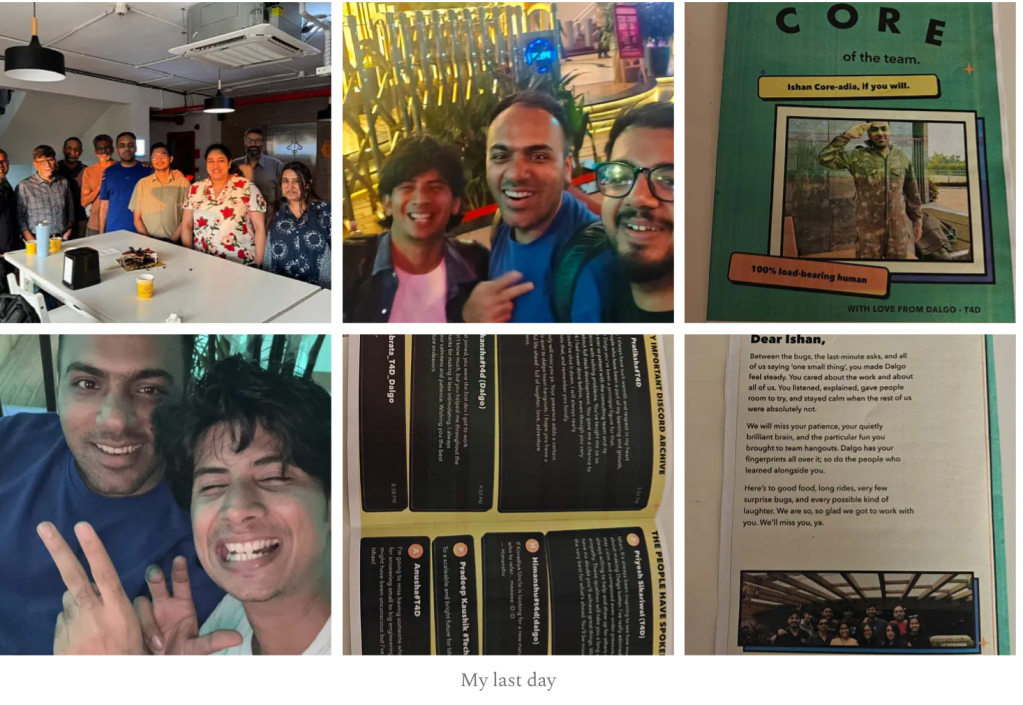
But before I wrap this up, I want to take a moment to acknowledge and thank some very special people who have been part of this journey. This journey wouldn’t have been the same without them.
- The Dalgo team – I’ve learned so much from each and every member of this team. From how to communicate with clients and approach problems to how to think about and experiment with AI. There’s something I’ve taken away from every interaction, discussion, and collaboration.
- Rohit (Mentor/Manager) – Although Rohit has since moved on from Tech4dev, he was a significant part of my journey. One of the most important things I learned from him was the value of writing, whether it was planning documents, design documents, or simply reflecting on experiences through writing (like this one!).
- Pradeep (Mentor/Manager) – From Pradeep, I learned how to stay calm, structure my thoughts, and put them across in a room, especially when there are conflicting opinions and perspectives. It’s a skill I’ve come to appreciate a lot.
- Himanshu and Siddhant (Engineering peers) – From our late-night debugging sessions and morning chai conversations to our side experiments (most of which failed!) and constantly pushing each other to get better at our craft, I’ve thoroughly enjoyed working with these two. I’ll miss these interactions!
- Thomas (My go-to mentor) – I’ve learned a lot from Thomas, but two things stand out. First, how to think from first principles and break problems down to their fundamentals. Second, his approach to getting things done: it doesn’t matter how many hours we’ve put in; the job isn’t finished until it’s finished. Both are lessons I’ll carry with me. And also he is the best city admin for our weekly meetups !!
A big thank you to everyone at Tech4dev for making these 3.5 years so special. While I’m moving on, I’m not moving away from the community or the cause. I’ll be around in Bangalore, so I’m always up for a coffee, a catch-up, or just a good conversation.

