
This quarter has been a rollercoaster for the Glific team and the platform. Here are a few ups and downs through the 3 months – ↑Added 3 new team members + MarComms lead. ↓Struggled with onboarding new NGOs. ↑Concluded 6-month accelerator cohort of 30+ NGOs. ↓12 NGOs churned. ↑Released multiple new features. ↓Had over 8 production incidents. ↓WhatsApp price change – panicking us and NGOs. ↑Showcased Web Channel as alternative. ↑Got connected with WhatsApp/Meta. ↑First conference – GlificConnect 2026. ↓Sustainability took a hit. ↑Changed team structure. ↑Kicked off Glific 2.0. ↑Hit peak at 13M msgs/month!!

Glific’s message volume graph – symbolic of the ups and downs of this quarter 🙂
We kicked off July with an organization level employee survey. A broad theme showed up – the Glific team was struggling with work-life balance and was feeling stretched. While I knew a couple of folks were stretched, this theme wasn’t expected. We dug deeper and found a couple of key reasons – 1) Accelerator cohort mentoring mainly for Customer Success team who took on 8-11 orgs per team member and 2) the expectation to move fast using AI. In hindsight, the team agreed that a cohort should ideally be 3 months long, 6-months doesn’t keep the same momentum and wears off on both NGOs and the mentor. We also acknowledged that for big cohorts we should hire additional mentoring bandwidth. The latter one was trickier. It seems that in moving faster, we appeared to be moving slow. The team had a roadmap for the last quarter (Q1), but we’d pulled in several “small” AI-enabled features thanks to the momentum from everywhere else. We took up referral campaign and win-back campaigns that had the promise of higher conversions but didn’t yield much in reality; though it took a decent chunk of time and mind space. This reality check helped in resetting Q2 – instead of doing too many things, we looked at bigger chunks of a few.
Moving away from adding disconnected AI features, we stepped back and worked on the AI orchestration backend for the platform. Akansha spearheaded this initiative following the AI cohort boost from building the Ask Glific bot – an AI surface on the platform that helps answer users’ questions. This was to set the stage for upcoming Glific 2.0 initiative – the essence is to have an AI-forward platform: Programme (or an organizing concept) becomes the new information architecture, and an AI layer handles ideation, building, scheduling, and analysis on top of it, gated by human approval at every step. In parallel, the Kaapi team (another Tech4Dev initiative) built and pushed out another round of AI Evals feature on Glific, receiving several accolades from the NGOs for its ease of use and intuitiveness.
The Ebb
As we went on our planned path two unknowns hit hard – WhatsApp decided to change its pricing and start charging for service messages, which were free up until now. This meant all NGOs who didn’t have to pay for messages sent by their bot in the conversation window with their end users, now have to start paying. Engagement was hard to get for most orgs, and now it was going to get costlier. We did several webinars on the topic, wrote blogs, pushed LinkedIn posts; but the panic was looming. And on the other end with the schools in full swing, our education NGOs had started testing the platform’s limits. From start of the quarter at 4M messages a month, we had hit 7 million in August – nearly doubled. Our queues were choking, CPU usage was hitting limits and MemUsage was at the brink several times. End users were impacted multiple times. We had to pivot to having all-hands-on-deck to get the Glific platform resilient and able to scale. Udhyam and TAP, our highest usage NGOs were only starting off, and we had to get ready for Sep through Nov to handle the load and not impact any users.
For those who like the detail, here is what went wrong. Our operational problems between July and September 2026 mostly traced back to capacity and background jobs shared by all organizations on the platform. BigQuery jobs to sync org data have been a gnarly thorn for years now. A BigQuery dedupe query failed silently for about 67 days, undetected, leading to duplicate rows in the five largest tables for every organization using BigQuery, inflating reports and storage costs. Another BigQuery sync bug loaded tens of thousands of rows into memory at once, causing memory spikes that affected all organizations. Flow processing issues also surfaced where a large broadcast by Civic Innovation Foundation exposed a locking gap in our flow engine, which produced more than 38,000 duplicate rows in its Google Sheet against about 7,000 expected, triggered Google Sheets API rate limits, and delayed conversations for other organizations. Udhyam Learning Foundation’s registration program exposed the limits of our shared message worker pool and caused about 41,000 failures (4.9% of inbound messages) across 19 organizations, leaving end users without replies. During the same window, a large TAP contact import caused database lock waits that slowed the whole platform, and a job uniqueness gap briefly stalled outbound messages on all accounts. Udhyam’s rollout again met delays, because Gigalixir, our hosting provider, was throttling us after a CPU allocation that had not been raised. Throughout, no alerts were triggered on stalled jobs or failing syncs, error logs were without organization ids, and AppSignal, our monitoring tool, stopped reporting custom metrics during the late August outage.
To top this all, we had not had much luck with our Referral, Winback and Trails campaigns, even though the team spent significant time in reaching out to the NGOs, checking in and nurturing leads we got through these. The silver lining though was a reinstated confidence in Glific’s USP – Support by the entire team for each and every NGO. The pricing change by WhatsApp didn’t help in getting new NGOs onboarded either. We also seemed to be questioned on our SaaS pricing more often, with comparisons made with Wati, who had slashed their prices drastically. On the other end, retention of existing orgs was proving to be a challenge. 12 orgs had churned this quarter, moving our active NGOs total downwards. We were far behind (by 66%) our 2026-27 projections – targets we had confidence in meeting based on the new campaigns were not met; while churn rate remained the same YoY.
.. and the Flow
With the omnipresence of AI, we saw a behavioral shift in our users. The Ask Glific bot on the platform was being asked to build, fix and provide insight. Our users in a meagre 6 months had shifted from “what is a flow” to “Build a flow”! It was evident that the vision we had written for Glific last year, had to be executed on – fast. All while making the platform more resilient and keeping cost low for our orgs. (man, this is tough!)
As we were wrapping up August, things had already started shifting (gradually) – Our Biz Dev team had to get innovative; and they did. Taking to the pen with several blogs (one on pricing by Sneha), events – attending multiple and hosting our own and doubling down on Webinars – WhatsApp Groups webinar as an alternative to 1:1 bot, our hindi webinar got over 100 registrations adding to our top-of-funnel, reeling in 8 new orgs this quarter. We were full throttle on hiring a senior Product Manager – with Sneha B joining as Principal PM. We were invited to a panel with WhatsApp/Meta at Charcha – for the first time in many years, we had a conversation with WhatsApp about how their pricing changes were affecting NGOs and their beneficiaries. Ops became the highest priority (more on the work done in post-script). We pivoted to building the Web Channel – an alternative channel that can be used alongside WhatsApp by NGOs; released by mid September within a month’s time thanks to Vignesh and Tejas, and showcased to NGOs at the Accelerator closing. Last but not least, the Support team was well ramped up to take on NGO activation to help with retention.
Our revenue was behind target and sustainability was at 62% in H1 instead of 65%. It was evident that we needed a change that the team was not used to. Big shifts were needed. Big bets. Our investments had to increase before our sustainability started increasing again. If we had to build everything in the vision by end of this financial year… from AI enabled building, recommendations, insights, to intuitive user experience, from trials to making payments easy on platform, from impactful consulting to faster NGO activations, from impact driven marketing to conversions; we needed a new team structure – more streamlined, autonomous yet accountable, quick on decision-making and plugged across functional silos. By the end of the quarter, the team was restructured to have single-threaded owners for product, engineering, customer success and sales.
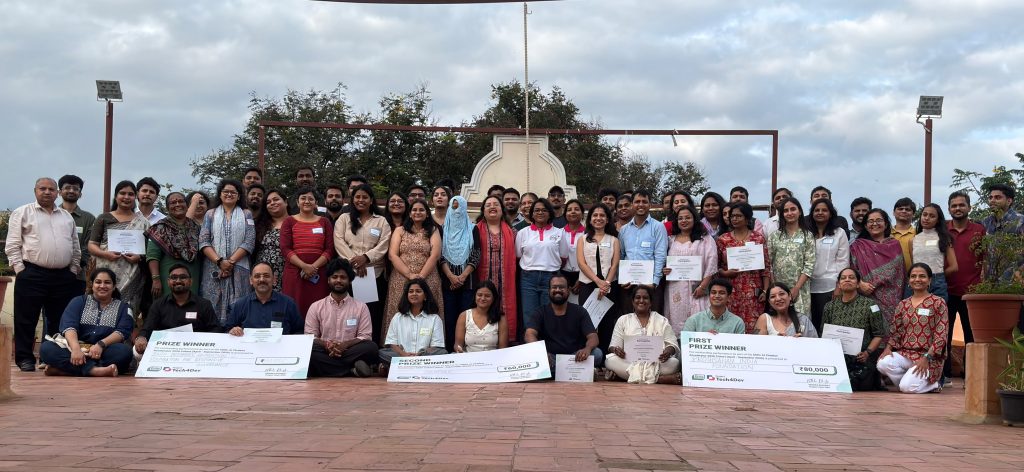

September saw a new high on several fronts – on the team’s ownership, NGOs’ spirits at Accelerator closing, acknowledgements of Project Tech4Dev, Glific and the visibility within the social sector at events like Charcha, our very first (long dreamt of) Glific conference – GlificConnect 2026, discussions on waivers for our NGOs, and highest ever message volume of 13M in a given month – without any major incidents!! The GlificConnect event was a special high for several of us in Tech4Dev – seeing Glific turn a corner and move to a different level of scale in terms of the team, the NGOs, the number of messages, the visibility and acknowledgement of the work we do and so much more. What Aishwarya said stayed with me – “It seems like Glific has jumped another level in a (video) game”!!

The last quarter felt like Glific was coming of age! We are getting a hang of the ups and down, and we are ready to deal with what’s in store for us up ahead. Vignesh’s message in the screenshot to the left reflects the team’s confidence and ownership.
In the next 2 quarters of this financial year, Glific would focus on pushing out Glific 2.0, piloting the Web Channel on ground with multiple NGOs, driving conversions through writing, webinars and cohorts, building up on consulting with larger orgs, making the platform resilient to scale and, last but not least, becoming compliant with the Digital Personal Data Protection (DPDP) Act.
Cosmos on our side
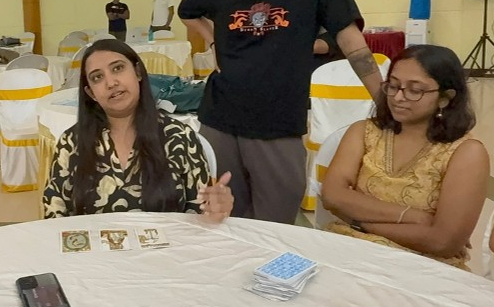
On a lighter note, this sprint Anusha and Pratiksha read us Tarot cards on “How will Glific 2.0 do?”. The prediction was unequivocal on our side – we got the ‘King’ and the ‘World‘ cards, which are supposedly very positive. Not to get too comfortable or complacent with this though, since we have a lot to do as a team to make Glific the one-stop platform for last-mile comms! But the nod from “out there” is very very welcome!! 😀


P.S.: What’s ready and what’s being cooked on the Ops side:
In the September dev sprint, Shijith and the Glific dev team prioritized customer impact over the offsite. For issues related to shared capacity, inbound and outbound messaging on Oban queues was partitioned by organization with longer timeouts, so one partner’s heavy flows would not starve everyone else. The contact import was rebuilt to use about 100 times fewer database statements. Background cron jobs now deduplicate and cap concurrency per organization, and flow wakeups run oldest first in smaller batches. Gigalixir raised our CPU allocation to 8 vCPU, and we plan to scale servers up and down on a daily schedule, reduce the replica connection pool, and move to a cloud auth proxy in October to offload encryption work. We now update many contact fields and flow results in one step, passing parent flow variables to subflows, and saving structured values in flow results. We are also working on fair processing and on letting long running flows yield instead of being cut off, and we are helping partners like Udhyam restructure flows to avoid repeated saves. For data sync, the BigQuery bookmark now points to a specific row, the row limit can be tuned without a deploy, and the dedupe query and its timeout are fixed. Planned work includes daily row count checks between source and destination, retries for failed jobs, and eventually moving the sync to a separate service. For visibility, we are adding alerts for Cloud SQL errors, database pool timeouts, flow error rates against baseline, failing sync jobs and silent monitoring, along with organization ids and PII removal in logs and a documented process for keeping affected organizations updated. For releases, any change touching Google Cloud will be tested against a sandbox project before merge. AI generated code touching external services will be treated as unverified until it is actually run, deployments will pin a single task revision, and we will audit loosely typed fields that hide breaking changes.

