
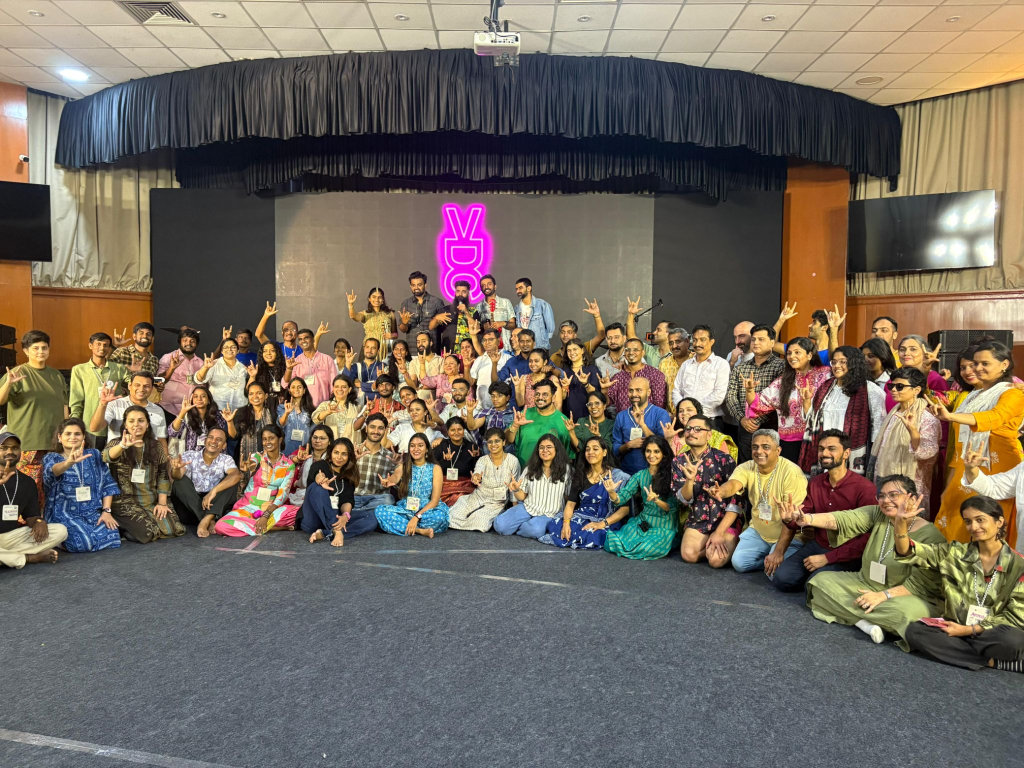
Last weekend, I got the opportunity to attend the Change the Script (CTS) event held by Dream a Dream organization. Dream a Dream is an NGO that works towards transforming the experience of education for children living in poverty. The theme of this CTS was “Love and Justice”. This is one of the events where there wasn’t a script to the sessions/workshops. It wasn’t one of those conventional IT/Tech/Corporate events where you listen to people give talks, network, eat, and probably go home to forget about what transpired. The facilitators ran the entire two-and-a-half-day event through activities that involved art, music, discussions, and movement exercises. It felt more like a journey of self-reflection and introspection throughout..
Before I go into the emotional roller coaster journey that this event took me, one thing that stood out about this entire experience were the participants I was attending it with. I have never been with such a diverse group of folks ranging from educators, researchers working in ECD (early childhood development), people from the deaf & blind community, people from LGBTQ+ community, founders & program leads of various NGOs (some that Tech4dev work with like Antarang, Apnalaya etc), government official working in drug prevention, mental health experts, teachers from various government schools and young students who were part of a fellowship program ran by Dream a Dream. And then there I was, the only engineer in the room. I was overwhelmed & started questioning whether I am supposed to be here or not.
My mindset going into this was to listen & internalize everyone’s stories with an open mind. And my aim was to understand more about the dynamics of our education system through the lens of various people in the system present there. The motivation of this write-up is not only to share my journey throughout the 2 days but also to invite everyone reading to question & reflect. Also, I don’t plan on making conclusions in this write-up; I will let the readers draw that for themselves.
Reality check
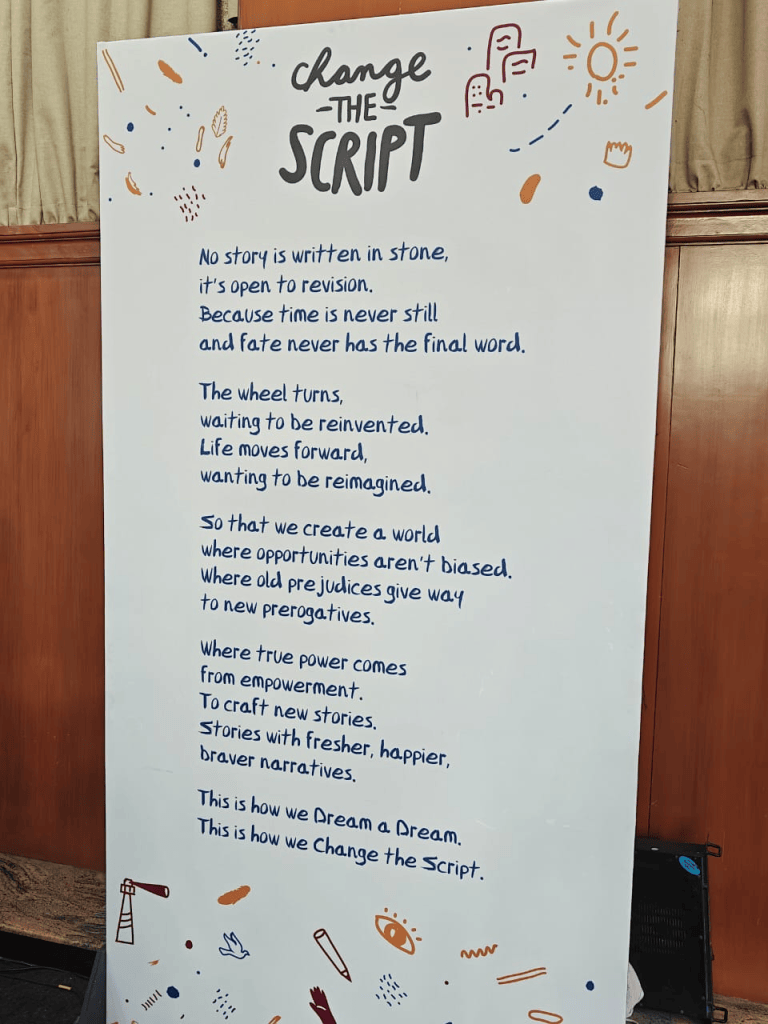
The prompts used in the icebreaker activity were pretty interesting. We were paired into random groups of 3-4 and were made to discuss these prompts. Some of the ones I could recall were –
- Your favorite snack
- What’s your spirit animal?
- If you could give a job to the voice in your head, what would it be?
- If you could change your name, what would you want it to mean?
- What is success to you?
The last one really made me think. I haven’t thought about “success” in a long time. I have been so caught up in juggling multiple things and trying to keep up with various deadlines. But this exercise made me question, what am I trying to achieve with all this hustle? Maybe money, respect, a good position? Have I given anything back to society yet? These questions are still in my mind. I don’t have perfect answers to them, but I do know I need to step back to reflect & define what success is for me.
Later, during the morning of the first day, we went through a creative process of writing an “I am from” poem about ourselves. The only constraint here was that we couldn’t mention the geographical location directly in the poem. Here is the snippet of the poem I wrote.
“I am from a childhood filled with love & care,
From a household always bustling with people & food,
From the cooker’s whistle to my grandmother’s nagging to my parents’ arguments,
From a place that was filled with guests/relatives during the Ramzan & Iftars….
I am from a place of confusion & anxiety,
Struggling to communicate in English,
To not knowing what to do in life
To slowly fight it.
What remains now,
Is a place for less confusion but more reflection,
Less anxiety but more confidence to listen/learn.”
We divided ourselves into groups of 3-4 & shared our poems. The space designed felt safe and inclusive enough to do this. Poems I got to listen to in my group were beautifully penned. Some talked about the beauty of Uttarakhand, some talked about the city of Jaipur, some talked about the struggles of growing up as a girl in the family, some talked about the mistakes made, and some talked about their move to the city away from their home. Some words to express what I was feeling after hearing folks share their personal poems – sad, grateful, irritated, injustice, empathetic. I could see some narratives/biases that were working against some people.
Narratives/biases
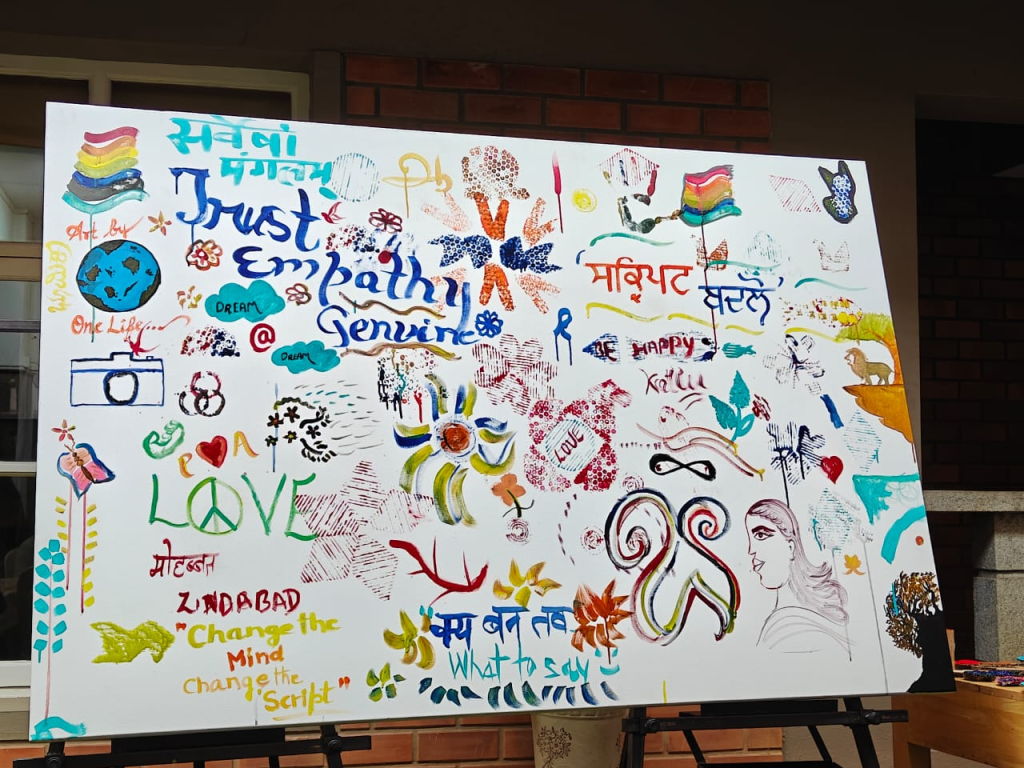
In the latter half of day 1, young students who were affiliated with Dream a Dream in various capacities shared their personal stories that depicted the struggles they had to go through in their schools & colleges. Most of them were from the North Karnataka region, except one who hailed from Jammu & Kashmir. I will try to summarize some of the narratives that came out after this.
- Bias against language. If you don’t speak English, you are not a “cool” student, or you are not good enough.
- One of the students had to travel 20-25 km for school. They were immediately tagged “irresponsible” because they were late.
- Many of them faced corruption around examinations. Giving multiple re-exams & getting the same result. The cost of the re-exam was very difficult for them to afford.
- One of them highlighted how easy it was to get a master’s degree (masters) certificate with money. But now they are helpless and not ready for the job market.
- Lack of sex education ruined one student’s life. Yes, they were courageous enough to share this.
- Many of them faced discrimination against their dark skin complexion. This had a drastic effect on their confidence.
- To get admission into a decent/good school, you need “influence”.
- No guidance or mentorship for students from remote backgrounds.
- If you don’t score good marks, you are a bad student. In some schools, you are also not included in the extracurricular activities/competitions.
I don’t think I had even half the amount of courage when I was their age. In my mind & heart, the common feeling was – Why did this happen to them? Did the system fail them? Did we fail them? Aren’t we part of that system? I took these questions to bed with me that night and tried sleeping, but couldn’t.
Reflection
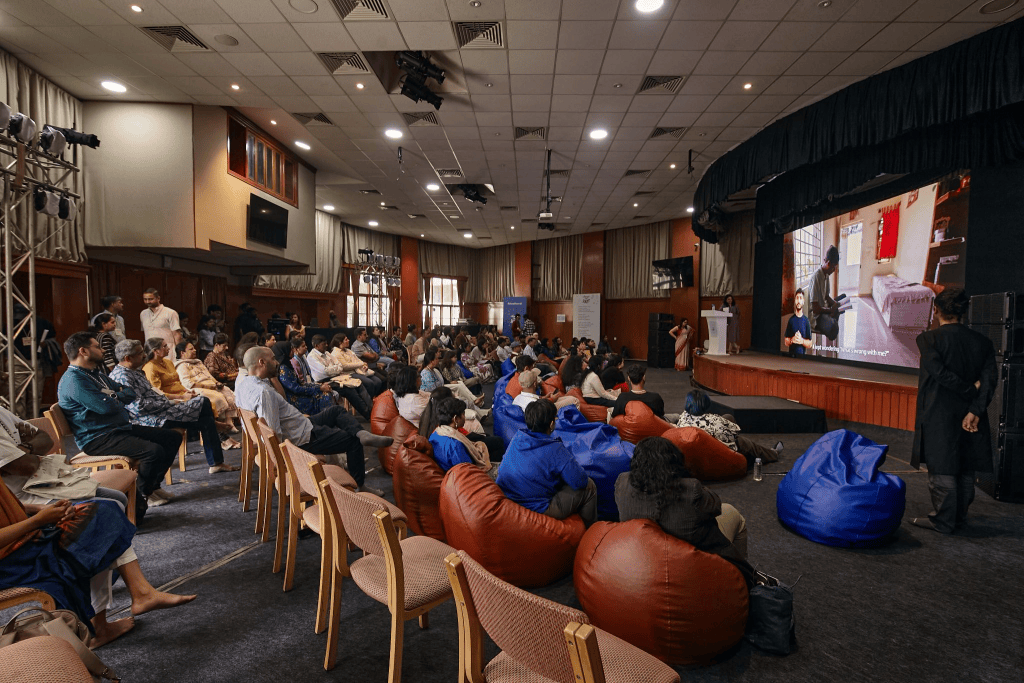
We started off Day 2 with a very interesting movement exercise. We walked around the room in a random pattern, and whenever we came across our peers, we took a moment to pause, reflect, look in that person’s eyes, and just try to feel their story/journey. The motivation for this exercise was to open ourselves up to understand & feel the injustice, the pain, the journey of that person.
After this, we went on to discuss 2 crucial questions
- Who are these people for whom the narratives didn’t work or worked against?
- Why are these narratives or biases still in place?
Facilitators did a great job of running these discussions, which guided us to think in the right direction. Some more questions that came up while we argued about the 2 above
- Are these people part of the system?
- What about those for whom narratives worked in favor? Are they also part of the same system?
- So the system is designed to work for some people and work against others?
Then the facilitators questioned us if we are all part of the system, why are these narratives still in place? Are we so blinded & not in touch with ourselves that we can’t see the biases around us? If we can see, then what stops us from taking action? An interesting paradox that came up in all this was – “We can change the system, but we are the system”. So are we ready to accept the biases within us and take action?
Facilitators never gave us answers. This was a reflective journey that we all participated in. I realised that most of the narratives discussed and biases that came up worked in my favor. The system worked in my favor. I had access to good education, had access to resources, I am not dark skinned, I was good at academics (current definition of success, i.e., getting good grades/marks worked for me) and I had good mentors to guide me through my life/career. I felt a little sick to my stomach at first, but then this feeling turned into the question, “What can I do to make sure the system works for people from marginalized communities too ?”
Accountability
On the last day, we all worked together to get some sort of answers/solutions to the question: how do we let go of that specific narrative/bias that has served us well ?. We went through a fun exercise where we all exchanged each other’s questions (questions we struggled to find answers to) & tried answering them. I had two questions for which I was searching for answers.
- One inherent bias in me is that I have most of the time associated success with credentials (marks, accolades, etc). What can I do to change this bias?
- I have been privileged enough to have those biases work in my favor. What can I do with my power/influence to change this for others?
The idea behind that last day’s discussion was not to get to solutions but to plant seeds that might help people kickstart their journey to answer their question(s).
After the exercise, these are some of the answers that came out
- change starts from the inside and spreads outwards
- pause and reflect
- respect, accept, include, love, and celebrate
- Be true to yourself, think about what gives you energy, and seek help
- What determines our worth – the change we are looking for.
For me personally, it is very easy/comfortable to hide behind that screen and code. As much as I love to do this, I have realized I need to be out more, reflect more, talk to people from different communities, and work with them. I definitely don’t want my definition of success to only include “how good am I at coding”. I am not sure what else should be included in my definition of success, but I am planning to reflect on this and figure it out.
Thoughts
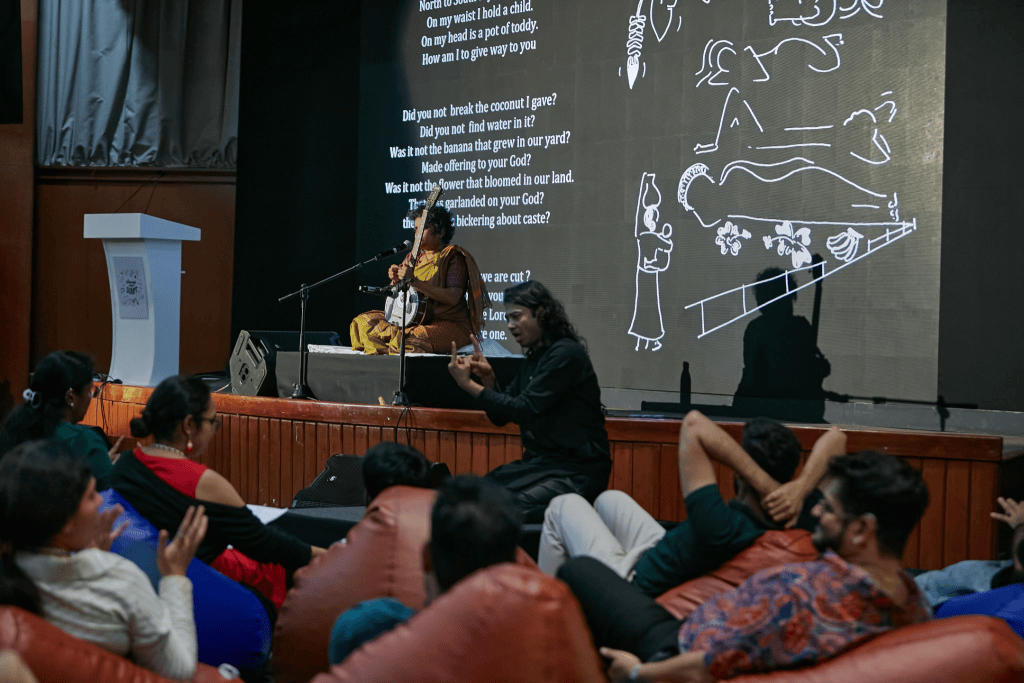
We got the opportunity to see two renowned artists, Bindhu Malini and Vasu Dixit perform. Both performances were so apt for their respective days. The first day was heavy on reflection & stories, which paired really well with Bindhu Malini’s soulful and calm songs. The second day stirred a lot of emotions & a desire to find answers to difficult questions. Vasu Dixit Collective’s electric performance took our energy to the next level and helped us end the conference on a high note.
I also had very interesting conversations with various NGO founders & teachers. One of the common things across all these conversations was that the schools & classrooms are not equipped to be inclusive enough. Even if they are, the teachers are either not trained to handle specially abled children or they don’t have the bandwidth to do more for the children. Another thing that came up is our education system ties success to marks greatly, which makes it difficult for NGOs & other organizations to include the factor of social-emotional learning in the schools & curriculum.
I wonder if we at Tech4dev (or the org you work for) are inclusive enough. Do we hire more folks from marginalized communities? Are our initiatives inclusive enough? Can someone from blind community be able to configure a Glific (Tech4dev chatbot platform) flow?
By Ishan Koradia
Software engineer at Dalgo
