What 110 applications from grassroots nonprofits told us about AI — and how we chose 20 organisations to work with.
People4Good × Project Tech4Dev × Infoxchange | November 2026
This blog post is written by Nandini Ravikrishnan from People4Good
Over the last few months we opened applications for the Grassroots AI Impact Lab, a supported programme for small and mid-sized nonprofits that want to put AI to work on a real problem. We expected interest. What we did not expect was how consistent the problems would be.
This brief sets out what grassroots nonprofits across India told us they want to solve with AI, what their starting point actually looks like, and why we chose the 20 organisations we did.
| 110+applications received | 29states and Union Territories | 50+one-to-one interviews | 20organisations selected |
110+ applications received (109 usable), from organisations working across 29 states and Union Territories.
Figure 1. A snapshot of our cohort of 20 NGOs.
The central idea
| AI adoption in the social sector should begin with the problem, not the tool.Applications and interviews showed real problems in programme delivery, data management, monitoring, reporting, beneficiary support and fundraising. The Lab will study each workflow, find where AI can help safely, and help organisations test solutions in their own setting. |
How we chose the 20 organisations
Six questions shaped every decision. None of them asked how advanced an organisation already was.
- Problem clarity — Is the problem real, does it happen often, and does it matter to the organisation’s work?
- Grassroots relevance — Does the use case come from day-to-day programme or office work?
- Feasibility — Are there data, documents, workflows or staff inputs to start testing with?
- Responsible adoption — Can the solution be built with safeguards for privacy, consent and data security?
- Implementation commitment — Is there a named contact and support from leaders to take part and test?
- Cohort fit — Can focused mentoring help the organisation make real progress during the programme?
| We did not simply choose organisations that were already good at AI. We looked for organisations with real grassroots problems, a clear way to test a solution, and the will to learn and put it into practice. |
Interest in AI is high, but readiness is uneven
Applicants work across 29 states and Union Territories. They differ in size, area of work and digital maturity.
Main areas of work
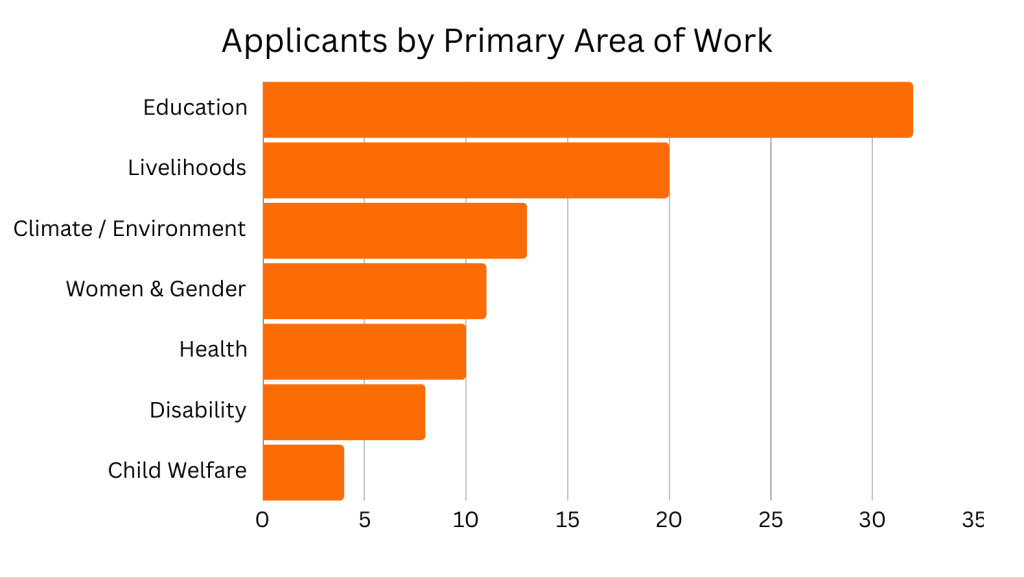
Figure 2. Applicants by main area of work.
| Primary area of work | Applicants |
|---|---|
| Education | 32 |
| Livelihoods | 20 |
| Climate / Environment | 13 |
| Women & Gender | 11 |
| Health | 10 |
| Disability | 8 |
| Child Welfare | 4 |
How applicants rate their own digital maturity
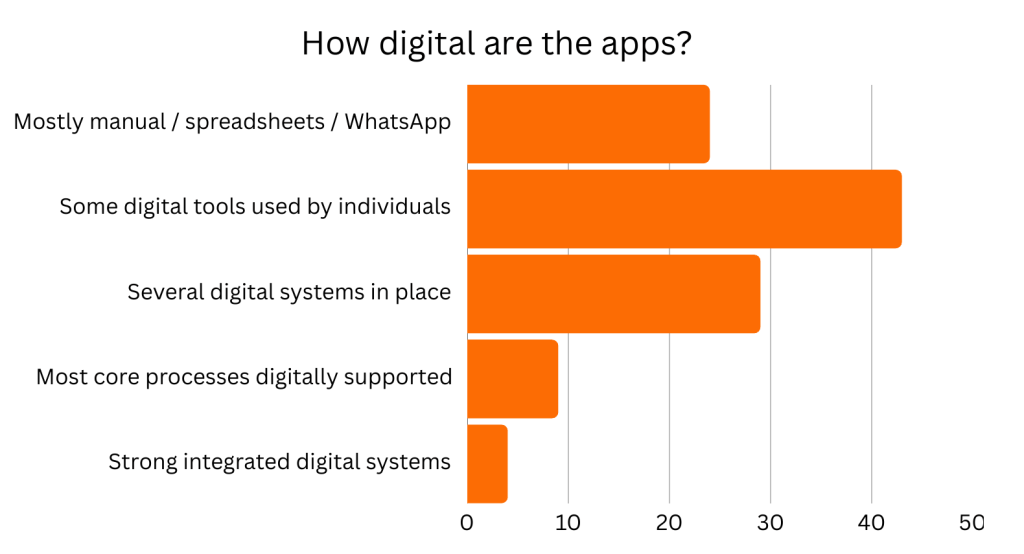
Figure 3. Digital maturity as reported by applicants.
| Self-reported digital maturity | Applicants |
|---|---|
| Mostly manual / spreadsheets / WhatsApp | 24 |
| Some digital tools used by individuals | 43 |
| Several digital systems in place | 29 |
| Most core processes digitally supported | 9 |
| Strong integrated digital systems | 4 |
What the numbers show
- 92 of 110 applicants reported using AI daily or weekly. This shows growing exposure, even where confidence and systems are uneven.
- 67 of 110 still work mostly by hand, or with digital tools used by individual staff.
- 52 of 110 had no AI or technology champion inside the organisation, or were not sure.
- 106 of 110 had some data, documents or information that could help with their problem.
What this means for the Lab
The Lab must meet organisations where they are. For some, the first step may be cleaning data, going digital and learning safe use. For others, it may be connecting AI to the systems they already have, or making programme data easier to act on.
The same seven problems kept coming up
- Data management and scattered systems — information sits in spreadsheets, forms, MIS platforms, paper records and WhatsApp.
- Monitoring, evaluation and programme insights — teams want to spot patterns, gaps, risks and next steps in the data they collect.
- Reporting and documentation — staff spend time writing reports for each donor, proposals, case studies, summaries and internal updates.
- Beneficiary and case tracking — organisations want to track progress, needs, referrals, follow-ups, eligibility, deadlines and services more consistently.
- Digitising paper and messy information — scanned documents, handwritten notes, forms in many languages, voice notes and field stories are hard to put into a clear structure.
- Fundraising and raising resources — AI could help find matching funders, understand donor needs and prepare proposals.
- Communication, knowledge and staff support — AI could help with internal knowledge assistants, voice tools in many languages, learning resources and chat-based support.
Interviews showed how work is done today, where staff time is lost, what data exists, who would own a solution, whether it can work, and what risks must be handled.
From selection to responsible use of AI
The 20-organisation cohort is a practical pilot and a learning exercise, not just an AI training programme. Working with 20 organisations lets the partners test many different uses of AI. It also lets them record what helps grassroots teams move from interest in AI to safe, long-term use.
A step-by-step path
| 1. Understand | 2. Design | 3. Prototype | 4. Test | 5. Learn |
|---|---|---|---|---|
| Map the work, the people, the data and the limits. | Pick one clear problem and decide what a useful solution looks like. | Build a small workflow with AI that can be tested. | Use it on real tasks, check the results and improve it. | Record the value, risks, use and next steps. |
What to measure before and after the programme
| Dimension | What to check at the start | What to check at the end |
|---|---|---|
| Time and workload | Time spent on the chosen task or workflow | Change in time, effort and manual steps |
| Data quality | How complete, repeated, consistent and easy to reach the data is | Improvements seen and data gaps that remain |
| Decision support | How information is used to make decisions today | Whether insights are clearer, faster or easier to act on |
| Adoption | Staff confidence, ownership and current AI use | Who uses the prototype, how often and with what support |
| Responsible use | Consent, privacy, access and human checking of results | Safeguards in place, risks found and how they were reduced |
| Sustainability | Available skills, budget, systems and leadership support | Plan for upkeep, running costs and who owns the next stage |
| SAFE AI MUST BE BUILT IN FROM THE STARTThe work must include informed consent, protection of children’s information, sensitive health and survivor data, access based on role, safe storage, human checks of AI outputs, support for many languages and realistic upkeep costs. Sensitive data should not be put into public AI tools without a proper privacy and security check. |
The big question
| Can a focused programme with mentoring help grassroots organisations save staff time, make better use of programme data, make better daily decisions and improve their services, without harming the trust and safety of the communities they serve? |
What this pilot can give
- Practical examples of AI use based on real nonprofit work.
- Evidence on what helps AI take root: leadership, ready data, staff skills and clear long-term ownership.
- A clearer view of where AI adds value, and where better processes or basic digitisation should come first.
- Lessons, safeguards and methods that others can reuse to support the wider nonprofit sector.
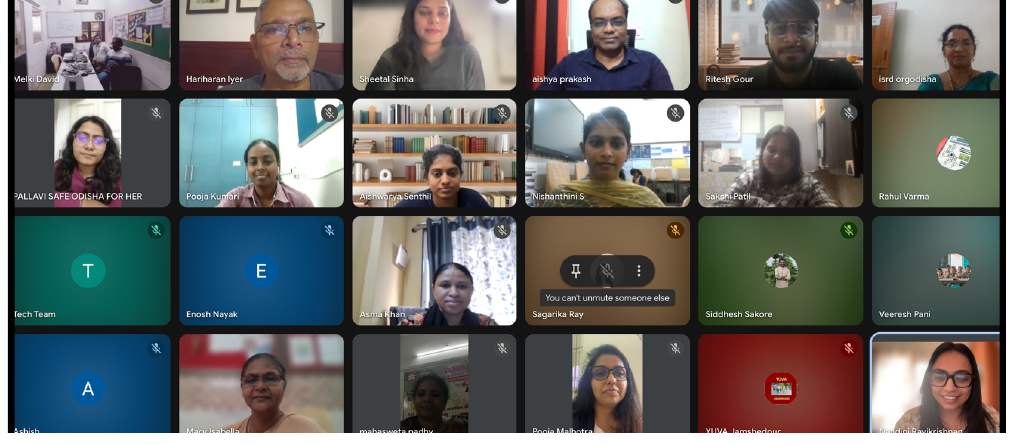
Figure 4. A snapshot of our cohort during the onboarding call.
Grassroots AI Impact Lab | People4Good × Project Tech4Dev × Infoxchange | November 2026