The Technology Leadership Cohort is designed to build a community of technologists prepared to work in the social sector, seeding the sector with professionals who can take on technology leadership roles. The goal is to build a scalable and structured talent pipeline for the social sector.
But what happens when senior professionals who have spent years working in corporates suddenly start working with an NGO?
All of a sudden, stand-ups move from large teams to a group of 2–3 people sitting around a table, trying to figure out the next steps. GitHub project plans become smaller and simpler, and a lot of the work becomes about experimenting and figuring out what works. The central questions, the principles on which decisions are made and also the team dynamics change. The size of the team and the kind of expertise available also look different.
So, how do we anticipate these changes and support this transition? What could a workshop that helps people navigate this shift actually look like?
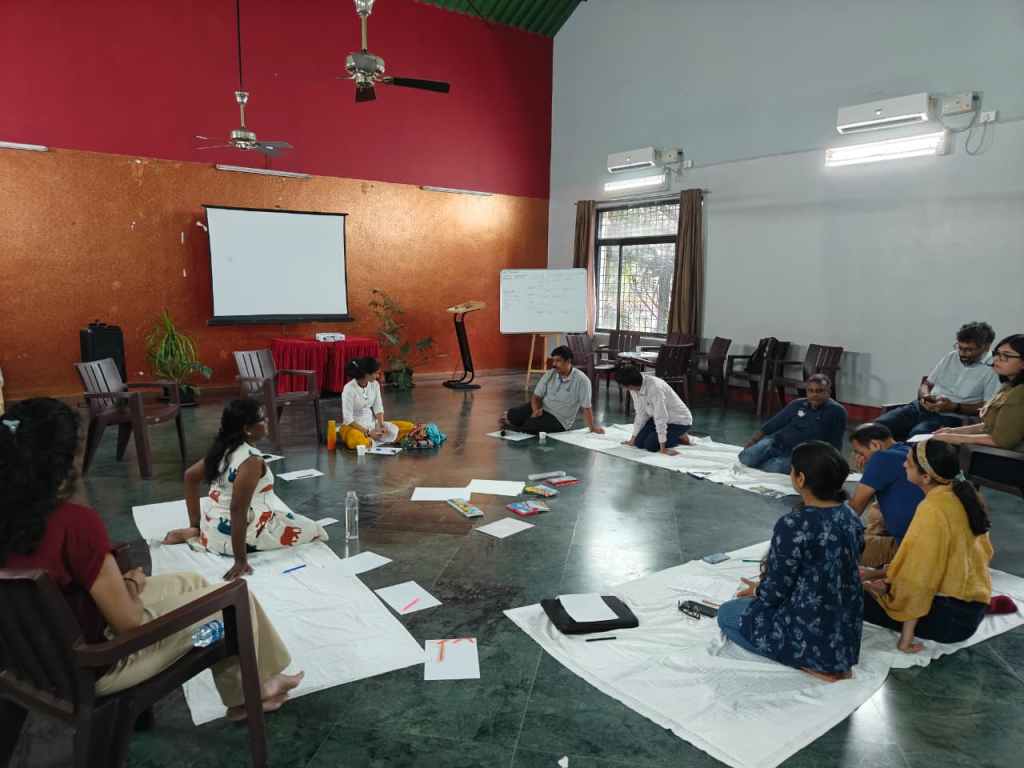
These are complex questions. And we knew that the usual conference-style presentations would not be the best fit for this kind of workshop. It needed to be more personal and experiential, because every person’s journey into the social sector is different.
To guide us, we invited Romana Shaikh, author of Weaving Wholeness, to facilitate a 1.5-day immersive experience on culture, communication, and navigating the social sector.
Right from the beginning, it was clear that this was going to be different. We started by making our own name tags, which needed two shapes and two colours! All I could think of were rectangles until I looked around for inspiration. Most of us are comfortable with documents or spreadsheets, but give us a blank sheet and some colours, and suddenly we have to think differently.
We used art to express our journeys, and different activities and games to explore what communication entails. We explored what it truly means to listen to emotions beyond words.
Listening to Sushil and Anto talk about their experiences as fractional CXOs was really interesting. Their stories helped us imagine some of the situations we might find ourselves in. There are different people. Different priorities. Different ways of seeing a problem. Sometimes the tech solution seems obvious to you, but not to the person sitting across the table. When do you push for your idea? When do you push back? When is the right time to convince someone, and when is it more important to listen? Especially when you are coming new into an organisation, the ability to read the room and understand where the other person is coming from can make or break a relationship.
One thought that stayed with me: the power of showing up for our peers as an Advocate, Ally, Champion, or Cheerleader. We all need this ecosystem of support around us to lean on and grow. These are four very different ways of showing up for someone. And perhaps knowing which one is needed, and when, is a big part of working well with others.
We also spent time exploring what happens to us during disagreements. It made me realise how often communication happens through our body language, expressions and the way we respond.
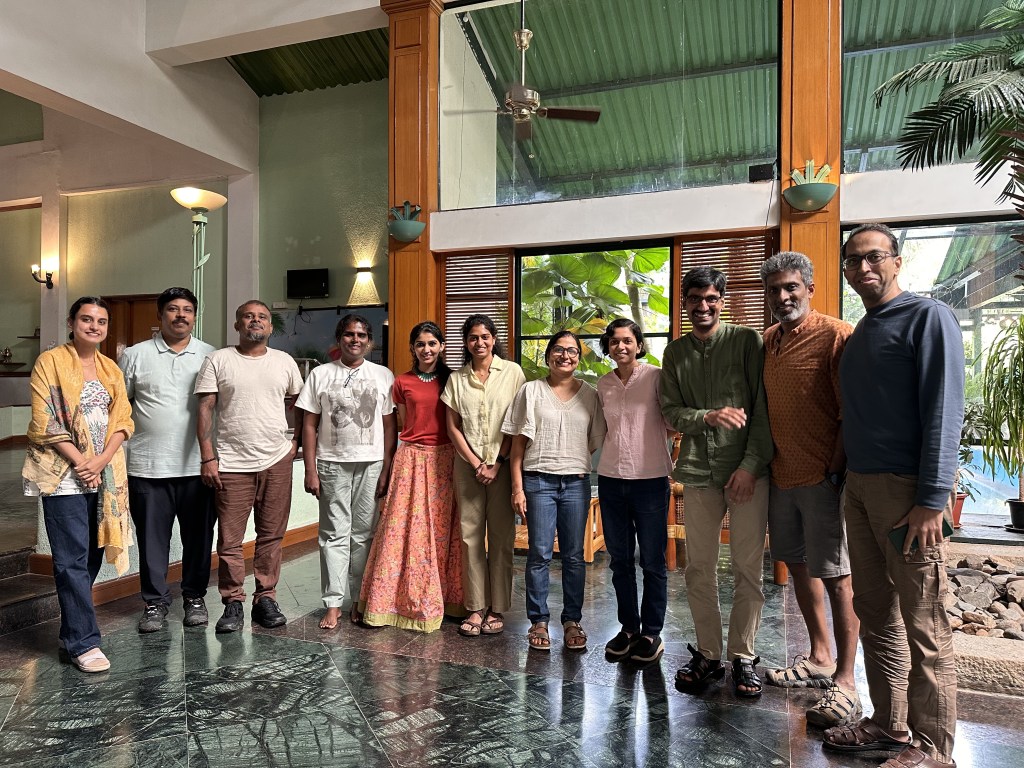
Overall, it was an immersive 1.5 days. A big thank you to Romana for designing the workshop so beautifully and for holding space for everyone to speak, share, slow down and reflect.