
The Ahmedabad sprint began with a long bus journey from the airport to this picturesque learning center at Neembadi. Away from the chaos of the city, the place was an oasis for stillness, ideal for serious work, dotted with daytime Gully cricket and midnight board games. Regular sightings of peacocks while taking a stroll added an extra layer of charm to this place.


The first two days were largely committed to settling in, getting to know each other, fun ice-breaking activities, and the Ahmedabad city day trip. The city trip ended with a 20-course+ Gujarati Thali meal at one of the nicer fine dining restaurants. The place had an palm-reader-cum-astrologer who would probably qualify for the dubious record of most inaccurate fortune-telling in 30 mins!


One downside of working from home is that your colleagues are often constrained to the two-dimensional 13-inch screen of your laptop. The unique selling point of a week-long sprint is that watercooler conversations are usually better at team building than any structured exercises. These impromptu conversations were of great assistance in getting to know our co-workers, appreciating the quirks of their personalities beyond their Discord profiles. Neembadi’s tree-lined open spaces naturally nudged people into impromptu conversations, fostering genuine connections. Apart from the usual work stuff, the one-drop-one-hand-catch gully cricket and Garba night made sure the team had enough avenues to bond over. Sushil’s super fun cybersecurity session prompted a lot of people to change their default passwords. The birthday celebrations for Radhika and Noopur, organised by a sprint veteran and Co., were the cherry on top!
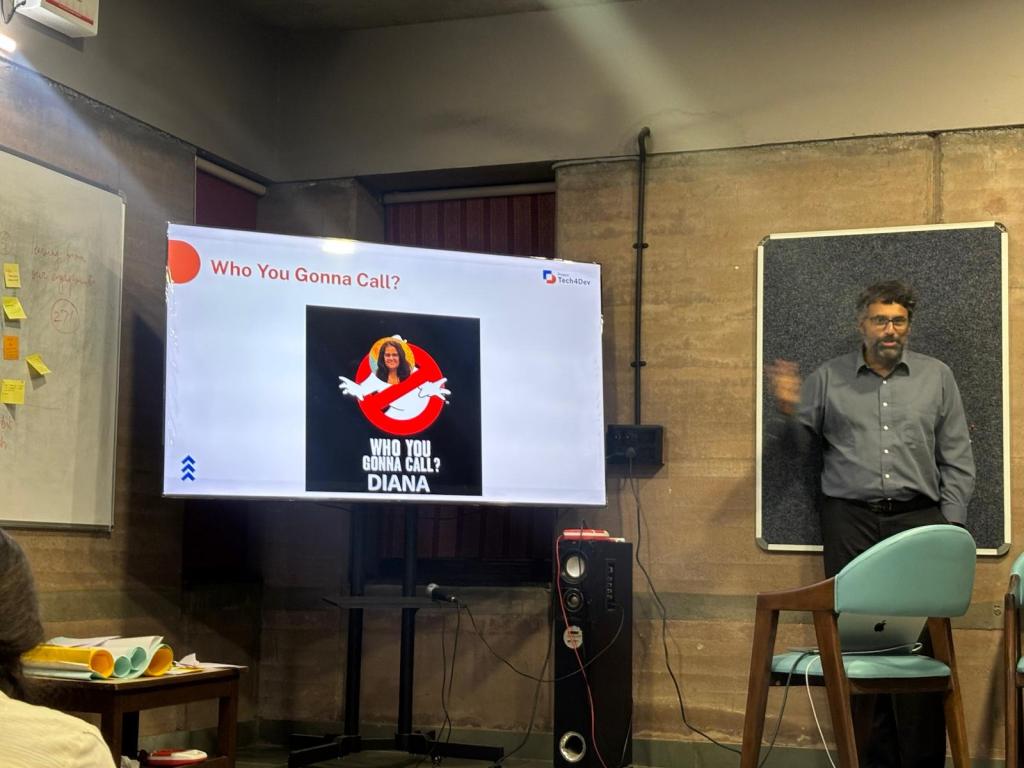
Now coming back to the scheduled events. On day 3, we had a time management session by Radhika and Krishna. While the principles of time management are of common knowledge, Radhika’s structured approach to it, tips and tricks, personal anecdotes, and the larger conversations around it were helpful in creating personalised DIY time management methodologies. Since we don’t work out of an office, there is no physical separation between work and non-work. Knowing when to disconnect is paramount, and the session provided a toolkit to accomplish that.
Later that day, we had a team-building session with Mr Gagan Sethi. Apart from being the creator of the Neembadi learning centre, he has been a towering figure in the social justice movement. The team-building tasks were fun and introspective and required an element of play, especially the game of blindfolded Zenga. Though we could not break the record of placing 24 blocks on top of each other without toppling, Shamoon, Priyesh, and Sangeeta’s efforts and camaraderie were commendable, garnering cheers, applause, and bets at every successful placement of the block.


Coming to the work part, we had multiple rounds of in-person meetings with relevant stakeholders, bringing in alignment about various Kaapi use cases. We fast-tracked AI model evaluation for text-to-speech and speech-to-text flows keeping in mind Glific as the primary user and recommended to use Google Gemini class of models for transcription and speech synthesis jobs. We had multiple rounds of discussions on how to make the Kaapi unified API more useful to the end user; discussed extending the endpoint to be the de facto workhorse for multimodal(audio, image, etc.) use cases; reusable configurations for better traceability and observability of AI workflows (evals, RAG, document transformations, audio, etc.). We made significant inroads into shipping evals-as-a-service for audio and text in the Kaapi Konsole; brainstorming how to make knowledge base and vector store creation more intuitive from a product and design perspective. Noopur’s suggestions and critiques on the console product helped us uncover blind spots and inspired us to create a more delightful user experience for Kaapi products.


Discussing the product and deliverables roadmap for the next quarter helped the team narrow down on a limited number of concrete products to be built into Kaapi, focusing on the broader platform-first thesis of Tech4Dev. The team was encouraged to think through possible use cases and pain points for responsible AI adoption in the social sector and build tools and services around them. From an ecosystem, events, and capacity building perspective, we kicked off the AI Cohort 2.0 program design, building on the experiences of AICohort 1.0 and tech fellowship.
Looking back, the team has turned the AI platform from a single coffee bean of an idea into a freshly brewed mug of Kaapi. We are excited for what lies ahead of us!

