“I went in to share—but ended up learning just as much from every question, struggle, and spark of insight.”
Context: The Dalgo Bootcamp is a two-day, in-person intensive program, designed to help non-profits to transform messy data spread across multiple tools and platforms into actionable insights. The recent program brought together teams across India to build PoCs grounded in their real-life use cases — feasible, representative of their overall challenges, and designed to demonstrate tangible value. This approach allowed NGOs to assess the usefulness of Dalgo for their overall challenges, provide feedback for improvements, and engage in conversations exploring practical tech solutions to their operational challenges.
When we decided to run the Dalgo Bootcamp — my first time leading one — I knew it would mean more than logistics and slides. It would take patience, persistence, and trust. NGOs are busy, budgets are tight, teams are overwhelmed, and asking them to invest time, cost and energy in something they haven’t yet bought is a big ask. But if we could make every moment count, the returns would ripple far beyond two days in a room.
Preparing for the Bootcamp
The Bootcamp began long before Day 1. I always have this strong belief that detailed planning matters a lot, but it’s the act of executing — quickly, with intent, and with the ability to learn and improvise along the way is what breathes life into those plans and keeps them grounded in intended outcomes — especially when we need to build benchmarks as well. The mix of macro vision and micro-level reviews kept us focused on the larger goals while making mid-course corrections as dynamics evolved.
We reached out strategically, shortlisted participant orgs, scoped their use cases, signed data-use agreements, and guided them through setup — from sharing a G-Sheet to aligning leadership on why this mattered. Each NGO came in at a different stage in initial fitment calls — some with little awareness of data automation/dalgo, others who’d engaged through earlier webinars. It took tailored conversations and proactive, timely, value-driven + action oriented follow-ups to keep NGOs engaged and build trust, bringing everyone to a common ground before the shortlisting phase. Once shortlisted, the cohort energy made the Bootcamp far more valuable than any one-on-one engagement — with peer learning, extended networks, and shared problem-solving multiplying the impact.
What surprised me most was how the pre-work became a mirror for NGOs themselves. As they sifted through tables, KPIs, forms, and old reports, they surfaced insights on collection, storage, reporting, and usage that might have otherwise taken months. That reflection later made the in-room work sharper and more grounded. And then came the budget. By leaning on partnerships and timely alternatives, we delivered the Bootcamp at just a quarter of the planned cost for venue, food, and AV — without compromising on quality.
Day 1: In the Room
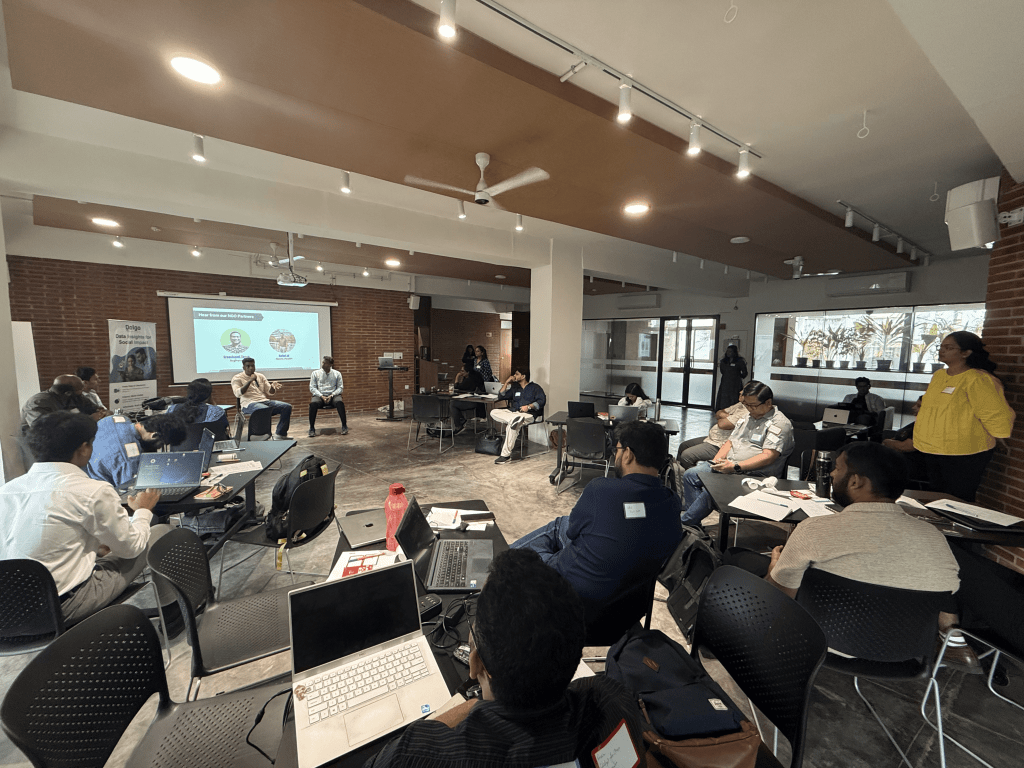
On Day 1, nerves quickly gave way to curiosity. The energy of the cohort was being felt as we started with ice-breaking activities which led to relevant conversations, turning questions into insights and keeping momentum alive toward meaningful outcomes. NGOs were candid about frustrations: scattered data across spreadsheets/tools, endless reporting cycles, and the constant “How do we make sense of this?” The brief was simple: build something useful, now. The most powerful moments weren’t dashboards, but sparks in people’s eyes when a trend appeared or relief when automation cut hours of manual work. These were not only technical but also human wins — lighter shoulders and freer time.
Day 2: Prototypes and Progress
Day 2 brought it all together. Each NGO showcased their prototype, with teams reflecting openly on challenges, “Aha” moments and further possibilities. What normally takes weeks of calls — aligning leadership, surfacing constraints, clarifying needs — happened in two days because the Bootcamp created urgency, structure, and a safe space. NGOs shared real progress grounded in their use-cases for the PoCs:
- Dasra: Standardized impact measurement at Org level in Tableau — “Aha” moment: meeting Ritabrata, one of our consultants.
The way Ritabrata patiently addressed their queries showed the deep empathy our consultants bring — not just solving technical issues, but helping NGOs truly understand the ‘why’ behind solutions. That human connection made the work feel lighter and more meaningful.
- ATREE: Trend dashboards from Household (HH) survey data — “Aha” moment: all the transformations and filters worked out.
For ATREE, the realization that their complex HH survey data could be transformed and filtered into clear, decision-ready dashboards in real time was a breakthrough — it validated months of effort and opened new ways to see their impact.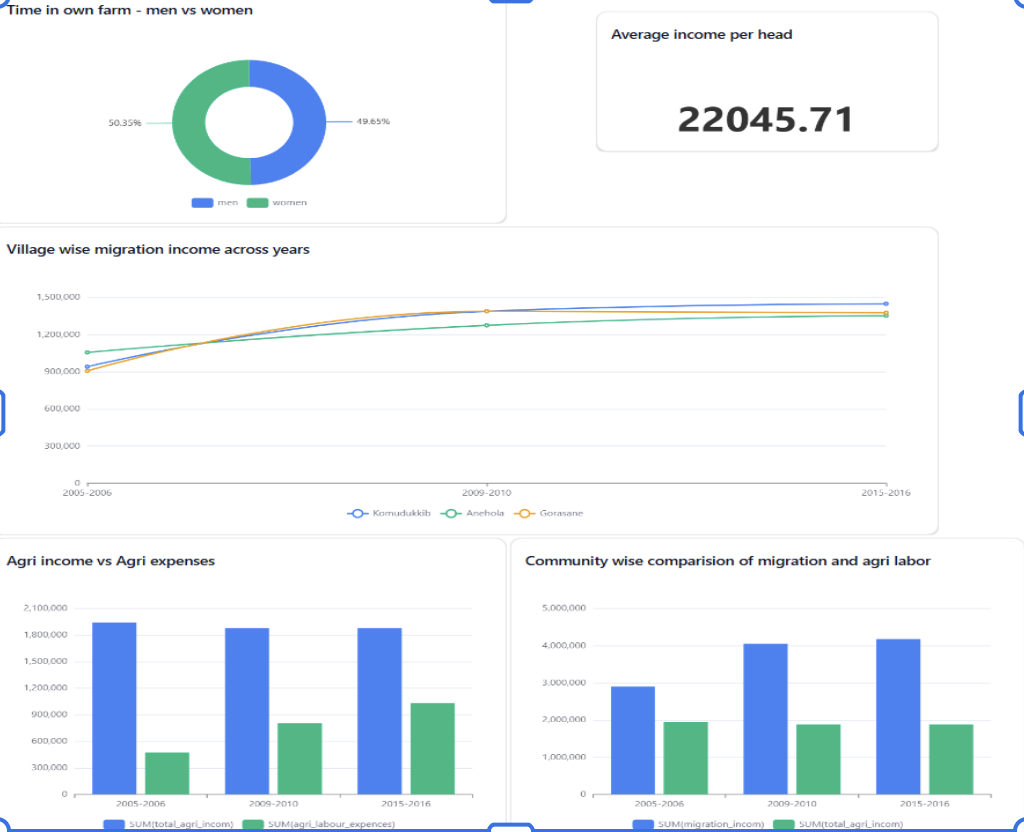
- IHCRF: LLM-powered qualitative & quantitative analysis — “Aha” moment: the potential for marrying quant & qual.
This sparked excitement about richer, more holistic evaluation methods that had felt out of reach before.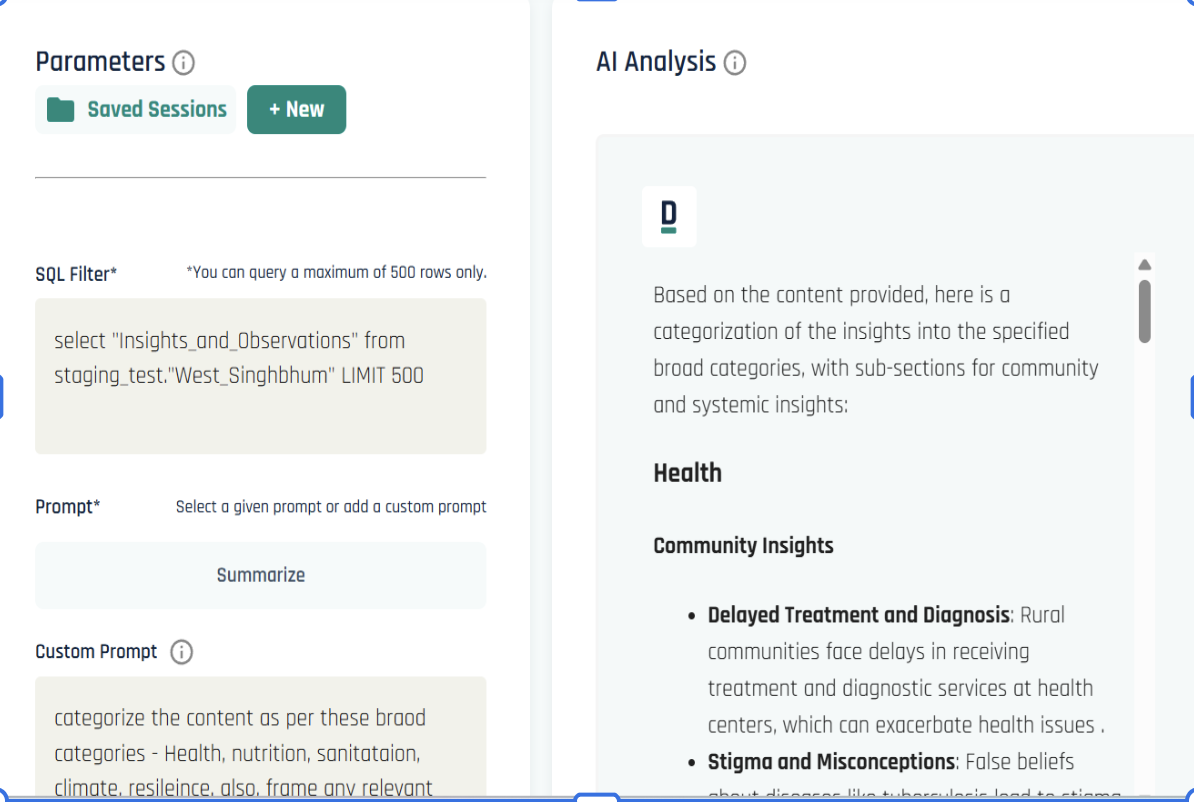
- Durga India: Impact and attendance dashboards — “Aha” moment: ‘We felt we could get hands-on better.’
For Durga India, the magic was in realizing they could directly engage with the tools themselves. The sense of ownership — being able to manipulate data and see results firsthand — gave them confidence that tech could be practical, not intimidating.
- Piramal Swasthya: Real-time MMU (Mobile Medical Unit) reporting — “Aha” moment: seeing raw data visualized instantly in charts.
The shift from static, delayed reports to real-time visibility was transformative. Watching raw data instantly come alive in dashboards showed them how much faster and sharper their reporting and conversations with CSR partners could become.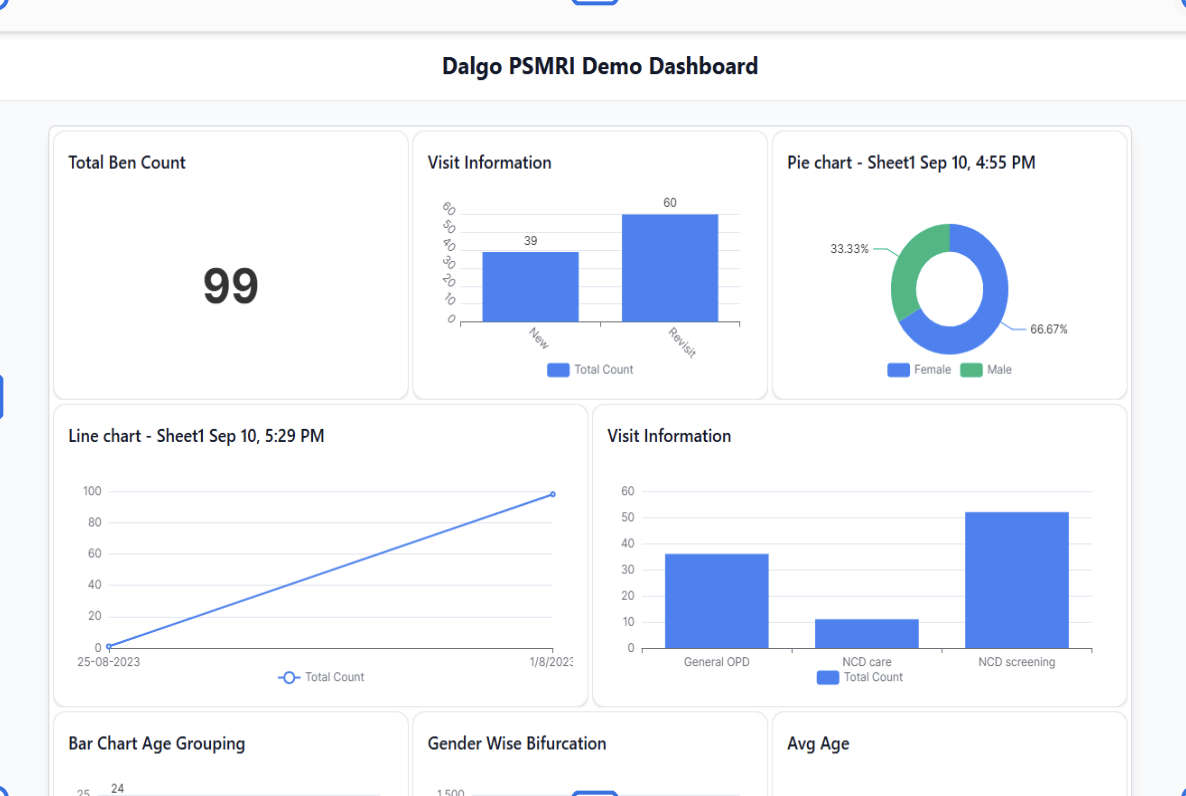
- Dani Sports: A working dashboard for diff stakeholders, with less manual effort — “Aha” moment: troubleshooting data transformation through DBT.
For Dani Sports, speed was the revelation. What had previously taken months of back-and-forth was resolved in a day and a half. With DBT simplifying data transformation, they could finally see how quick, structured workflows unlock agility.

Ongoing Support
Solutions from one NGO sparked ideas in another. Shortlisted NGOs received one month of free Dalgo access, with query resolution and guidance from current partners during the bootcamp. To sustain momentum, we set up bi-weekly support calls for another month, helping them implement learnings and build confidence. We were mindful that every NGO’s investment — of time, money, and energy — carried weight. Our approach was to ensure they walked away with more value than what they put in, both quantitatively and qualitatively. From working prototypes and tangible dashboards to deeper clarity, confidence, and peer learning, the return was designed to far exceed the initial commitment.

What I Learned
Sales cycles in the NGO sector for IT products are often long. Decisions involve multiple stakeholders, tight budgets, and careful risk assessment. NGOs need to align leadership, program/M&E teams, finance, data/tech staff, often legal/procurement, and seeing benefit for their outreach/field teams and beneficiaries/communities at large, and at times their donors. They also need to ensure new technology fits smoothly with existing systems. Common concerns include funding, integrations, ongoing support, pricing, scaling, and future migration (if need arises) . For early-stage products, apart from case studies/benchmarks, the pilots/PoCs and extended evaluations become essential before investment.
Different stakeholders carried different expectations — leaders sought strategic clarity, program teams focused on usability, and data staff cared about technical feasibility. It also highlighted the everyday realities NGOs navigate: tight budgets and uncertain funding, staff turnover risking continuity, reliance on vendors who may not stay the course, and the constant pressure to balance core work with the need to “keep up with tech.” Even when leaders understand the importance of technology, finding the time, money, or energy to commit is difficult. They stand at a crossroads, weighing urgent service delivery against the long-term promise of better systems. Our role is to reduce friction, make adoption simpler, and ensure value is visible from the very first step.
We guided NGOs through scoping, handled objections, resolved queries, and helped them share only essential + non-confidential data while signing data-use agreements. The focus was on what mattered now versus what could wait, keeping the process practical and manageable.
The biggest lesson? NGOs don’t need perfect solutions. They need practical help, trust that their time is valued, and steady partners through the messiness. Trust, transparency, and hands-on support — including small, meaningful pilots — help shorten the cycle. Sales may take time, but once trust is built, it sustains – this can be validated here – Link.
The Bootcamp also refined our understanding of Dalgo’s value. NGOs didn’t just test the platform — they built, shared, and highlighted patterns in needs, budgets, and decision-making, giving us clear signals for repeatable impact.
Special Thanks
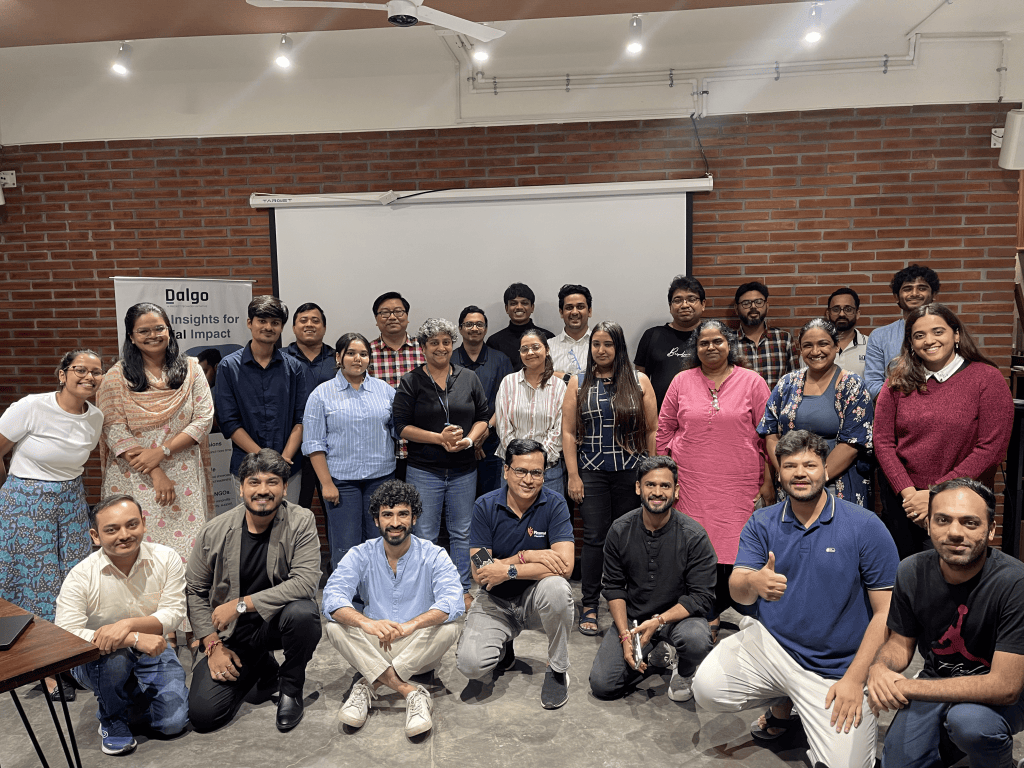
A huge thank you to everyone who made this possible:
- Stuti and Pratikska for their energy and natural mastery as MCs.
- Himanshu, Pradeep and Ishan for pulling features live before the bootcamp, enabling hands-on PoCs.
- Siddhant and Ritabrata for their dedicated consulting support in scoping requirements, connecting data sources, and building use cases.
- Abhishek, Siddhant and Ashwin for strategic guidance and support whenever needed.
- Anto and Thomas for lending their experience to help NGOs navigate tech challenges.
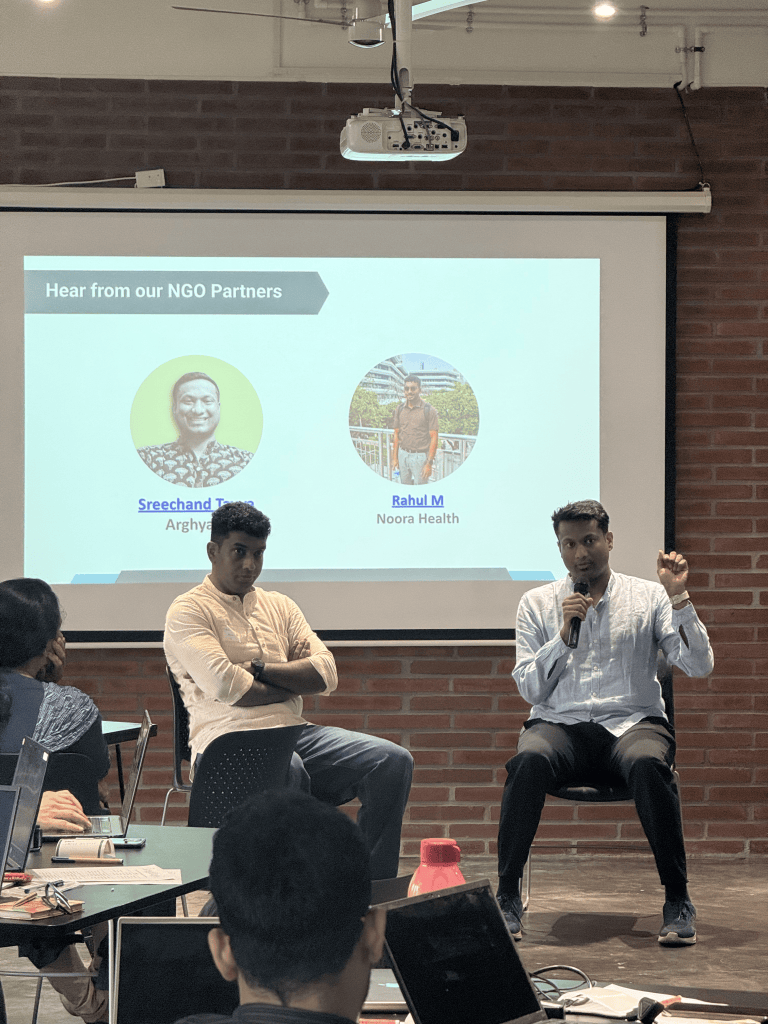
- Sreechand (Arghyam) and Rahul (Noora Health) for showcasing their journeys and handling NGO queries.
- Implementation partners — 10x Impact Labs, Social Bytes, and others — for their presence.
Your expertise, energy, and time made the bootcamp meaningful, enabling NGOs to leave with tangible outcomes and clearer paths.
Gratitude and What’s Next
I’m grateful to NGOs who trusted us, to my team esp. for late-night fixes, and to everyone who believed this mattered. The bootcamp was a start — with prototypes, clearer paths, and relationships that can grow deeper. It also shifted our perspective: from an early-stage hypothesis to a data-informed understanding of who finds real value in Dalgo. NGOs didn’t just test; they built, showcased, and revealed patterns of need, budgets, and decision-making — moving us toward repeatability, not just validation.
For those who joined — thank you. For those who couldn’t — we’ll make space in the next bootcamp. The mission remains: reduce friction between data and decisions, so NGOs spend less time wrestling with chaos and more time creating impact where it matters most.
x
