This blog is written by Ksheetiz, Software Engineer, CoRE Stack
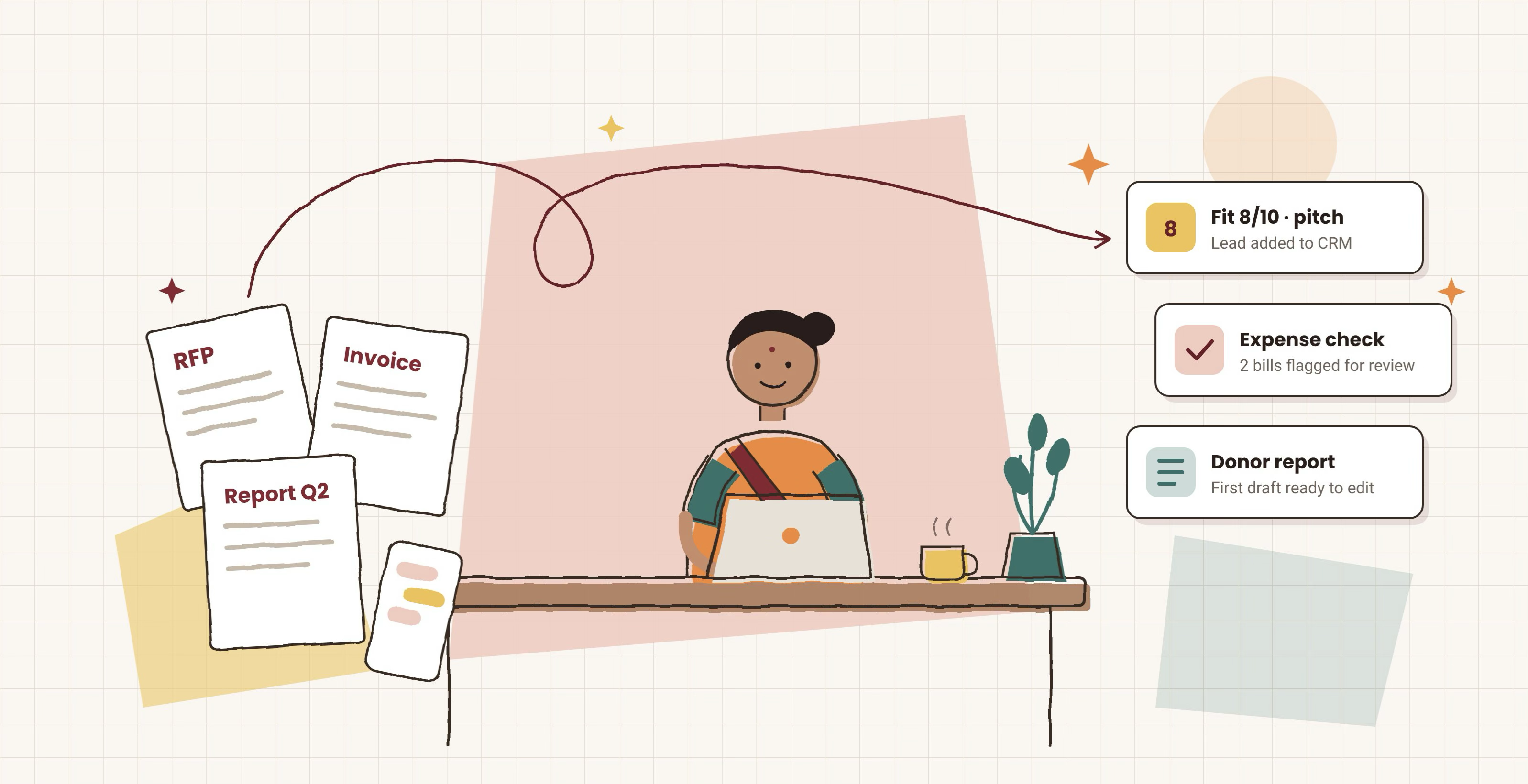
CoRE Stack already knows a lot about India’s landscapes. For micro-watersheds across the country, it computes hydrology, land use, cropping intensity, drought and terrain. The data is there. The catch is that turning it into a decision still needs an expert in the room.
A village steward shouldn’t need a GIS analyst to ask, “Is my watershed getting drier?”
That gap is what we brought to Tech4Dev’s AI Cohort 3.0. Our proposal is CoRE Ask: an AI layer that lets people ask landscape questions in plain language and get answers grounded in CoRE Stack data.
Why a cohort, not just a hackathon
Every organisation in the cohort arrived with a problem and a proposed AI solution. Every organisation also got a mentor. That pairing matters more than it sounds. Building alone, you polish the idea you already have. With a mentor, someone asks the question you’ve been avoiding. Ours, Akhilesh Negi, pushed us to strengthen the user research behind CoRE Ask.
Where it happened
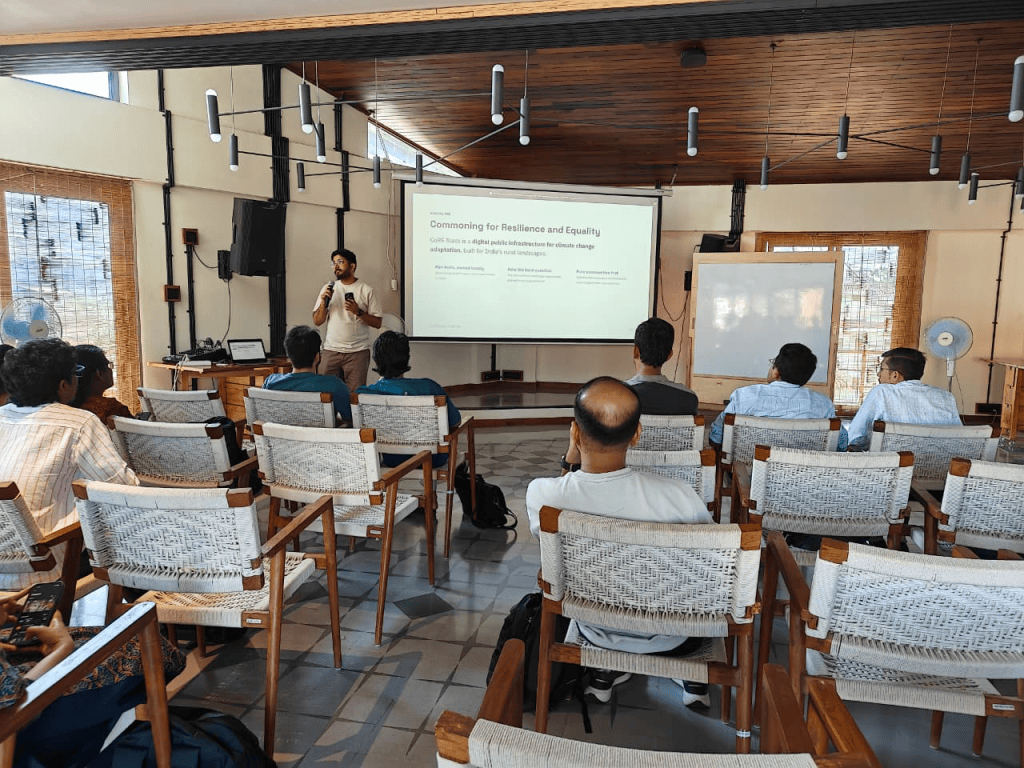
We spent the two days at the Quest Learning Observatory (QLO) in Kambipura, on the southwestern edge of Bangalore. Walking in, you can tell this space has a point of view. What caught my eye most was the building itself. It is designed as net zero energy, with all its energy needs met from renewable sources. Seeing that net zero logic in a real, working building, not on a slide, was a quiet reminder of why many of us were in that room. The space also has co-working space, a makers garage, a community kitchen and a sustainability museum.
Day 1: Everyone put their idea on the table
The first day was presentations. Each team had a few minutes to explain the problem and the solution. A pattern showed up fast: most ideas were chatbots, or systems with an LLM in the loop, working on a specific dataset.
Two stood out for me.
CSTEP is estimating rooftop solar potential from geospatial data, and putting that answer behind a conversational interface. Same shape as our problem: rich spatial data, hard to use, an assistant in front.
Samyak is building AI-assisted health decisions for cities, linking weather and climate data with health records to anticipate disease risk.
The other theme we kept hearing: multilingual dashboards. Several teams called language support their USP. Honestly, for tools meant for people on the ground, it’s less a feature than a prerequisite.
Day 2: Design before code
Day two flipped the switch from “what are we building?” to “who is it for?”
We spent it in a design and product-thinking workshop, sketching problem statements and user personas in far more detail than we had before. As engineers, our instinct is to jump to architecture. The workshop made us slow down and define the person first, then the problem, then the product.
We know our users. The workshop pushed us to go further: sharpen who is asking, what decision they are trying to make, and what they do next. Building something users truly need comes before anything else, and every design choice we make from here starts there.
What we’re taking back
- Start with the user. The architecture follows from who is asking and what they need to do next.
- Language is not optional. If it only works in English, it doesn’t work for most of our users.
- Peers are a resource. Teams in the cohort are solving neighbouring problems. There is plenty to borrow and plenty to collaborate on.
What’s next
We’re heading back to refine CoRE Ask around the personas and problem statements we sketched, and to dig deeper into user research, with our mentor keeping us honest. We’ll share what works, and what doesn’t, as we go.
Thank you to the Tech4Dev team, our mentor, the workshop facilitators, and every organisation in the cohort for two days that were far more useful than we expected.
If you work on geospatial data, climate, or natural resource management and want to compare notes, we’d love to hear from you.
Write to us at contact@core-stack.org.