
We live in an outcome-oriented world. Everything we do, we want to trace back to impact. Every rupee spent, every hour invested, every initiative launched – we look for a number, a proof point. Rightly so, since resources are limited and accountability is important.
Yet, some of the important work cannot be directly linked to outcomes or numbers.
The 1+1 > 2 Problem
A simple way to describe ecosystem building is that 1+1 is greater than 2.
But exactly due to this, it is so hard to measure and thus fund. How do we put a number on a conversation that sparked an idea a couple of months later? How do we quantify a phone call that happened because two people knew where they could leverage each other’s work?
The outcomes from ecosystem building look a bit different from impact numbers that we see usually. They look like:
- A connection made between two organisations who’d been working in parallel for years
- Someone leaving a room feeling seen, validated, energised
- A hypothesis, quietly held and privately doubted, suddenly feeling solid because fifteen other people in the room feel the same way
- A collaboration that works because trust was built in person first
- A compliment from someone who understands the work now.
These are important things but are they important enough to spend on them?
We tried it last week
We recently received a capacity building grant and decided to bring together six ecosystem partners for a two-day convening. We kept the agenda deliberately loose so it provided some structure but also room to wander, to let a question sit for sometime.
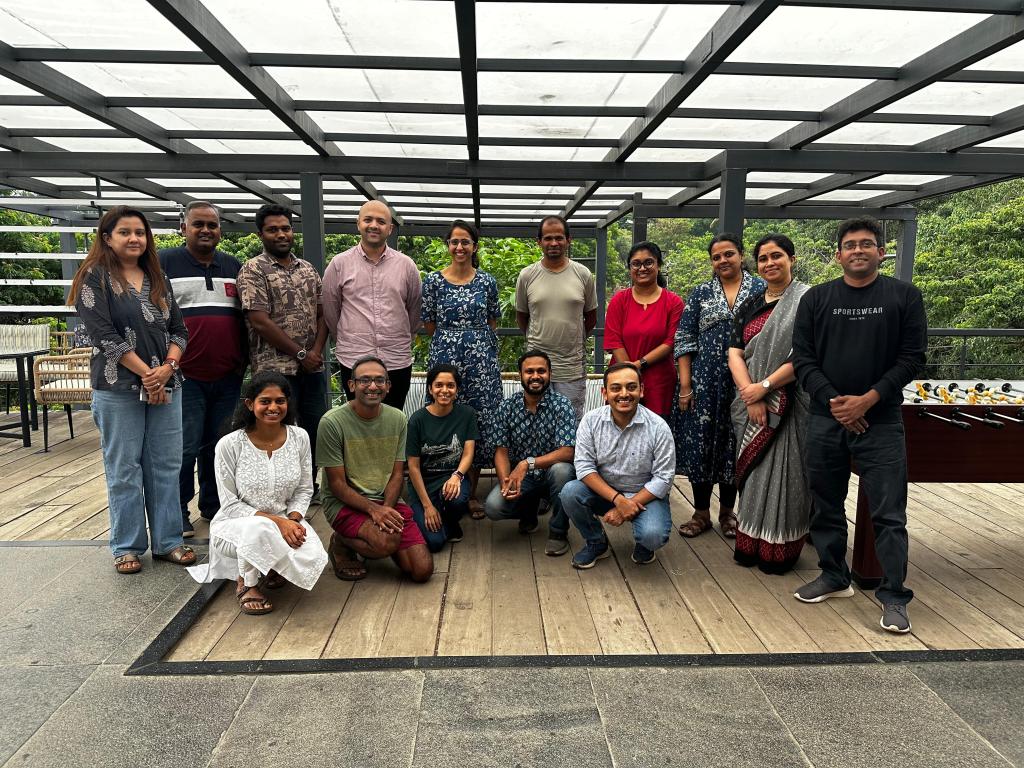
The questions that surfaced were:
- What does “ecosystem partner” actually mean to each of us differently?
- Who really is an ecosystem builder?
- How do we design cohorts that actually optimise for impact, not just activity?
- How can we learn from each other’s journeys and specially from failures?
The Moments That Stayed
What we will actually remember from those two days are the in-between moments.
“Oh, I saw you at the airport. But we never spoke.”
“We’ve been working on the same problem. Our offices are across the street from each other. We just never knew.”
“Now I can finally visualise what your work looks like on the ground.”
“Collaboration is really tough. We should only do it when it genuinely makes sense.”
Where Does This Leave Us?
We came out of the two days with more questions than answers:
The questions we’re sitting with:
- Are we missing out on some ecosystem players?
- What would be the best next step to designing cohorts?
- Moving forward with executing the program
We are still working on refining and designing it. We will keep sharing the progress as we move forward.

