
Two Weeks of Growth: A Deep Dive into Multiple Sprints
For the first time in over three years, I recently spent two weeks immersed in a series of events—the Dalgo Bootcamp, Dev Sprint, AI Cohort, and Dalgo Sprint. It was an intense and rewarding period of connecting with NGOs and my colleagues, and I’d like to share some key takeaways from each.
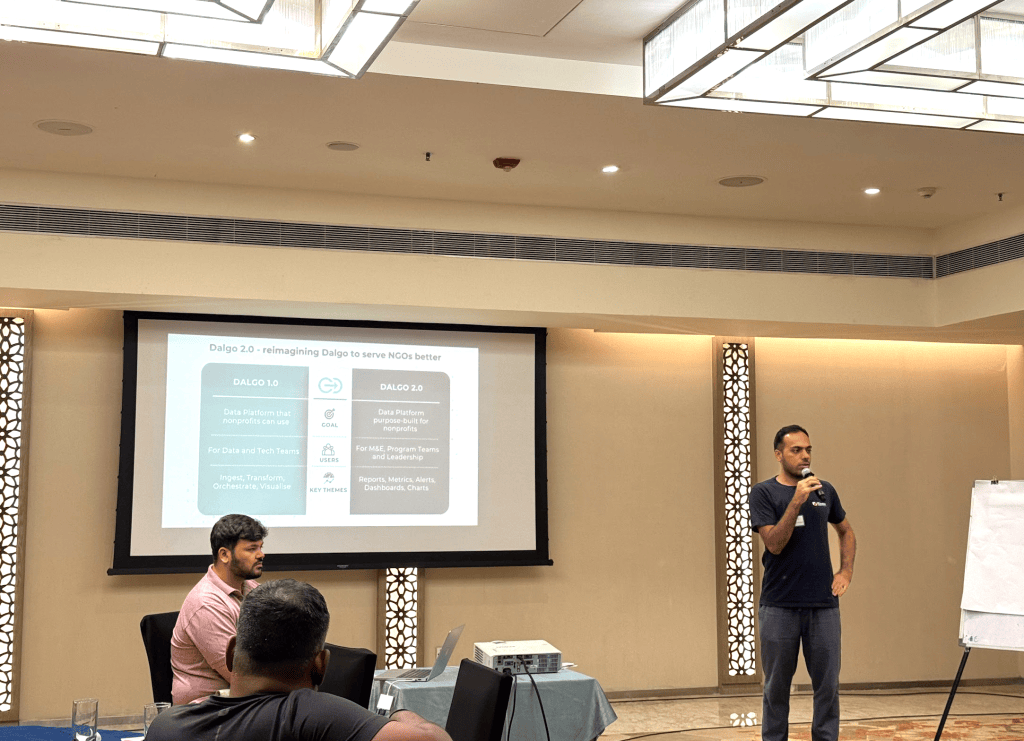
Dalgo Bootcamp: Shifting Our Approach to Sales
Over the past two years, I’ve seen firsthand how challenging business development and sales can be for Dalgo. We tried many different tactics, from free 10-hour proof-of-concepts to two-day, in-person workshops, but the process was slow. Conversions often took 4-6 months, or even a year.
This time, we took a new approach, and Priyesh did a great job of narrowing the focus to 7 NGOs. We reduced our in-person time to two days to demonstrate value quickly, followed by a one-month trial period for them to make a decision. I had insightful conversations with NGOs like Piramal, Dasra, and Durga India. I was particularly impressed by Piramal’s scale and the custom solutions they build for their stakeholders. I also learned about Durga India’s work on women’s safety in Bangalore and their journey to use tech to measure the impact of their programs.
During the bootcamp, we introduced our vision for Dalgo 2.0, a more NGO-centric platform. The organizations got to test our new beta features for charts and dashboards and provided valuable feedback. The positive reception confirmed we’re heading in the right direction.


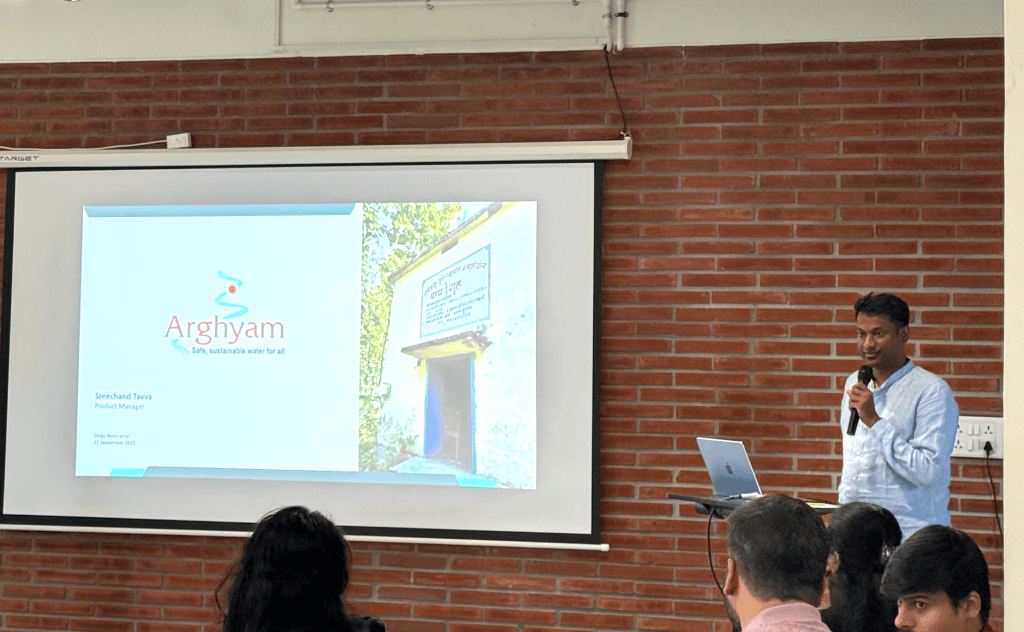
A highlight for me was inviting Sreechand to speak about their work on the JJM in Bihar. I’ve built a strong relationship with them over the years, and I’m grateful he was willing to share their experience. Now, as they hand over their work to AKRSP, Dalgo will be used instead of Arghyam, a great testament to our platform.
Ultimately, the bootcamp achieved key outcomes:
- We reduced the time it takes for NGOs to see the value of Dalgo from months to just two days.
- NGOs got hands-on experience with Dalgo 2.0, providing great feedback on our new features.
- Everyone was able to cross-learn from each other’s use cases.
- AI was helpful for dbt modeling.
We’re introducing support calls twice a week for a month to cross learn and share.
Dev Sprint
Lobo initiated a Dev Sprint to welcome our recent new hires, and it was great to see how much our team has grown since our first two dev sprints. This was an excellent opportunity for cross-learning with the team and FCXO. I had a lot of great conversations with Priyanshu and Apeksha about their experiences so far. It was also wonderful to see Aviraj excelling in Kaapi and bringing his college friends into Tech4Dev.
We only got to spend one day at the QLO office, but it was a great space. I especially enjoyed the delicious Sadya food they served for Onam—it was so good I needed a two-hour nap afterward!
AI Cohort: Diving into Predictive Modeling
We’ve been working with IPE Global on their problem to predict households with low birth weight (LBW) children. They have a pilot program in Rajasthan and collect a vast amount of data—around 400 relevant variables. To build our model, we decided to start with a smaller, more focused set of 25-30 variables across different categories like Behavioral, Health & Nutrition, and Socio-Economic factors. Our plan is to build a base pipeline with these variables, assess the model’s accuracy, and then iterate and improve from there.
I also connected with SNEHA, which is working on a similar problem. As Ashwin suggested, we connected to share insights on program scale, data collection, and quality. Although SNEHA is in the early stages of their program, learning from each other gave both organizations valuable perspectives.
It was also great to see Deepansh from Avanti Fellows, who I worked with last year on changing their data architecture. Seeing them use parts of Dalgo in production was a proud moment.
Dalgo Sprint: Refining Our Product with User Feedback
Right after the bootcamp, we kicked off the Dalgo Sprint. We invited a mix of new and long-time NGO partners to try Dalgo 2.0. The feedback was overwhelmingly positive. I had a particularly interesting conversation with Arun from Stir, who gave us detailed feedback on our approach to charts and dashboards. His insights highlighted the need for the product team to think deeply about making these features truly NGO-centric.
I spent most of my time working closely with organizations like Project Baala, Bhumi, Antarang, and Stir. I focused on understanding their work and how they operate, not just their tech-related issues. Karishma from Project Baala told me she used to work at SNEHA two years ago and recalled a presentation I gave them—something I had completely forgotten! Our discussions with Project Baala on dashboards and the “goalkeep session” were especially productive.
We also trained several NGOs on using Cursor with DBT. Everyone who tried it was happy. Arun from Stir, who knew SQL but struggled with DBT, was able to grasp it and build models in just two hours. This single session reduced our consulting load, which was a huge win. Similarly, Ritabrata trained Bhumi and Ummeed, who also loved how easy it was to set up locally.
The retrospective at the end of the sprint was a great moment. It was rewarding to hear how much everyone appreciated our work and how they now see the value of Dalgo in a much deeper way.
The Lighter Side: Late Nights and Laughter


Beyond the work, we needed some time to decompress. Anandu and Himanshu were the kings of late-night fun, making sure we laughed enough to forget our tiredness. I’ll always remember the banter between Vinod, Lobo, and Anandu, Ishan’s birthday celebration (Mr. NRI aka Spain Boy), Anandu’s late-night cravings for Meghana Biryani, and Thomas’s memorable statements (oh I forgot!), himanshu’s imitation and legendary room 816. This sprint was truly fun on many different levels.
A Personal Note: Growing with Tech4dev
I recently celebrated my three-year anniversary. I’ve truly grown up here. My goal has always been to tackle my weaknesses head-on. Looking back, the growth is significant—I’m a far more confident speaker now than I was in college, and presenting at FOSS last year was a major milestone for me.
This year feels different. I’ve always struggled with the ideal way to manage people, and while I’ve taken courses, I’ve never seen a practical example until now. I’ve learned so much from Ashwin this year and just want to appreciate him but this is what I’ve learned so far:
- How to talk to leadership: He presents his points with a sense of calm and logic.
- Clarity without rigidity: He challenges us with clear direction but trusts us to find the best path.
- Trust: He trusts us to get the job done, which gives us the confidence to deliver.
- Product thinking: He asks the right questions and allows us to figure out the answers.
- Mentorship: He gives us suggestions for things to try, not just a list of tasks.
These are the lessons I want to apply to my own work. This experience was more valuable than any course I’ve ever taken.

