
Written by Antony Justin and Thomas Mampilly
Introduction
2025 was a year of consolidation, experimentation, and evolution for the Fractional CxO program. Building on the momentum of previous years, the program deepened its shift from individual fCxO-led engagements to a more scalable Fractional Tech Team model, expanded targeted interventions for mature NGOs, and strengthened ecosystem learning through convenings and shared playbooks. With sustained demand from NGOs, strong revenue performance, and growing evidence that organizations are willing to invest in technology when value is clear, the year also surfaced important challenges around capacity-building, dependency, and impact measurement. This reflection captures what worked, what didn’t, and how these learnings are shaping the next phase of the program.
Goals and Results
The year started with the following objectives:
- Structuring and increasing the scale of the Fractional Tech Team model, which pairs fCxOs for strategic guidance with senior developers to rapidly translate ideas into working POCs and solutions for more non-profits.
- More Tech4Impact events, in person and online, to maintain and increase community engagement.
- Chai Pe Charcha – where we meet with NGOs in the cities where we have our quarterly sprints, listen to their challenges, and fCxOs volunteer as pro-bono advisors for the day, working more deeply with a select group of NGOs.
- Raising the quality of our engagements through stronger collaboration and knowledge-sharing among fCxOs, supporting newer initiatives and the broader ecosystem.
There has been a sustained interest in the fCxO program that has now been able to engage with as many as 34 NGOs since its inception in 2022 out of which 9 NGOs were added in the last calendar year alone. The nature of engagements have also evolved to move from the traditional fCxO model to engagement through fractional teams as well as engaging with NGOs for addressing specific technical domain related engagements as compared to overarching engagements in the previous years. The fractional CxO model operated with a sustainability of 74% and also had an impressive 133% of targeted revenue achievement for the calendar year.
This performance indicates a growing willingness among NGOs to invest in technology when it is closely aligned with program outcomes and organizational priorities, as well as strong perceived value in the fCxO and Fractional Tech Team approach. In particular, the team-based model has enabled more cost-effective delivery by right-sizing roles to need, reducing reliance on senior time alone, and lowering the overall cost burden for both Tech4Dev and participating NGOs.
Fractional CxO to Fractional Team model
Multiple engagements with NGOs over the years highlighted the need for augmenting tech leadership provided by the fCxO with programming/devops muscle (which was originally expected to be provided by the NGO) as it was observed that such an evolution could unlock more bandwidth of the fCxO for strategy and design, but also speed the process of creating functional prototypes that helped NGOs visualise the ideas better and drive faster development as well as adoption of technology. As many as 50% of the existing engagements saw significant increase in throughput by pivoting to the Fractional team model with all future engagements being positioned as Fractional team engagements.
Such a metamorphosis also meant revisiting the composition of the team, leading to the addition of full stack/dev ops resources to the team. Team growth has been both internal as well from external hires. The composition of the team is evolving further with the addition of a Product Manager in 2026; this is expected to further streamline and improve the delivery process.
Targeted engagements
Over the course of ongoing conversations across the ecosystem, we identified a gap in the Fractional CxO program’s offering. While the fCxO model has traditionally focused on broad, end-to-end leadership, spanning strategy, design, implementation, and long-term support, some larger and more mature NGOs expressed a need for targeted, short-term interventions to address specific, high-priority challenges.
In many cases, narrow and well-defined needs are effectively met by specialized product teams within the ecosystem; for example, platforms such as Glific for community engagement, Dalgo for data management, and Avni for data collection. However, NGOs also highlighted a class of requirements, particularly around cybersecurity, data privacy, regulatory compliance (including the DPDP Act), and product management for existing systems, that did not warrant a full-scale, organization-wide fCxO engagement, yet still required senior strategic guidance, thoughtful design, and hands-on implementation.
In response to this need, the Fractional CxO program has, in 2025, begun offering focused support for such requirements. These interventions are designed to complement our broader engagements, enabling NGOs that are already largely self-sufficient in managing their technology to access senior fCxO expertise in a targeted and time-bound manner.
Impact Stories
It has been a fruitful year for the fCxO team in terms of the impact that they have been able to activate/support at the NGOs that they have been associated with and this is a testament to the success of looking at the problem from the best vantage point. Below are a few representative impact stories from the year.
SEARCH – From being an organisation that did not believe in the need for an extensive use of technology, SEARCH today is on the path towards activating an AI powered mental health chatbot that can significantly enhance their ability to provide mental health support in remote and tribal areas. The organisation has seen a gradual but steady move towards data driven decision making that can be seen in the slowly growing number of dashboards based on Metabase that are getting operational across various teams. The organisation has also begun to adopt the use of open source platforms like Frappe and a definite migration from on-premise servers to adoption of cloud technologies.
Educate Girls – One of the first NGOs selected for a targeted fCxO engagement. The engagement centered on strengthening data security and privacy practices, alongside providing product guidance for the Pragati Didi chatbot; fCxOs worked closely with the team to review existing systems, identify risks and gaps, and recommend pragmatic improvements aligned with their scale and maturity. This focused intervention enabled Educate Girls to address critical priorities efficiently while continuing to manage their broader technology stack independently.
ATREE – ATREE’s digital transformation is taking solid shape, with improvements that make daily work smoother and more connected. Core systems have moved to the cloud, code is now managed on GitHub, and infrastructure is more secure and reliable. The AI-enabled Digital Assessment Management system is live, helping teams quickly tag and organise images and annotations for easy search and retrieval. SNAIL, the educator-focused knowledge repository, is also fully operational.
ATREE is beginning to apply AI in practical ways. A RAG-based chatbot on Gliffic is ready for field testing in January, with a Darjeeling version planned for February. Internally, ERPNext modules for onboarding, separation, appraisals, and project tracking are in testing, and Vaultwarden has been deployed to strengthen password and credential management.
ATREE is also laying the foundation for more data-driven work. Early setup of a data science team has begun, and a Lantana-focused proof of concept using AI and GIS is underway. Together, these steps are helping ATREE move toward a more secure, efficient, and insight-rich digital ecosystem.
Farmers for Forests – Over the course of this year, the technology team grew from five to nine members, including the hiring of a full-time CTO, alongside the launch of several new initiatives. These included productizing their drone-based carbon stock estimation pipeline (TreeLens), strengthening their field operations platform (FieldHQ), and building Chutki AI, a farmer engagement platform built on Glific. These new products and features significantly move the needle on reducing cost, time, and complexity of monitoring, reporting, and verification (MRV). By digitizing and automating key stages of the carbon credit lifecycle, F4F is now better positioned to scale across geographies, support more project developers, accelerate time to credit issuance, and build greater trust with farmers, implementers, and carbon financiers.
The Fractional Tech Team model proved effective in combining strategic leadership and day-to-day management with rapid progress on POCs and production deployments, laying a strong foundation that the newly hired CTO is now accelerating further.

Facilitating technology for smaller NGOs
Our ever increasing understanding of the NGO sector led us to the identification of the tech needs of smaller NGOs whose needs are very basic in the grand scheme of all things but as important and critical to be addressed nevertheless as these interventions could significantly enhance their ability to deliver impact to their target beneficiaries. As part of this exercise, the FCxO team collaborated with Dasra on the “Rebuild India Project”’s first cohort that aimed at providing support to a cohort of 4 NGOs in Tamil Nadu to address basic requirements in the space of email management, website development and maintenance, social media proficiency as well as enhancement of their ability to develop multimedia content. The fCxO team provided strategic guidance and support to People4Good, an organisation that was commissioned to provide technology support to the identified NGOs. A detailed read about this can be found here.
Buoyed by the success of the first cohort, Dasra and T4D are looking at replicating the program across newer geographies in the coming calendar year.
Tech4Impact Outreach
The Fractional team participated in multiple webinars and events that were organised both by T4D as well by other ecosystem players towards helping NGOs get a better sense of how to adopt technology better and faster.
The team participated in several webinars organized by Tech4Dev (1, 2, 3) as well as by India Partner Network (an initiative of Sattva), ISDM and more.
The team played a key role in facilitating a leadership convergence event in partnership with Dasra, bringing together leaders from a diverse set of NGOs for open, practice-driven conversations on technology for impact. Through a mix of plenary talks, lightning sessions, and facilitated roundtables, the event enabled sharing and learning across critical topics such as government collaboration, talent and capacity building, data protection and cybersecurity, fundraising for tech, and responsible AI adoption. Designed as a peer-learning space, the convening helped surface real challenges, practical insights, and opportunities for collaboration across the ecosystem.
The Chai Pe Charcha initiative did not work as intended, owing to low turnout and limited follow-up response, and highlighted the need for a different approach to local NGO engagement.


“Be better to deliver better”
One of the objectives of 2025 was to help leverage work better amongst the fCxOs in order to help improve the quality and speed of both ongoing as well as new engagements. In addition to improving internal efficiency, the team strived towards structuring their work in a way in which it could benefit the ecosystem too.
As part of this initiative, the team created several playbooks towards standardising fCxO engagements as well as towards helping NGOs navigate some of these scenarios on their own. The following playbooks were developed as part of this exercise
Development of dashboards for tracking and reporting of work has been one of the highlights of the improvements in internal processes and structures.
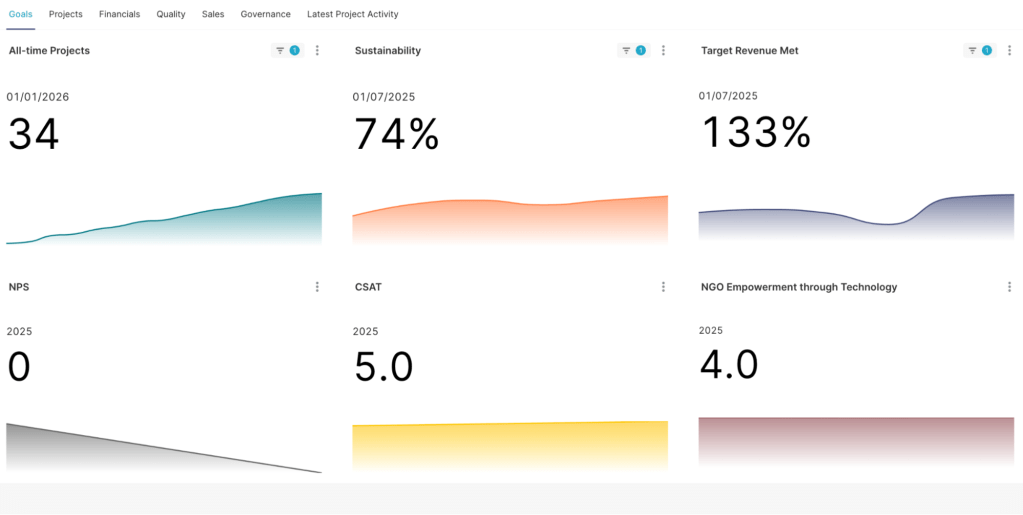
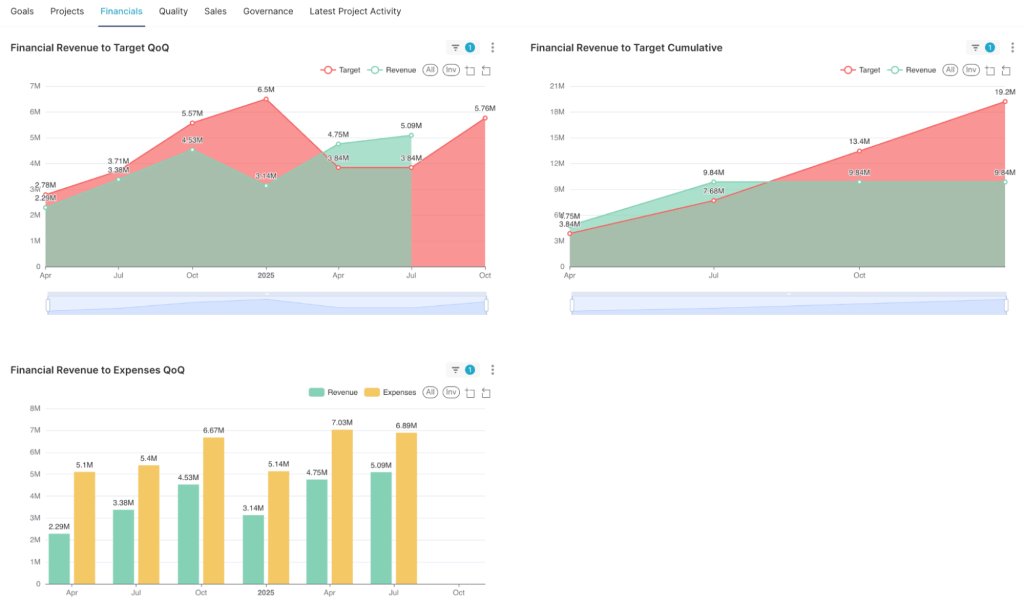

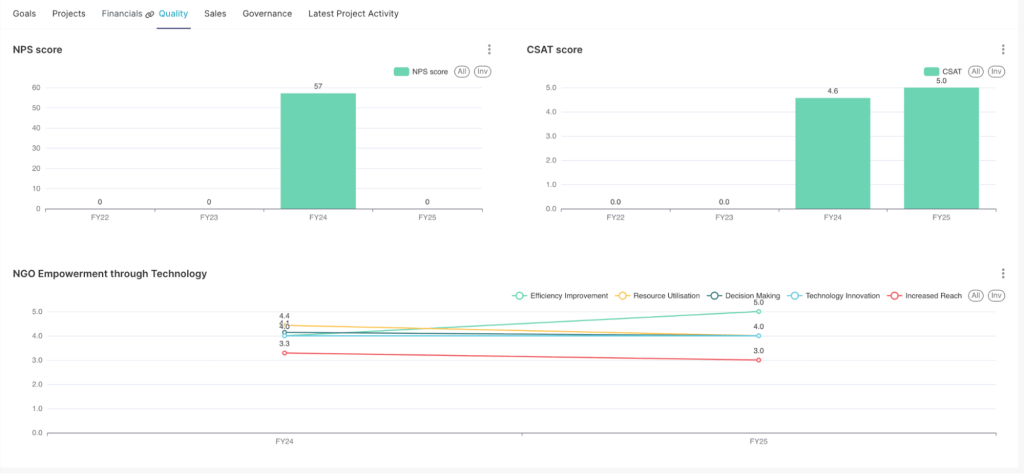

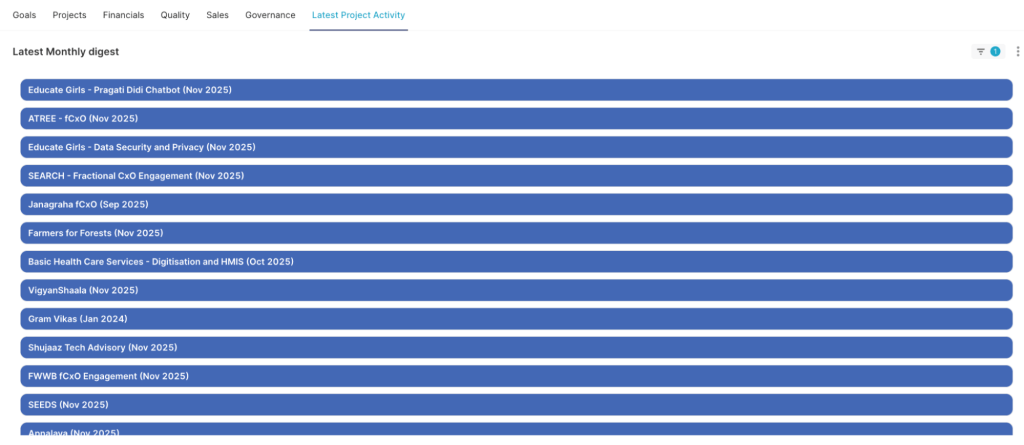
A key objective for the coming year is to accelerate internal adoption of the dashboards, positioning them as the central mechanism for enhancing coordination, operational visibility, and transparency across the organization and with external stakeholders.
Additionally, while not specific to 2025, it is worth highlighting the close collaboration between fCxOs and Tech4Dev product teams. Deep engagements with NGOs have consistently surfaced valuable feature ideas, implementation challenges, and product improvements, strengthening the relevance and effectiveness of ecosystem tools.
Challenges and Lessons Learnt
Though there have been several highlights across the last year, there have been a few failures that have been part of a learning curve across the team. Across some of the engagements, the team has realised the need to drive utmost clarity of the role of the engagement with the respective NGOs as it was recurring theme that was observed was that one of the NGOs having misunderstanding the role of the fCxO team to be one of an implementer rather than a facilitator for tech adoption.
Another recurring observation has been on the increasing dependency of the NGO on the fCxO team which is an antithesis to one of the goals of the fCxO program which is to drive internal capacity and capability to manage technology. Certain assumptions of the ability of the NGO to build confidence and also be able to upskill internal teams and leadership to replace fCxO and Fractional team members have been found to be misplaced based on the size, perceptions and even geography of the NGOs. It would be critical that the fCxO team address this scenario more effectively with the NGOs to be able to scale faster and serve more NGOs in the coming days.
In this context, the Global Tech4Dev Fellowship is being planned as an experimental extension of the program, to address two persistent challenges: NGOs’ difficulty in hiring senior and mid-level technology talent, and the limited scalability of the high-touch fCxO model. The fellowship will test whether embedding mentored, mission-driven technologists within NGOs for 6-12 months can accelerate internal capacity building while reducing long-term reliance on fCxO teams. By pairing fellows with Tech4Dev fCxO mentors, the pilot will aim to balance strategic oversight with day-to-day ownership inside the NGO, while also seeding the sector with a growing community of technologists prepared for social-impact leadership roles.
One of the most significant challenges of the fCxO program has been measuring its overall impact in a consistent and meaningful way. The program currently begins with an organization-wide technology assessment, followed by planned midline and endline assessments to evaluate progress across key dimensions: strategic alignment, technology systems and roadmap, tech team capacity, vendor performance, and data governance.
The intent is for participating NGOs to demonstrate measurable improvement in at least one or two of these dimensions over the course of an engagement. In practice, however, this approach has not been sufficiently effective in capturing the true impact of the program, both because progress is uneven across organizations and because qualitative improvements (such as confidence, decision-making quality, or operational resilience) are difficult to quantify. As a result, there is a clear need to rethink and strengthen how impact is defined, measured, and communicated across the fCxO program.
Looking ahead to 2026
As we reflect on the progress made this year, we are encouraged by the continued interest and appetite among social impact organizations to leverage technology to expand their impact. These signals reinforce our commitment to supporting organizations not just through leadership and delivery, but by building lasting technology capacity and unlocking sustainable pathways for change. As we move into 2026, we will build on these learnings by strengthening the Fractional Tech Team model, expanding targeted interventions, and experimenting with new approaches to talent and capacity building, harnessing technology, shared knowledge, creativity, and collaboration to drive meaningful transformation across the social impact ecosystem.
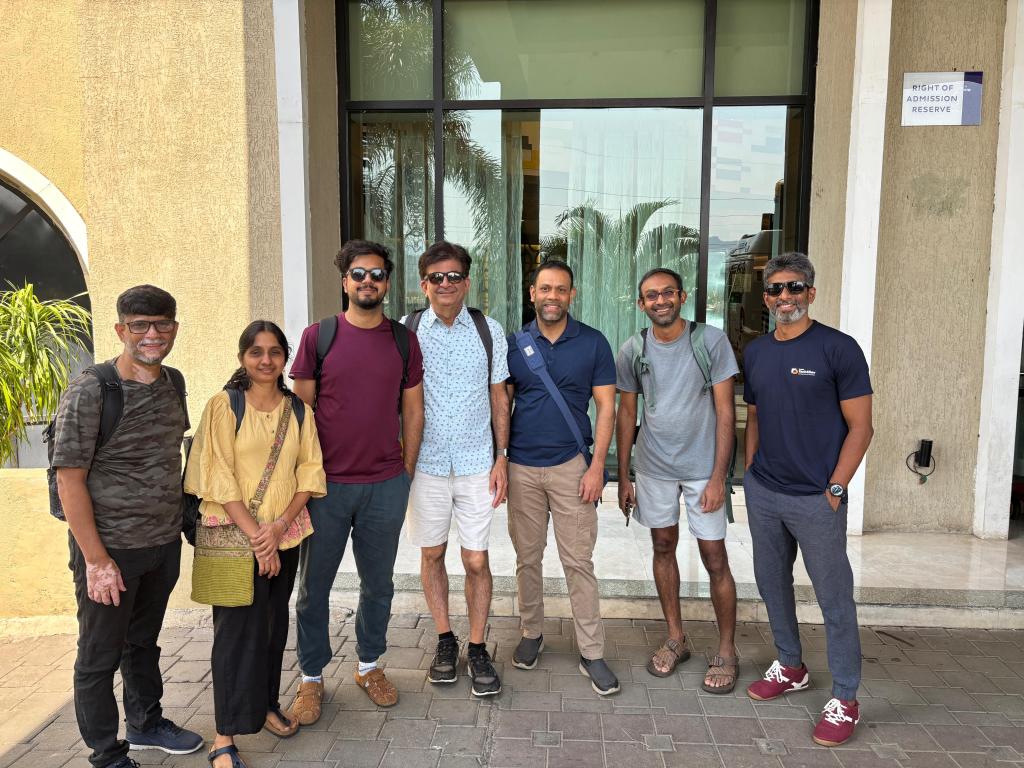
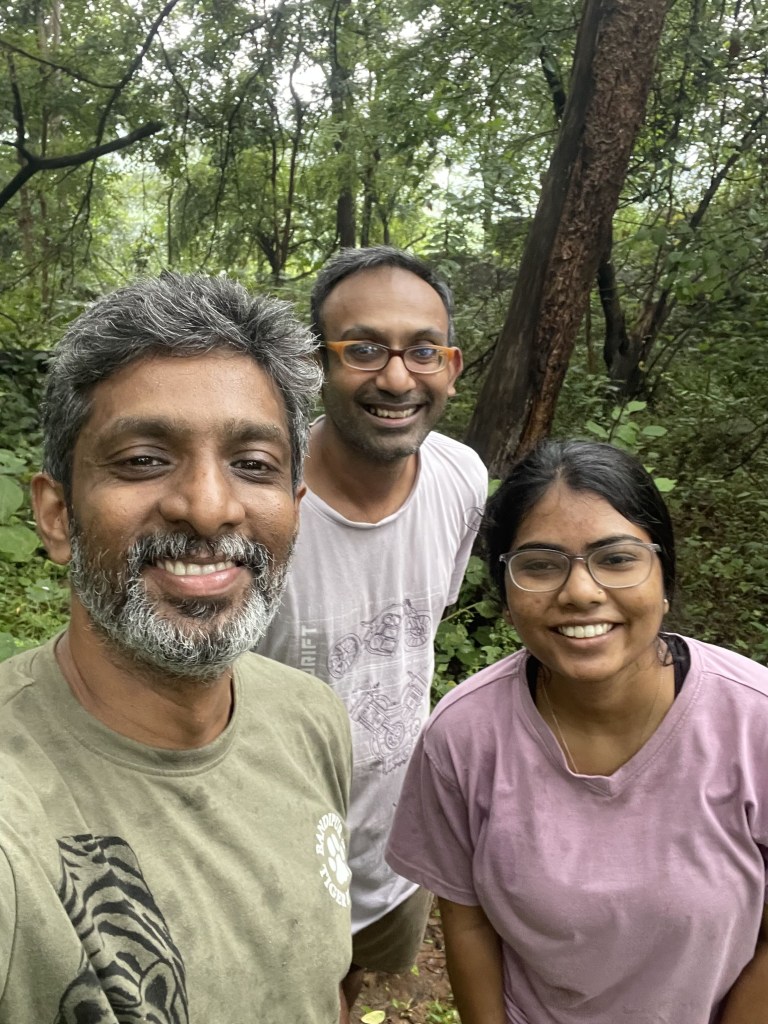
fCxO Team, April 2025 at the Khopoli Sprint

